As an Amazon Associate, we earn from qualifying purchases. Some links on this site are affiliate links at no extra cost to you. Our recommendations are based on thorough research and editorial judgment.

How Do Slip In Shin Guards Compare To Ankle Guards?

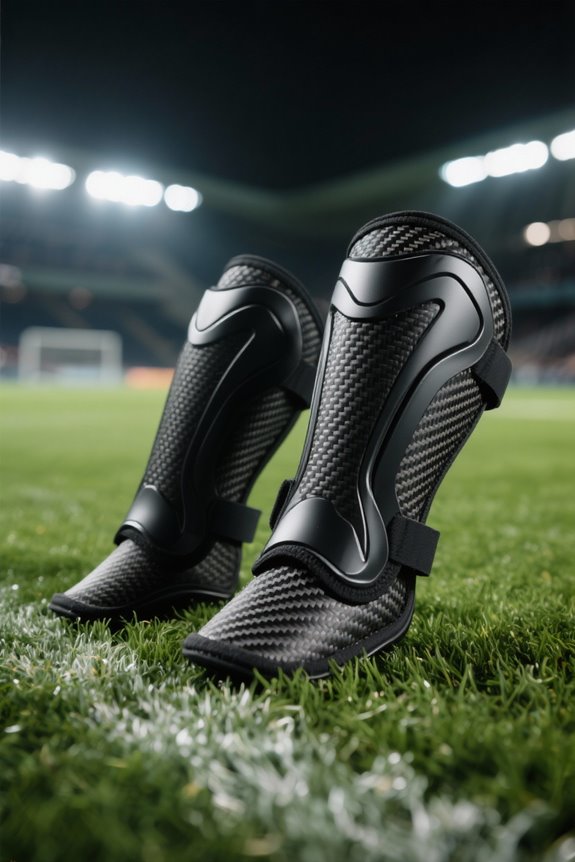
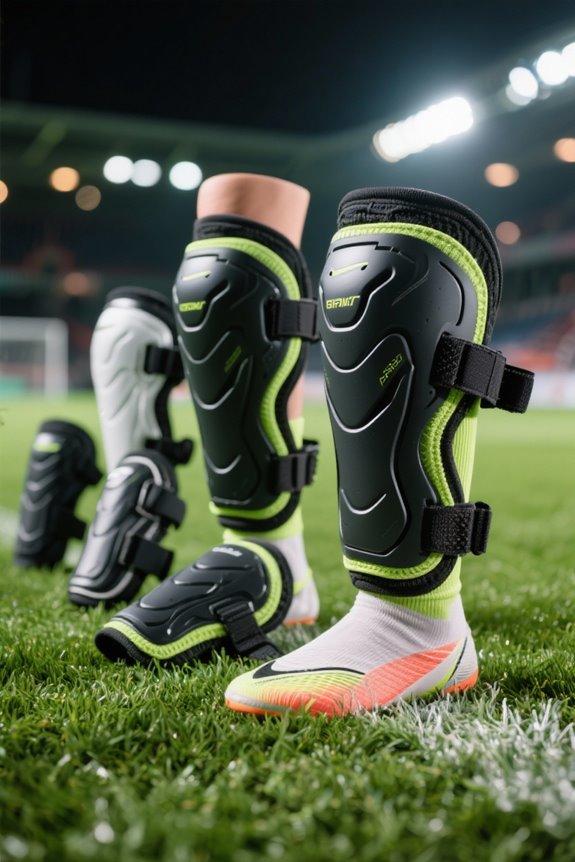
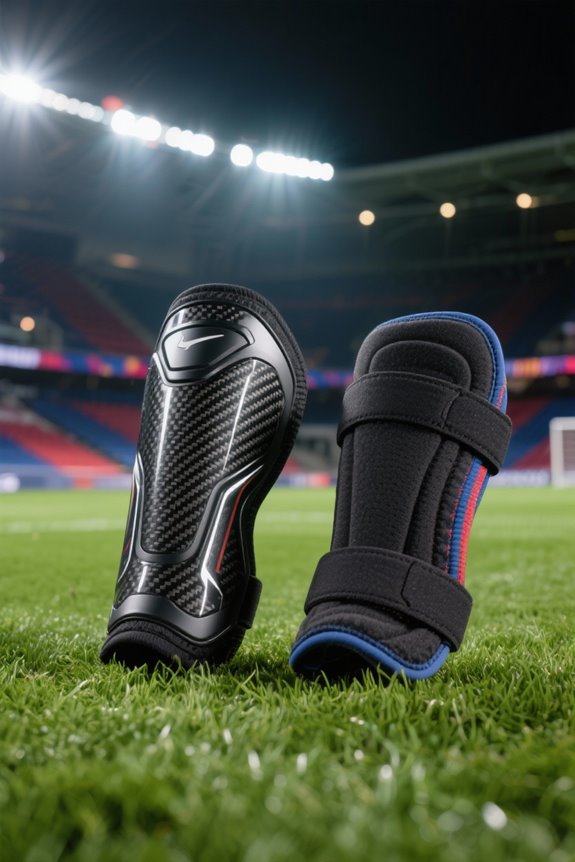
Slip-in shin guards weigh between 150 and 200 grams, promoting speed and agility. They provide protection primarily to the front of the shin. In contrast, ankle guards, which are heavier at 50 to 100 grams more, offer additional coverage for both the shin and ankle. While slip-ins enhance mobility, ankle guards support the ligaments and reduce injury risk. Players choose gear based on positions and preferences, with each type influencing performance metrics on the field. Further insight awaits.
Key Takeaways
- Slip-in shin guards are lighter and less bulky, promoting enhanced agility and speed, while ankle guards provide added protection but can restrict movement.
- Ankle guards offer superior coverage for both the shin and ankle, reducing the risk of bruises and sprains during intense gameplay.
- Defensive players typically prefer ankle guards for their increased support and stability, whereas forwards lean towards slip-in shin guards for minimal bulk.
- Slip-in guards rely on socks for security, providing a snug fit, while ankle guards use adjustable straps for enhanced stability during play.
- Ankle guards deliver better injury prevention, particularly for younger players, whereas slip-in shin guards favor freedom of movement for quick lateral actions.
Weight and Bulk Comparison
When comparing the weight and bulk of slip-in shin guards and ankle guards, significant differences become apparent. Slip-in shin guards typically weigh between 150 and 200 grams, offering a minimal bulk profile that enhances speed and agility. In contrast, ankle guards, designed with extra padding and straps, can weigh 50 to 100 grams more than slip-ins, which affects overall weight distribution. This increase results from additional materials that contribute to the bulk assessment. The slimmer design of slip-in guards allows for a snug fit within socks, minimizing interference with movement. Conversely, ankle guards, while providing additional protection, often restrict flexibility due to their increased mass. These weight and bulk factors heavily influence players’ choices based on their positional needs and playing styles. Additionally, choosing the right compression level can enhance circulation and reduce muscle fatigue, which is vital for maintaining performance on the field.
Protection Coverage Analysis
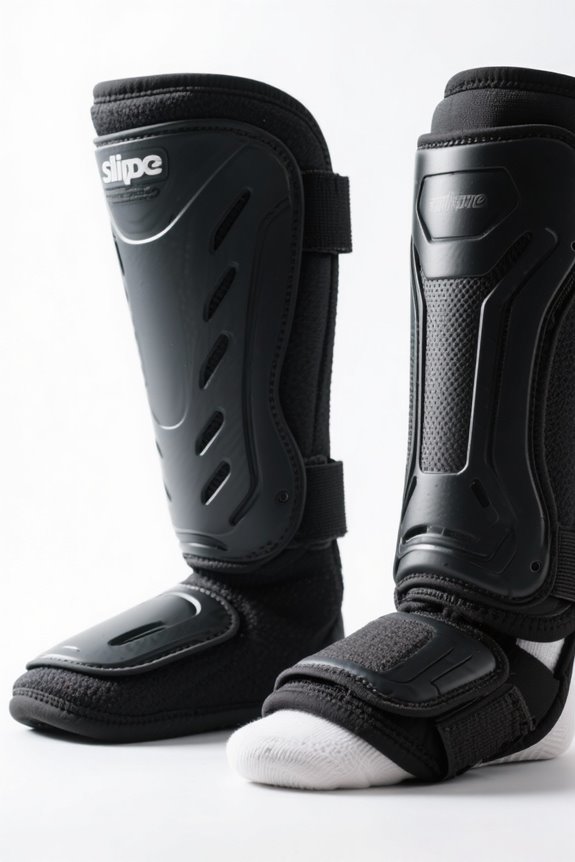
Protection coverage analysis reveals significant differences between slip-in shin guards and ankle guards, particularly in their protective capabilities. Slip-in shin guards offer solid protection for the front of the shin, primarily safeguarding the tibia; however, they leave the ankle and lower leg exposed, compromising injury prevention effectiveness. Conversely, ankle guards extend coverage to both the shin and the ankle, wrapping around vulnerable areas, thereby enhancing impact protection. This added coverage reduces the risk of bruises, sprains, and fractures arising from tackles or collisions. The padding in ankle guards absorbs lateral impacts that slip-ins cannot address, making them more suitable for players in physically demanding situations. Overall, ankle guards provide superior overall protection, reinforcing safety during intense gameplay. Additionally, using training packages that include protective gear can further enhance a player’s safety and performance on the field.
Fit and Stability Differences
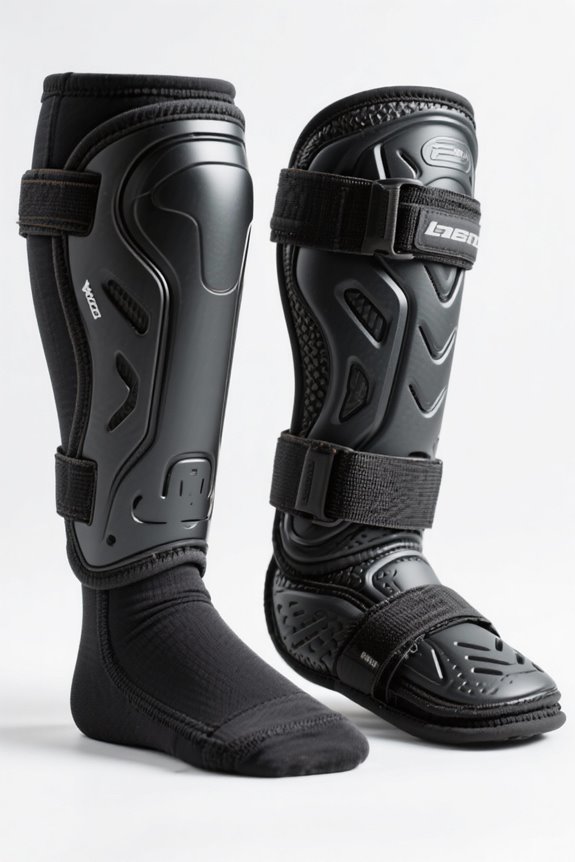
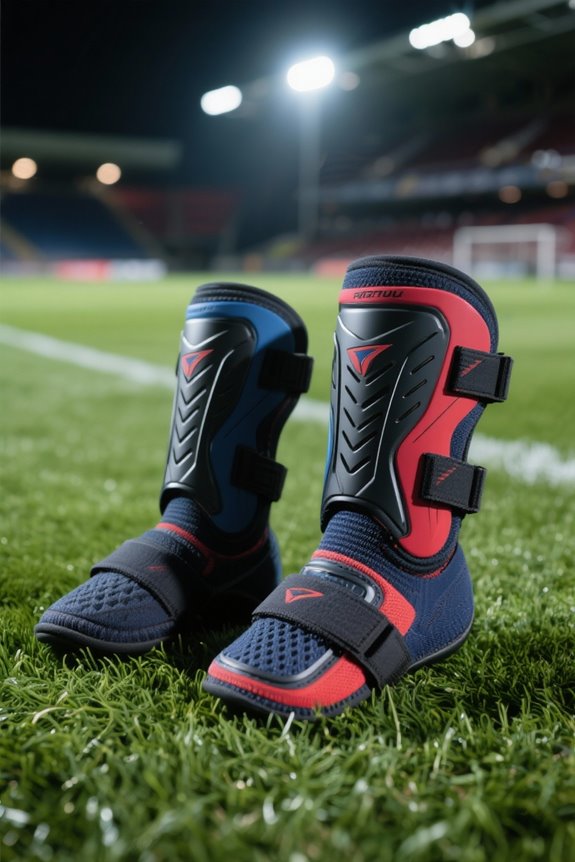
Fit and stability represent critical factors when comparing slip-in shin guards and ankle guards, each offering distinct advantages tailored to player needs. Slip-in shin guards provide snug fit variations that contour to the lower leg, relying solely on the fit of the accompanying sock or sleeve. In contrast, ankle guards use adjustable straps or reinforced elastic bands that secure around the ankle, accommodating various sizes and enhancing stability differences during play. This allows ankle guards to minimize unwanted movement, supporting ligaments and tendons. While slip-in guards offer greater freedom of ankle motion, they may shift during vigorous activity, requiring additional tape for maximum security. Consequently, each type of guard is suited to different player preferences and gameplay dynamics, influencing overall performance. Additionally, the lightweight and low-profile design of breathable materials in slip-in shin guards enhances agility, making them ideal for players seeking speed on the field.
Player Position Suitability
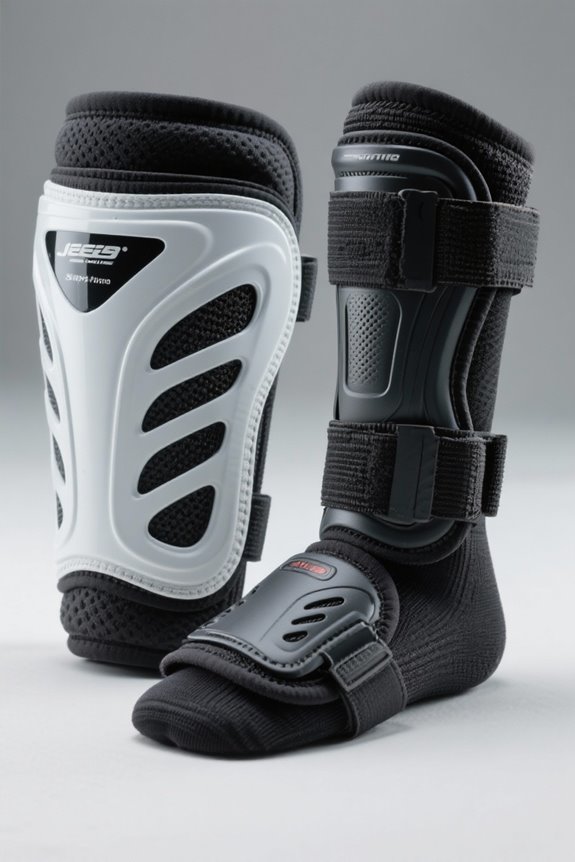
Shin guard selection varies considerably based on a player’s position on the field, as each role presents distinct demands regarding mobility and protection. For defensive positions, ankle guards offer added protection for both the shin and ankle, which is essential due to frequent tackles. Defenders often seek guards with stirrups to guarantee stability during intensive defensive tactics. Midfielders require a balance between protection and mobility, making slip-in shin guards appealing for their lightweight design, while some may choose ankle guards for enhanced security. Forwards typically favor slip-ins, as their minimal bulk allows for quick directional changes. Evaluating player rankings and priorities helps determine the suitability of shin guard types across various positions on the pitch. Additionally, considering the benefits of compression arm sleeves can further enhance overall performance and comfort during gameplay.
Comfort and Wearing Experience
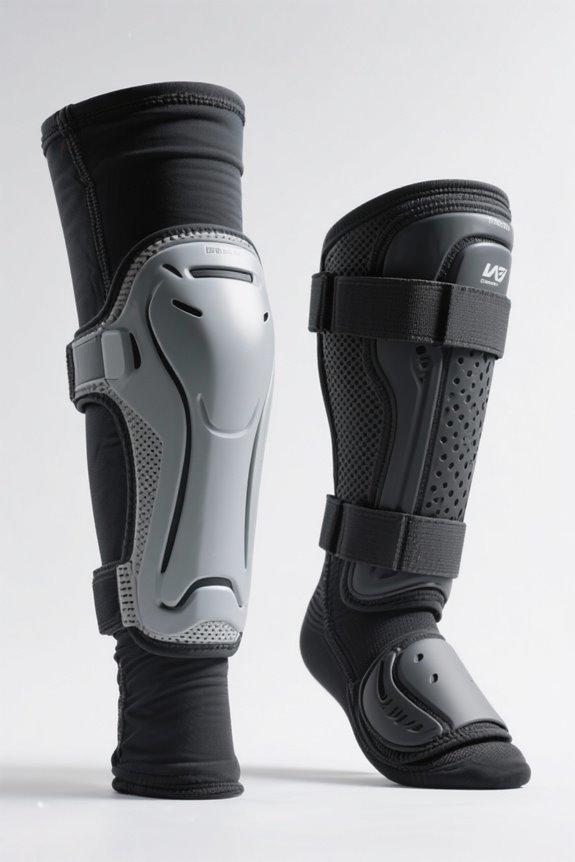
How do different types of guards influence a player’s comfort and overall wearing experience on the field? Slip-in shin guards provide a lightweight, slim profile that enhances agility, which is essential for positions like forwards and midfielders. Their construction often includes breathable materials, optimizing airflow and minimizing heat retention, aligning with players’ comfort features. Conversely, ankle guards offer added padding and adjustable straps, providing thorough protection but increasing bulkiness and weight. This extra weight can restrict movement, particularly for players prioritizing agility. While ankle guards secure better through their fastening systems, they may feel warmer and cumbersome. Ultimately, players’ wearing preferences vary based on their specific needs for protection, agility, and comfort during play. Additionally, the compression level and design features of the guards can significantly enhance comfort and reduce fatigue during gameplay.
Maintenance and Durability Factors
Proper maintenance and durability are essential considerations when choosing between slip-in shin guards and ankle guards. Slip-in shin guards typically use lighter materials, leading to quicker wear and deformation under impact. Regular cleaning, which involves wiping down the plastic shell and foam padding, is vital to prevent bacterial growth. In contrast, ankle guards require more careful maintenance due to moisture management issues; their fabric straps retain moisture, necessitating air drying after use. Repair techniques for ankle guards can extend their lifespan, as replacing straps or padding can enhance usability. While slip-in shin guards are easier to clean, they often need more frequent replacement, making ankle guards a more durable, long-term investment for players who prioritize protection and longevity. Additionally, choosing shin guards with breathable materials can further enhance comfort and reduce moisture retention during gameplay.
Agility and Speed Considerations
While choosing the right type of guard, players must consider the significant impact of agility and speed on their performance. Slip-in shin guards, being lighter and less bulky, provide agility benefits that enhance quick foot movements during play. The streamlined design allows for faster directional changes, vital for players who rely on speed enhancement. Conversely, ankle guards, due to their additional material and reinforcement, may inhibit ankle flexibility, slightly slowing pivoting and lateral movement. This limitation can affect how quickly a player accelerates or decelerates during competitive scenarios. Ultimately, players must assess their specific roles and how guard weight and fit will influence their overall agility as they navigate the demands of the game. Additionally, the choice of impact protection levels can also play a crucial role in ensuring that players feel secure while maintaining their agility on the field.
Ankle Protection Benefits
Ankle guards offer significant protection benefits by providing mechanical stability and reducing the risk of common ankle injuries, particularly sprains. These devices restrict excessive joint movement, ensuring greater ankle support during dynamic sports activities. Semi-rigid or lace-up braces are designed to limit harmful motions around the subtalar joint, a frequent site for injuries. Research indicates that the use of ankle supports is justified due to the high rates of ankle injuries in sports and recreational activities. Moreover, enhanced proprioceptive feedback from ankle guards aids in injury prevention by improving joint awareness, which contributes to better neuromuscular control. This combination of mechanical restriction and proprioceptive enhancement makes ankle guards essential in minimizing the incidence of sprains during athletic performance. Additionally, using shin guards with anatomical fit can further improve support around the ankle area during play.
Psychological Reassurance in Protection
Psychological reassurance plays a critical role in the effectiveness of protective gear, influencing athletes’ confidence and their overall performance. Slip-in shin guards visibly absorb impacts, enhancing users’ beliefs in their protective abilities. This perception greatly boosts psychological readiness, as players feel that injury prevention is more feasible; studies suggest injury risks can be reduced by 41% to 77%. Additionally, integrated ankle guards increase feelings of security around vulnerable joints, helping reduce anxiety related to injuries like contusions. A balance of comfort and freedom of movement further reinforces this reassurance, enabling athletes to maintain focus during games. Overall, the combined effect of visible protection and comfort enhances players’ mental states, encouraging a more aggressive style of play with reduced hesitation. The material durability and quality of high-quality materials used in shin guards also contribute to this psychological assurance, as athletes feel more secure when they know their gear can withstand impacts effectively.
Suitability for Different Skill Levels
Selecting the appropriate type of protective gear is essential for athletes at various skill levels, as it directly impacts their performance and safety on the field. Slip-in shin guards are preferred by experienced players, thanks to their lightweight design that promotes agility and speed. These guards focus on basic shin protection while allowing freedom of movement, making them ideal for positions requiring quick lateral actions. Conversely, ankle guards are best suited for younger, beginner players who need additional coverage and stability around the ankle. This extra protection aids in skill development and greatly enhances injury prevention. As players shift from novice to intermediate levels, they may switch from the more protective ankle guards to the agile slip-ins based on game demands and personal comfort. Additionally, high-density foam padding in shin guards can significantly improve safety during gameplay by absorbing impacts effectively.
Popular Choices Among Players
Players across various positions on the field exhibit distinct preferences for protective gear, greatly shaping the choices made in modern soccer. Forwards and midfielders often favor slip-in shin guards due to their lightweight design and snug fit, allowing for agility and freedom of movement. This preference arises from design innovations that enhance player comfort, as confirmed by player feedback emphasizing the need for less bulky equipment. Conversely, defenders and youth players typically choose ankle guards, which provide full lower leg protection through built-in sleeves and straps. This choice accounts for players’ need for stability during aggressive play, making them suitable for those facing frequent contact. Ultimately, preferences reflect individual playing styles and positional requirements in the sport.
Impact on Game Performance
The impact of protective gear on game performance is evident in the choices players make regarding shin guards and ankle guards. Slip-in shin guards, being lighter, enhance players’ agility and speed, which improves performance metrics in fast-paced scenarios. Many players express through feedback their preference for the minimalist design of slip-ins, allowing for quicker cuts and reduced fatigue. In contrast, ankle guards provide more thorough protection, covering the shin and ankle, which may benefit performance in slower-paced roles. However, their bulk can hinder mobility, restricting rapid movements. This trade-off between protection and agility ultimately influences the player’s effectiveness on the field, showcasing a balance between comfort and performance in gear selection.
Personal Preference in Gear Selection
Personal preference in gear selection plays an essential role in determining which protective equipment players choose for soccer, greatly influencing their overall experience on the field. Players often base their choices on comfort, fit, and desired level of protection, which can differ markedly between slip-in shin guards and ankle guards. Player feedback reveals that experienced athletes prefer the lightweight design of slip-in guards for enhanced agility. In contrast, newer players often lean toward ankle guards due to their additional support and snug fit, promoting confidence during play. Current gear trends showcase diverse preferences along positional lines, highlighting how individual needs, such as protection level and movement restrictions, directly shape gear selections among soccer players of varying experience levels.
Frequently Asked Questions
How Do Temperature and Weather Influence Shin Guard Choice?
Temperature impacts shin guard choice considerably, with warmer weather necessitating breathable designs, while colder conditions favor insulated materials. Weather conditions ultimately dictate the balance between comfort and protection, influencing athletes’ performance and safety during play.
What Are the Price Differences Between Slip-Ins and Ankle Guards?
In a price comparison, slip-in shin guards typically range from $10 to $30, while ankle guards cost between $20 and $50. This cost analysis reveals that added features in ankle guards contribute to their higher price point.
Which Materials Are Commonly Used in Shin Guards?
In the quest for protection, shin guards often utilize polypropylene, plastic, and advanced carbon fiber composites, balancing material durability and performance impact. Enhanced foam padding promotes comfort, while breathable fabrics support athlete endurance during intense matches.
Do Brand Variations Affect Comfort and Fit Significantly?
Brand variations greatly influence comfort and fit variations in guards. Higher-end brands typically offer tailored designs for enhanced wearability, while lower-tier options may compromise on padding and elasticity, affecting overall comfort for players.
How Often Should Shin Guards Be Replaced for Optimal Protection?
Frequency recommendations suggest competitive players replace shin guards every 6 to 12 months. Regular wear assessment is essential; visible damage or loss of fit indicates the need for immediate replacement to guarantee maximum protection during play.