As an Amazon Associate, we earn from qualifying purchases. Some links on this site are affiliate links at no extra cost to you. Our recommendations are based on thorough research and editorial judgment.

What Are The Safety Standards For Youth Soccer Shin Guards?

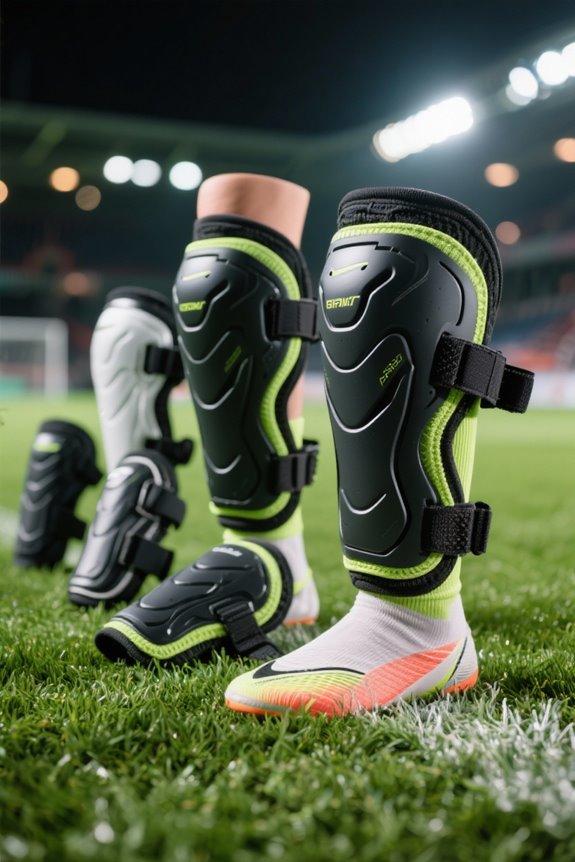
Youth soccer shin guards must adhere to NOCSAE safety standards, ensuring proper coverage and impact protection. Each guard should extend from above the ankle to below the knee, ideally covering 70-80% of the shin. Sizing corresponds to age and leg length, with specific dimensions for each size to guarantee a snug fit. Non-compliance increases injury risks and may lead to disqualification from games. Further insights into essential features and selection practices can enhance player safety during practices and matches.
Key Takeaways
- Youth soccer shin guards must comply with NOCSAE standards, ensuring proper impact and coverage testing for safety and protection.
- Guards should cover the shin from above the ankle to below the knee, enhancing both safety and freedom of movement.
- Correct sizing is critical, matching the leg length and age group to ensure an effective protective fit.
- Each pair of shin guards must be worn under socks and maintained as matching pairs to avoid disqualification during games.
- Players must wear properly certified equipment to minimize injury risks and fulfill league safety requirements.
Overview of Shin Guard Requirements
Ensuring the safety of young soccer players begins with a thorough understanding of shin guard requirements. Shin guards must cover the majority of the shin, extending from just above the ankle to a few inches below the knee. Correct sizing is essential for youth safety; the guards must align with the player’s leg length and age group. For instance, XS size is suitable for shin lengths of 6–8 inches, while L is for 11.5–13 inches. Guards should rest 2–3 inches above the foot and should not restrict movement. Guard comfort is crucial, as overly loose or shifting guards can increase injury risk during play. Players must wear matching pairs, secured beneath their socks, for maximum protection and compliance with regulations. Additionally, the anatomical design features of shin guards enhance fit and reduce injury risk, making them vital for young athletes.
Compliance With NOCSAE Standards
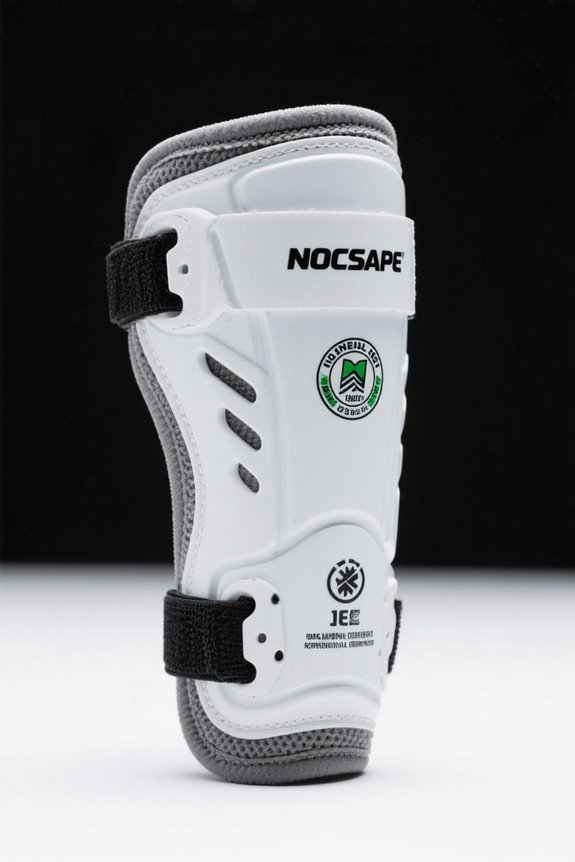
Compliance with NOCSAE standards is vital in guaranteeing that youth soccer shin guards provide adequate protection during play. NOCSAE guidelines specify minimum performance requirements to protect players from injury. Certification is awarded only to shin guards that pass stringent impact and coverage tests outlined in the ND090-06m24a standard. Each size must meet specific coverage area dimensions, which include durable materials designed to absorb impact. Compliance benefits not only enhance player safety but also guarantee consistency across all sizes and designs, including asymmetrical shapes. Testing procedures mandate multiple impacts at significant zones of the shin, asserting protection against injury thresholds. Overall, adherence to NOCSAE standards assures effective, reliable shin guards for youth athletes, promoting safe gameplay environments. Furthermore, impact protection levels are a crucial aspect that these standards address, ensuring that players receive the best possible defense against injuries.
Importance of Proper Fit and Size
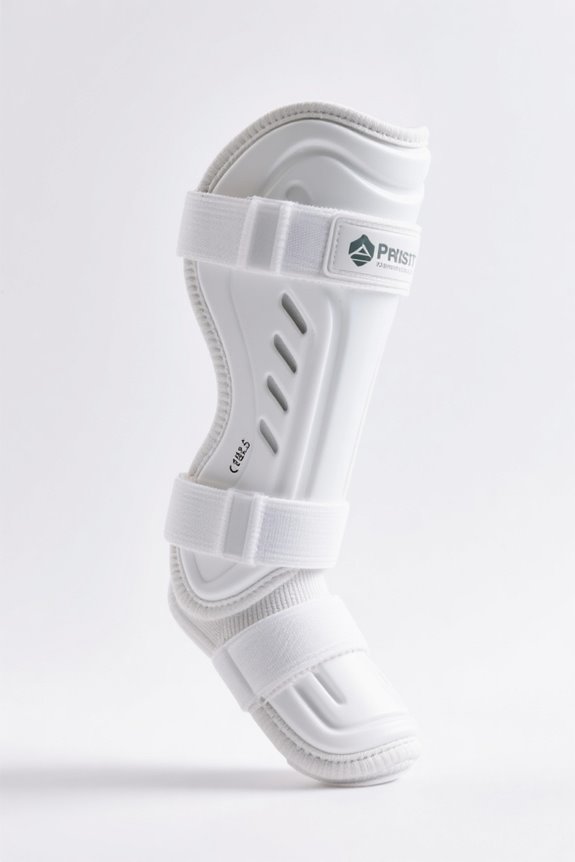
Proper fit and size of shin guards greatly influence the safety and performance of youth soccer players. A precise fit assessment involves measuring the player’s leg, as shin guard sizes often correspond to specific height ranges, supporting ideal protection and comfort. For example, a shin length of 6–8 inches corresponds to an extra small size, while medium sizes are for ages 7–14. It is vital that guards fit snugly, covering the area from above the ankle bone to below the knee, preventing guards from shifting during play. Youth players should consider their size range alongside manufacturer size charts, ensuring they select guards that offer both adequate coverage and freedom of movement, thereby enhancing their overall performance and confidence on the field. Additionally, selecting shin guards made from durable materials can significantly impact their longevity and protective features.
Protective Coverage Guidelines
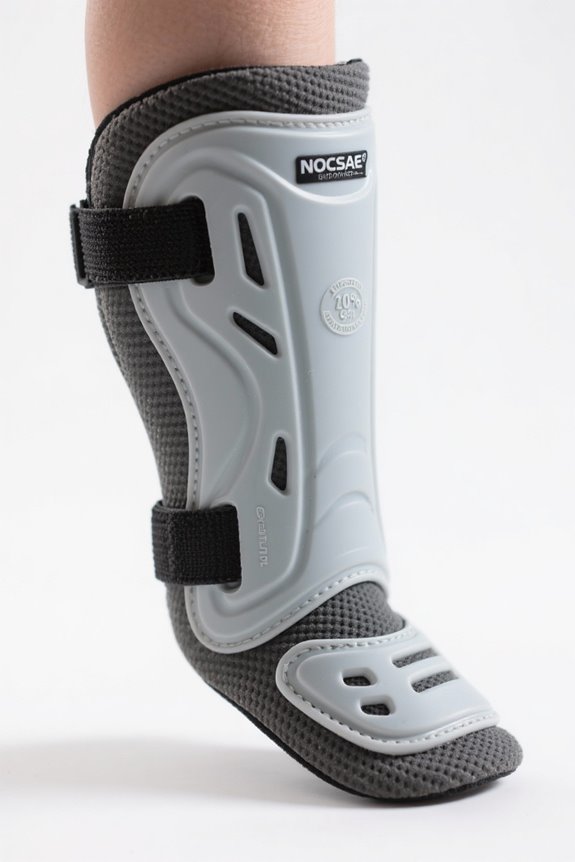
Adequate protective coverage is critical for youth soccer players, as it directly impacts their safety during matches and practices. According to established safety protocols, shin guards must comply with minimum protective area specifications outlined in standards like NOCSAE. Each guard should effectively cover the central and lateral shin portions, extending from 2 to 3 inches above the foot to just under the knee. Guards must remain completely under the sock to enhance injury prevention. Youth shin guards should also incorporate ankle protection, which further minimizes risk to vulnerable areas. Properly sized and certified equipment guarantees consistent coverage without significant gaps, ultimately contributing to safer play. Compliance with regulations, including marked coverage areas, is essential for reliable protection against impacts. Additionally, the use of NOCSAE certification ensures that the shin guards meet specific safety standards for effective protection.
Position-Specific Shin Guard Considerations
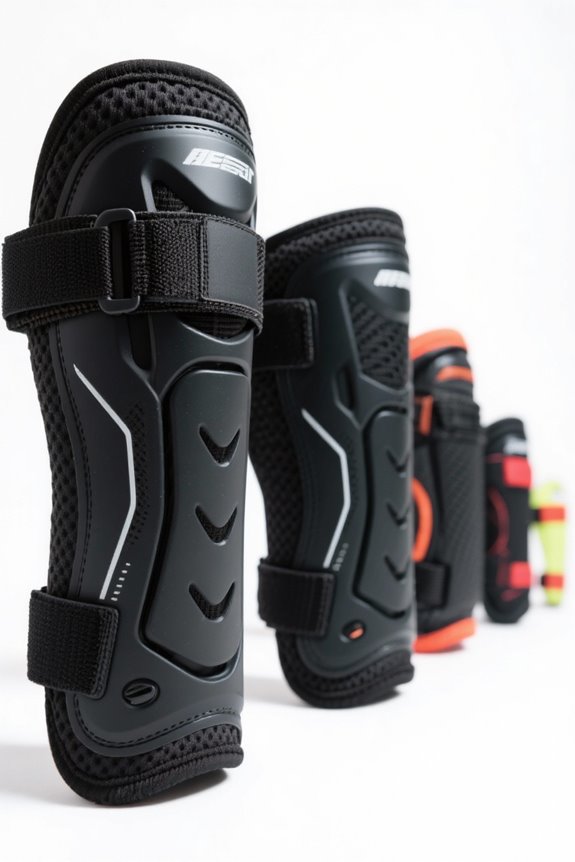
Position-specific shin guard considerations are essential for optimizing safety and performance in youth soccer players. Defenders typically prefer ankle protection models that provide padding on both sides for tackling and collisions, ensuring they maintain security with elastic straps during aggressive play. Midfielders require slip-in styles that promote agility, balancing both defense and offense while allowing for quick changes across the field. Forwards focus on speed, using lightweight designs that allow unrestricted movement; some may choose shin socks for integrated protection. Goalkeepers prioritize flexibility and often select lightweight options to enhance quick reactions. Overall, these designs cater to youth convenience, ensuring the right balance between protection and mobility tailored to each player’s role on the field. Additionally, it is crucial to ensure that shin guards are made from durable materials that can withstand the rigors of play while providing ample protection.
Equipment Enforcement by Leagues
Ensuring compliance with shin guard regulations is essential for maintaining player safety in youth soccer leagues. Leagues enforce strict rules that require all players to wear proper shin guards during practices and games. Referees play a significant role, inspecting equipment before games and maintaining standards throughout matches. Challenges arise in enforcement, as non-compliant players may need removal, affecting team dynamics. To mitigate these challenges, leagues prioritize player education by offering resources to coaches, parents, and participants regarding correct shin guard usage. Coaches are encouraged to provide spare equipment to support players lacking compliant gear. Failure to comply can lead to penalties or eligibility issues, underscoring the importance of strict enforcement to safeguard all participants on the field. Properly fitting shin guards are essential in minimizing injury risk, which ultimately allows players to concentrate on their performance in-game.
Testing and Certification Processes
Proper compliance with safety standards for youth soccer shin guards is reinforced through rigorous testing and certification processes. Manufacturers must submit samples for evaluation against the NOCSAE Standard Test Method ND090. This certification process includes impact testing, which assesses how well the guards absorb shock and maintain their structural integrity under realistic conditions. Each guard undergoes multiple impacts at designated locations, measuring peak acceleration to guarantee safety. Retention tests evaluate the effectiveness of straps in keeping the guards securely in place during play. To achieve certification, shin guards must meet strict performance specifications and bear a permanent NOCSAE seal, indicating they are suitable for official competitions. Adherence to these testing protocols protects young athletes on the field, ensuring they are equipped with high-density foam padding for optimal safety.
Materials Used in Shin Guard Production
Materials play an essential role in the production of youth soccer shin guards, influencing their protective capabilities and overall performance. Common materials include polypropylene, which comprises about 43% of some shin guard shells, providing durability and impact resistance. Ethylene vinyl acetate (EVA) foam is used for padding, delivering cushioning and effective shock absorption. Material innovations such as polyethylene plastic ribs enhance impact dispersion, while advanced composites like carbon fiber and fiberglass offer high strength at minimal weight. Additionally, softer materials like closed-cell foam improve mobility and comfort. Protective advancements focus on ergonomic designs, ensuring guards adhere closely to youth leg anatomy. These carefully selected materials and construction technologies work together to enhance athlete safety while ensuring comfort during play. Moreover, high-quality materials like nylon and spandex are essential for durability and breathability in shin guards.
Consequences of Non-Compliance
Non-compliance with shin guard safety standards considerably heightens injury risks for youth soccer players. Injury statistics reveal that inadequate or improperly sized shin guards often lead to leg injuries, from minor bruises to serious fractures, during tackles. Altering shin guards diminishes their protective capability, increasing the risk of injury. Players hold the responsibility to wear compliant equipment, as failing to do so may result in disqualification or removal from play. This could delay their development and negatively impact team dynamics. Additionally, leagues face liability issues when safety standards are not enforced. Failure to comply may complicate insurance claims if injuries arise, emphasizing the necessity for adherence to safety regulations in youth soccer settings. Lightweight options enhance athlete movement and performance while providing optimal padding for impact absorption without bulk.
Best Practices for Selecting Shin Guards
When selecting shin guards for youth soccer, how can players and coaches guarantee they choose the most effective equipment for safety and performance? First, they should consider shin guard features, such as coverage area, ensuring that guards cover 70-80% of the shin. Sizing must match the youth’s age and leg length; common sizes range from extra small to large based on shin measurements. Additionally, materials should be firm yet lightweight, employing plastic shells and foam padding for shock absorption. Regarding youth player preferences, younger players often benefit from full-length shin guards with ankle coverage for maximum protection. Ensuring a snug fit under socks is essential, as this avoids movement during play and maintains safety compliance. Regular checks enhance proper positioning. Moreover, opting for shin guards with high-strength polypropylene shells can significantly improve protection against impacts during games.
Frequently Asked Questions
Can Players Wear Customized Shin Guards for Better Fit?
Players can wear customized shin guards for a better fit, provided they meet safety compliance standards. These custom fit guards enhance comfort, ensuring secure coverage while maintaining protection, as required by regulations and guidelines.
Are There Specific Brands Known for High-Quality Shin Guards?
When it comes to brand recommendations for youth soccer shin guards, Nike, Adidas, and Under Armour stand out for their material durability and safety. G-Form also impresses with flexible designs catering to young players’ comfort and mobility.
How Often Should Shin Guards Be Replaced?
Shin guard lifespan varies, typically requiring replacement every 1-2 years, influenced by growth and wear. Regularly monitoring for damage and fit guarantees proper protection, guiding the necessary replacement frequency for ideal player safety.
What Should I Do if My Shin Guards Are Too Big?
Studies show that over 30% of youth soccer injuries are preventable with proper gear. If shin guards are too big, consider adjusting fit with tape, switching shin guard types, or obtaining smaller, properly fitting sizes.
Do Shin Guards Expire or Degrade Over Time?
Shin guards degrade over time due to material breakdown, affecting their protective capabilities. Youth safety regulations recommend regular inspection, as wear can compromise effectiveness, necessitating replacement when signs of damage or decreased performance are evident.