As an Amazon Associate, we earn from qualifying purchases. Some links on this site are affiliate links at no extra cost to you. Our recommendations are based on thorough research and editorial judgment.


What Are The Benefits Of Hand Stitched Versus Machine Stitched Soccer Balls?

Hand-stitched soccer balls offer enhanced durability and superior tactile feedback, making them ideal for professional players. They are crafted with thicker seams that resist water absorption and wear. In contrast, machine-stitched balls guarantee consistent shape retention and accurate flight due to uniform stitching. They are lighter, facilitating easier control for younger players. Overall, the choice between hand-stitched and machine-stitched balls depends on performance needs, durability requirements, and budget considerations. Further details about these distinctions await exploration.
Key Takeaways
- Hand-stitched soccer balls provide superior durability and shape retention due to tighter and deeper seams compared to machine-stitched balls.
- The meticulous panel alignment in hand-stitched balls enhances tactile feedback and control, preferred by professional players.
- Machine-stitched balls are lighter and more consistent in flight, making them suitable for younger or recreational players.
- Production of machine-stitched balls is faster and more cost-effective due to automation, resulting in lower retail prices.
- Hand-stitched balls resist water absorption better, maintaining performance in wet conditions, while machine-stitched versions may stretch or tear.
Overview of Soccer Ball Construction
Soccer ball construction is a meticulous process that integrates various materials and techniques to enhance performance and durability. The outer cover is primarily constructed from synthetic leather, often polyurethane (PU) or polyvinyl chloride (PVC), minimizing water absorption and weight gain. PU is desirable for match-quality balls due to its soft feel, durability, and shape retention. In contrast, PVC is economical and used for training but offers less performance. Inner linings, comprised of multiple polyester and cotton layers, provide structural integrity and responsiveness. The core includes the bladder, typically made from latex or butyl for maximum air retention. Additionally, stitching techniques, whether hand or machine, are critical in affecting durability, water resistance, and overall quality, ensuring precise seams in the final product. The use of high-quality materials is essential for achieving optimal performance standards in soccer balls.
Understanding Machine Stitching Techniques

While pursuing efficiency and quality in sports equipment manufacturing, understanding machine stitching techniques becomes essential for producing high-performance soccer balls. Automated stitching employs machine precision to guarantee uniform stitch length and tension across panels, which results in consistent seam quality and reduces irregularities. This method creates deeper seams that enhance structural integrity and shape retention, contributing positively to ball aerodynamics. Additionally, machine stitching minimizes human error, thereby improving seam strength, durability, and overall lifespan of the soccer ball. The technology also facilitates rapid mass production, allowing manufacturers to efficiently meet high-volume demand while maintaining quality. As a result, machine-stitched soccer balls are accessible, particularly for training and entry-level competition, bridging affordability and performance. Furthermore, the use of thermal bonded construction in some soccer balls offers enhanced durability and water resistance, making them suitable for various playing conditions.
Exploring Hand Stitching Methods

The craftsmanship of hand stitching in soccer ball production emphasizes meticulous attention to detail and skilled manual techniques. Hand stitching requires careful panel arrangement, often following the classic 32-panel pattern, which includes 12 pentagons and 20 hexagons. Artisans utilize strong polyester threads and expertly choose needles that guarantee thread durability while achieving seam perfection. Manual techniques involve tightening seams with wooden sticks, allowing precise control over stitch variation. Each stitch is carefully checked for even spacing, enhancing overall strength against impacts. The use of pre-punched holes guides stitching artistry, ensuring accuracy in alignment. Artisans’ skilled labor results in unique characteristics for each ball, reflecting the dedicated craftsmanship and enhancing its value compared to machine-stitched alternatives. Additionally, this method provides better durability and enhances ball performance, making hand-stitched balls a preferred choice for competitive play.
Stitching Accuracy and Consistency

Stitching accuracy and consistency play vital roles in determining the quality and performance of soccer balls. Hand-stitched soccer balls exhibit superior panel alignment due to skilled stitching techniques, ensuring a round shape and uniformity. The thicker stitching materials used in hand stitching secure panels more effectively, which enhances the ball’s aerodynamic performance. In contrast, machine-stitched balls often face challenges with inconsistent stitching depth, resulting in uneven panel stress that may impair performance. The rapid manufacturing process compromises the uniformity of seams, making them more prone to unpredictable behavior on the field. Consequently, the meticulous attention to detail in hand stitching offers superior accuracy and consistency, essential for players demanding reliable handling and control during gameplay. Additionally, high-quality material quality standards significantly influence the overall performance and durability of soccer balls.
Durability and Seam Strength Comparison
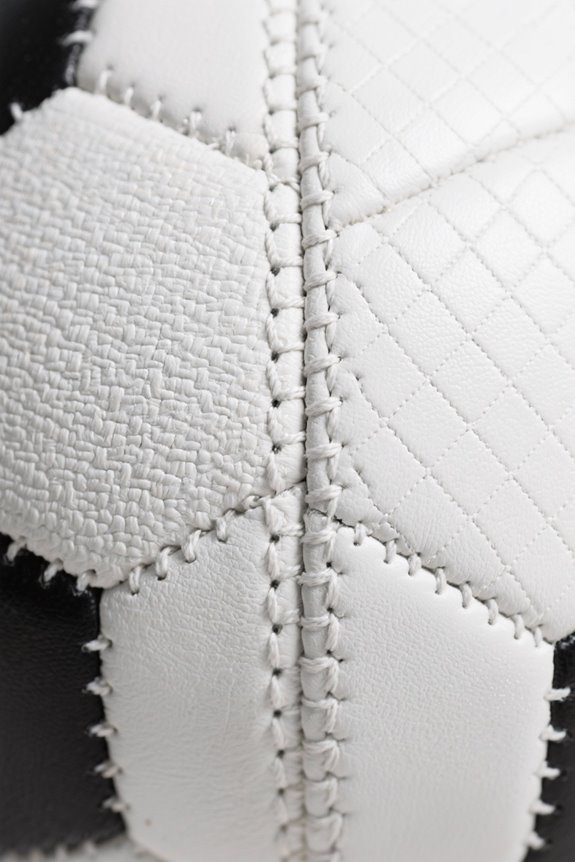
Durability and seam strength greatly impact the overall performance and longevity of soccer balls. Hand-stitched soccer balls feature tighter, deeper seams that enhance stitch durability, allowing them to withstand significant wear during play. The thick polyester threads used in hand stitching provide superior seam longevity, resulting in a product that typically has a longer lifespan. In contrast, machine-stitched balls have shallower seams that are more exposed, making them susceptible to stretching and tearing, leading to earlier seam failure. This construction difference often results in hand-stitched balls maintaining their shape and structural integrity longer, while machine-stitched options degrade more quickly. Ultimately, higher seam strength in hand-stitched balls contributes to better overall durability and performance, especially in intensive use scenarios. Additionally, the durable TPU materials used in high-quality futsal balls further enhance their resistance to wear and tear, making them suitable for rigorous play.
Water Resistance Features
Often overlooked in the dynamics of soccer ball performance, water resistance plays a significant role in how well a ball performs during wet conditions. Hand-stitched soccer balls typically experience higher water absorption due to deeper seams and thicker stitching, which create gaps allowing moisture to penetrate. This can result in increased weight and inconsistent flight patterns, especially if water retention is not managed. In contrast, machine-stitched balls feature shallower seams that reduce overall water penetration, yet they still struggle with seam performance, as moisture can accumulate in visible stitched areas. Both types require diligent maintenance to minimize water damage, but thermal bonded soccer balls remain the most effective at resisting water, offering superior performance in damp environments. Additionally, the use of moisture-wicking materials in certain soccer gear can help manage sweat and maintain performance even in wet conditions.
Impact on Ball Shape and Aerodynamics
The performance of soccer balls considerably hinges on their shape and aerodynamics, particularly influenced by the method of construction. Hand-stitched soccer balls typically maintain a more consistent spherical shape, thanks to tighter and stronger seams. These deeper seams reduce panel deformation, preserving the ball shape during play and over time. In contrast, machine-stitched balls may experience greater panel stretching, leading to irregularities that affect ball behavior, particularly in flight. The surface texture of hand-stitched balls is smoother, minimizing aerodynamic drag, while machine-stitched variations often result in rougher surfaces that increase air resistance. A smoother surface improves flight stability, essential for professional play, as any distortion can lead to unpredictable trajectories. Overall, stitching variations directly affect aerodynamic efficiency and shape retention. Additionally, the choice of high-quality materials in soccer balls can further enhance moisture management technology that contributes to better performance on the field.
Production Efficiency and Cost Analysis
While considering production methods, the efficiency and cost analysis of hand-stitched versus machine-stitched soccer balls reveal significant differences that impact manufacturing processes. Machine-stitched balls benefit from automation, resulting in higher production speed and lower labor costs, which collectively lower overall production expenses. This efficiency allows for mass production, leading to reduced unit prices as economies of scale take effect. Conversely, hand-stitched balls require skilled labor, resulting in slower production timelines and higher labor costs due to the piece-rate wage system. The manual method also raises the likelihood of inconsistencies, potentially leading to more defects and greater quality control costs. Ultimately, these cost implications suggest machine stitching is more advantageous for large-scale production, while hand stitching serves niche market segments. Additionally, the choice between hand-stitched and machine-stitched can influence players’ performance and satisfaction with their equipment.
Player Experience: Control and Feel
When comparing player experience, the choice between hand-stitched and machine-stitched soccer balls greatly influences control and feel during gameplay. Hand-stitched balls typically feature thicker materials that enhance weight, providing improved ball handling and responsiveness. The deeper seams of these balls protect the stitching, ensuring a consistent and flexible surface for better grip. Conversely, machine-stitched balls utilize thinner threads, leading to shallower seams that may diminish surface stability and tactile feedback. This can affect ball control, especially for experienced players who rely on subtlety. Additionally, hand-stitched balls better resist water absorption, maintaining a stable feel in wet conditions, while machine-stitched options may alter control dynamics when saturated. Overall, the construction type considerably impacts a player’s interaction with the ball. Balls with high-quality materials are essential for optimal performance and durability.
Performance Characteristics of Soccer Balls
Performance characteristics of soccer balls considerably impact gameplay, influencing factors such as accuracy, durability, and handling. Machine-stitched soccer balls typically offer enhanced accuracy and consistency in flight due to precise stitching, resulting in smoother trajectories. Additionally, the consistent shape of these balls improves aerodynamics, allowing them to travel further and faster during play. Conversely, hand-stitched balls may be more durable owing to deeper seams, but they can be heavier, which affects ball handling. Lighter machine-stitched models often facilitate easier control, especially for younger players. The materials used in both types are similar, yet their construction techniques can lead to different match performance outcomes, influencing how a player interacts with the ball during games. The durability of these balls is fortified by high-quality construction that resists wear from abrasive surfaces.
Professional Preferences: Hand-Stitched vs. Machine-Stitched
The preferences of professional players in soccer often reflect their needs for peak performance, particularly regarding ball construction. Hand-stitched soccer balls, known for their durability, use thicker polyester thread and deeper seams, offering superior wear resistance compared to machine-stitched alternatives. While machine-stitched balls are lighter and easier to handle for youth players, they do not meet the competition standards required by professionals. Many players favor hand-stitched balls for their tactile feedback and precise control during play. Historically, hand-stitched designs dominated professional matches, but the rise of other types has shifted some preferences. Regardless, the durability and performance characteristics of hand-stitched balls make them a preferred choice for training and serious competition among professionals seeking reliability on the field.
The Rise of Hybrid Soccer Balls
As soccer continues to evolve, hybrid soccer balls have emerged as a popular choice among players and coaches, blending the best features of hand-stitched and machine-stitched designs. Hybrid technology benefits from combining machine stitching and bonded panels, typically totaling 18 to 32, using materials like synthetic leather, genuine leather, or microfiber to enhance durability. This construction reduces water absorption, ensuring reliable performance in various weather conditions. Hybrid ball performance is characterized by superior grip, improved handling, and consistent sphericity, maintaining a maximum 1.8% deviation. The advanced construction also provides ideal rebound height, allowing for responsive play. Consequently, hybrid balls effectively support players in competitive and training scenarios, offering a reliable and versatile option on the field.
Innovations in Ball Stitching Technologies
Innovations in ball stitching technologies have evolved greatly to enhance the quality and performance of soccer balls. Machine stitching employs automated processes, ensuring faster production times and greater precision in seam depth, which appreciably improves ball performance. The uniformity provided by machine stitching results in better shape retention, allowing for aerodynamic advantages during play. Conversely, hand stitching offers flexibility but may introduce inconsistencies due to human error, affecting ball shape and handling. An emerging technique, thermal bonding, utilizes heat and pressure to fuse panels invisibly, creating superior seam strength and reduced water absorption. This minimizes risks of seam splitting, which in turn contributes to enhanced longevity and maintaining peak ball performance under various weather conditions.
Choosing the Right Ball for Your Needs
Selecting the right soccer ball requires careful consideration of various factors, including player skill level, playing conditions, and intended use. Player preferences often dictate the choice between hand-stitched and machine-stitched balls. Hand-stitched balls provide superior durability and control, making them suitable for older players focused on competitive performance. In contrast, machine-stitched balls offer lighter options, ideal for younger players developing their skills. The stitching techniques also play a critical role; hand-stitched balls utilize thicker materials that resist wear better than the finer stitches found in machine-stitched alternatives. Additionally, for wet conditions, thermally bonded balls may be advantageous due to enhanced water resistance. Ultimately, players should evaluate specific needs when selecting the appropriate soccer ball.
Frequently Asked Questions
Can I Repair a Damaged Soccer Ball Myself?
Yes, a damaged soccer ball can be repaired using DIY techniques. Basic repairs include using adhesive patches for small punctures or resewing seams with polyester thread, but some damage may require professional assistance for effective restoration.
How Do Weather Conditions Affect Ball Performance?
Weather conditions greatly impact ball performance, with temperature effects altering ball inflation and affecting flight, while rain creates slippery surfaces that hinder control. Consequently, players must adapt strategies to maintain effectiveness and reduce injury risk during matches.
What Should I Look for in a Youth Soccer Ball?
When selecting youth soccer balls, it’s essential to contemplate the appropriate ball size for the child’s age, material quality for durability, and construction type, ensuring an effective balance between performance and comfort during play.
How Often Should I Replace My Soccer Ball?
Soccer balls should generally be replaced every 2 to 3 matches for peak performance, while recreational use can extend ball longevity to one or two seasons, depending on maintenance and wear factors affecting replacement frequency.
Are There Eco-Friendly Options for Soccer Balls?
Eco-friendly options for soccer balls utilize sustainable materials, greatly reducing their environmental impact. These balls often feature biodegradable components, recycled materials, and ethical production practices, promoting sustainability while minimizing waste and chemical pollution in manufacturing processes.


