As an Amazon Associate, we earn from qualifying purchases. Some links on this site are affiliate links at no extra cost to you. Our recommendations are based on thorough research and editorial judgment.


What Makes Some Soccer Balls Better For Youth Development Training?

Soccer balls designed for youth development training are optimized for age-specific sizes and weights, enhancing skill acquisition. Size 3 balls, for ages 5-8, measure 23-24 inches and weigh 300-320 grams, facilitating basic skills. High-quality materials, like synthetic leather, offer durability and better touch. Enhanced control features, including textured surfaces, support precision during practice. Additionally, small-sided games encourage tactical awareness and physical fitness, ultimately fostering a deeper understanding of the game. More insights await those interested in thorough training enhancement.
Key Takeaways
- Properly sized and weighted soccer balls enhance player control and skill development, crucial for youth training sessions.
- High-quality materials, such as PU leather, improve durability and tactile feedback during practice.
- Optimized ball design promotes consistent performance and enhances touch accuracy for skill refinement.
- FIFA Quality Pro certification ensures soccer balls meet professional standards for reliability and performance in training.
- Smaller ball sizes facilitate easier manipulation, allowing younger players to focus on technique and control without injury risk.
Age-Appropriate Size and Weight
The selection of age-appropriate soccer ball sizes and weights is crucial for effective youth development training. Size 3 balls, recommended for children aged 5 to 8 years, measure 23-24 inches in circumference and weigh 300-320 grams, providing an ideal balance for small athletes to learn basic skills. Moving to size 4 balls, suited for ages 8 to 12, offers a circumference of 25-26 inches and a weight of 350-390 grams, enhancing youth engagement as players refine their abilities. For those aged 12 and older, size 5 balls, which are 27-28 inches in circumference and weigh 410-450 grams, match their physical capabilities. Correct ball selection encourages skill development while minimizing injury risk, supporting effective training experiences throughout youth sports participation. Additionally, using properly sized soccer balls enhances player control and technique, making practice sessions more productive.
Recommended Products

12 size 5 soccer balls, duffle ball bag and a ball hand pump provide everything you need to hit the soccer pitch for your next team practice

Team Pack of 12 Club DB soccer balls with duffle ball bag and hand pump

Team Pack of 8 Club DB soccer balls with duffle ball bag and hand pump
Material Quality and Durability

Material quality and durability play a significant role in the effectiveness of youth training sessions, building on the previous discussion regarding age-appropriate ball sizes and weights. High-quality materials, such as synthetic leather made from polyurethane (PU) or polyvinyl chloride (PVC), directly influence material performance. PU offers a softer touch for match balls, while PVC enhances durability for outdoor training. Additionally, the construction quality, including reinforced seams and sturdy bonding, increases longevity, particularly on abrasive surfaces. The bladder type also impacts responsiveness; latex provides superior bounce, while butyl retains air. Durable soccer balls reduce the need for frequent replacements, ensuring that young players engage consistently with reliable equipment, which is essential for effective skill development and safe practices. Furthermore, using high-quality construction in soccer balls helps to maintain their shape over time, providing a consistent playing experience.
Recommended Products

Classic Design: Traditional black & white panel design for a timeless look
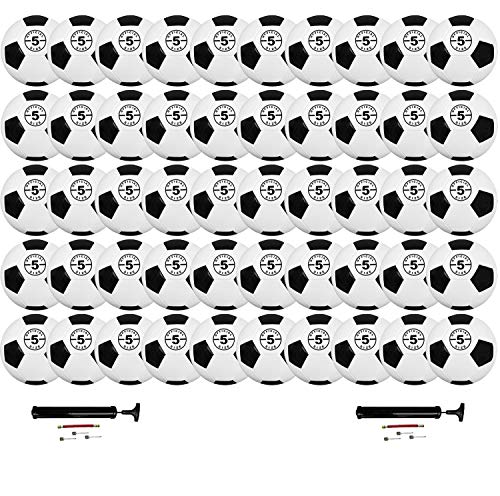
Includes: 50 - Size 5 Soccer balls, (2) premium hand pump, and inflation needles.

24 Pack Bulk Value for Teams and Schools:you will receive 24 brightly colored soccer balls, 1 soccer net bag, and 1 air pump. The ample quantity and reasonable combination can meet the needs of soccer training camps, school physical education classes, and soccer clubs for use and replacement.
Enhanced Control and Skill Development

Enhancing control and skill development in youth soccer hinges on the specifications of training balls used during practice sessions. Youth training balls, typically ranging from size 3 to size 4, facilitate easier ball manipulation appropriate for players aged under 12. Properly weighted balls enable improved touch accuracy, allowing players to focus on precise interactions without the distraction of excessive mass. Textured, softer surfaces provide better grip and tactile feedback, which enhances ball control during complex skills such as dribbling. Training balls designed with larger sweet spots promote clean strikes, further supporting consistent touch accuracy. Additionally, balls designed for reduced bounce and stable flight characteristics encourage predictable play, aiding young athletes in developing crucial control and skill execution. Choosing high-quality TPU materials ensures durability, enabling consistent performance during training sessions.
Recommended Products

Jugs Field General Football Machine throw accurately from 5 to 60 yards, allowing you to hit receivers in stride, running any route in playbook

Portable and easy to move

The Skill Attack Volleyball Machine elevates to a ball release point of 5 ft, 3 in.
Game Simulation and Tactical Awareness

Developing game simulation and tactical awareness in youth soccer players requires consistent exposure to realistic playing conditions. Engaging in small-sided games, such as 3v3 or 5v5, fosters high-pressure environments where tactical adaptability becomes essential. Players encounter various game scenarios that compel quick decision-making and enhance spatial awareness. Coaches teach specific formations, like 4-4-2 or 4-3-3, to clarify team roles and responsibilities. Observing professional matches and analyzing slow-motion replays improve players’ understanding of tactical concepts and formations. Additionally, reviewing game footage helps identify strengths and weaknesses, allowing targeted tactical education. These approaches cultivate a deeper soccer IQ, enabling youth players to anticipate opponent movements and respond appropriately during matches, ultimately enhancing their tactical understanding on the field. Incorporating vibrant soccer-themed designs into their training environment can also help keep young athletes motivated and engaged.
Recommended Products

【Professional-Grade Size Options】 This heavy-duty baseball and softball batting cage comes in a variety of sizes (20FT/35FT/55FT/70FT, etc), featuring reinforced, wear-resistant and corrosion-resistant cage nets and thickened steel pipes for support. It is suitable for backyard practice, baseball training and softball practice. Ideal for youth leagues, coaches, and serious players seeking a large, durable hitting cage.

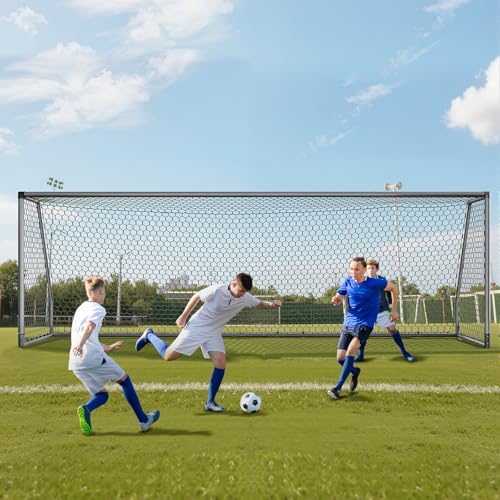
Perfect for Training & Match Prep: Available in multiple sizes, ideal for youth teams, clubs, schools, or adult practice, offering realistic dimensions for developing skills or match simulation
Physical Fitness and Injury Prevention

Youth soccer players benefit greatly from an all-encompassing approach to physical fitness and injury prevention. Regular soccer training considerably enhances cardiovascular fitness, improving essential metrics such as VO₂ max, heart rate, and stamina. Additionally, soccer promotes the development of important motor skills, including agility and coordination, which are essential for overall athletic performance. Effective injury management can be achieved through progressive, supervised training that emphasizes balanced training routines. Incorporating soccer-specific exercises strengthens key muscles around joints like knees and ankles, which reduces the risk of common injuries. Using appropriately sized soccer balls minimizes joint stress, promoting safe skill development. Collectively, these factors foster healthy, active lifestyles while ensuring young athletes remain physically prepared for the sport. Moreover, choosing soccer balls made from durable materials enhances their longevity and weather resistance, contributing to consistent performance during training sessions.
Psychological Benefits and Motivation
Engaging in soccer training offers substantial psychological benefits that contribute to overall youth development. The process of mastering new soccer skills leads to confidence building, as young players experience repeated successes that enhance their self-esteem. Achieving specific goals on the field fosters a growth mindset, motivating continual effort and improvement. This confidence gained in soccer also translates to improved emotional resilience in academic and social challenges outside the sport. Players learn to set personal and team goals, bolstering both motivation and perceived competence. Additionally, soccer offers valuable lessons in managing disappointment, teaching emotional regulation during high-pressure situations. Repeated exposure to setbacks encourages a constructive response to adversity, ultimately improving emotional well-being and reducing anxiety among youth participants. Furthermore, the anatomical fit of properly sized shin guards enhances players’ focus on skill development by ensuring safety during practice.
Responsive Design for Better Touch
When considering soccer training, responsive design markedly enhances players’ touch and control of the ball, which is essential for skill development. Soccer balls featuring advanced polyurethane covers and textured surfaces improve touch sensitivity, allowing for superior interaction between the player’s foot and the ball. Smaller sizes, such as size 3 or 4, enable youth players to practice with better control and feel. The responsive design includes consistent rebound responses, promoting accurate timing during drills. Additionally, multi-layer construction optimizes energy return, enhancing ball responsiveness and immediate feedback. This design allows players to quickly correct technique errors. By fostering a predictable trajectory and encouraging experimentation with various kicking powers, these thoughtfully crafted soccer balls enrich the overall training experience for young athletes. Moreover, using high-quality materials in soccer balls ensures durability and performance, further enhancing the training process.
Recommended Products


Superior Spin Detection: VST (Visual Spin Technology) uses color variance to allow easier spin detection and ball tracking

The speed cage inside is made of a thin but strong material that secures the foot to the plate without adding extra weight.
Facilitating Tactical and Technical Progression
Facilitating tactical and technical progression in soccer training relies on the precision of equipment used, particularly the soccer ball itself. Modern soccer balls, with their optimized flight paths and controlled surface textures, greatly improve tactical training. These balls enhance skill acquisition by providing players with consistent performance during drills. Standardized sizes and weights match players’ physical capabilities, allowing younger athletes to develop strength and control effectively. Additionally, durable materials guarantee longevity and consistent bounce, essential for replicating tactical scenarios. The engineering behind these soccer balls also facilitates better tactile feedback, enabling players to refine their touch and passing techniques. Overall, the quality of a soccer ball plays a pivotal role in fostering both tactical understanding and technical skills in youth training programs. Furthermore, using FIFA Quality Pro certification ensures that the balls meet professional standards for performance and durability.
Encouragement of Creativity and Experimentation
Creativity and experimentation are essential components in youth soccer training, providing players with opportunities to explore and develop their own unique playing styles. Unstructured play encourages creative autonomy by allowing athletes to experiment without strict rules, fostering independent problem-solving. Such open exploration promotes confidence as players attempt various techniques, exposing them to unpredictable game scenarios that enhance adaptability. Additionally, small-sided games introduce manageable constraints that stimulate inventive play, increasing ball touches and decision-making opportunities. Coaches cultivate creativity through divergent tactical thinking and balanced guidance, allowing youth to innovate within the game’s framework. Encouragement from coaches, combined with soccer balls designed for ideal ball control and sensitivity, enables young players to fully realize their creative potential on the field. Furthermore, using high-quality materials like PU leather in training balls enhances durability, ensuring that youth can engage in frequent practice without compromising performance.
Frequently Asked Questions
How Often Should Youth Soccer Balls Be Replaced?
Youth soccer balls should be replaced based on usage frequency and ball materials; typically, a quality ball lasts a season but may require earlier replacement if significant wear, shape distortion, or structural issues occur.
Are There Specific Brands Recommended for Youth Soccer Training?
Amidst the vibrant world of youth soccer, brands such as Adidas, Select, and Nike shine brightly. Their comparisons reveal distinct advantages and foster youth preferences, ultimately guiding young players towards skillful development and enjoyable training experiences.
What Age Groups Benefit Most From Size 3 or 4 Soccer Balls?
Children aged 5 to 8 benefit most from size 3 soccer balls, promoting foundational skill development. Size 4 balls serve ages 8 to 12, offering appropriate challenges that align with age appropriateness and growing physical abilities.
Can Using a Heavier Ball Support Muscle Development for Young Players?
Research indicates that using a heavier ball can increase muscle strength by up to 20% in youth players, supporting muscle growth. Appropriate ball weight challenges lower body muscles, enhancing performance while prioritizing safety and development during training.
How Do Weather Conditions Affect Soccer Ball Performance?
Weather conditions considerably affect soccer ball performance, as temperature effects influence elasticity, while humidity impact decreases accuracy. Moisture absorption alters weight and bounce, impacting gameplay dynamics, ultimately shaping players’ interactions with the ball during matches.


