As an Amazon Associate, we earn from qualifying purchases. Some links on this site are affiliate links at no extra cost to you. Our recommendations are based on thorough research and editorial judgment.


How To Properly Clean And Maintain Soccer Shin Guards?

To properly clean and maintain soccer shin guards, wipe them with a damp cloth or antibacterial wipe after each game. Hand wash them with lukewarm water and mild detergent, scrubbing for five minutes before rinsing thoroughly. Air dry shin guards flat for 8-12 hours in a well-ventilated space. Regularly inspect for visible damage, and store them in breathable bags to prevent moisture buildup. These practices will enhance their lifespan and hygiene—further insights on effective techniques await.
Key Takeaways
- Wipe shin guards with a damp cloth or antibacterial wipe after use to remove sweat and dirt effectively.
- Hand wash shin guards in lukewarm water using mild detergent and scrub with a soft brush for thorough cleaning.
- Rinse shin guards thoroughly to eliminate cleaning agents and ensure hygiene without damaging materials.
- Store shin guards in a cool, dry place using breathable bags, avoiding plastic to prevent moisture buildup and odors.
- Regularly inspect for damage, wear, and frayed straps to maintain safety and performance throughout the season.
Cleaning After Use
Cleaning soccer shin guards after use is essential for maintaining hygiene and prolonging their lifespan. Effective cleaning techniques begin with wiping the guards immediately after use with a damp cloth or antibacterial wipe, ensuring that dirt, grass, and sweat do not build up. Gentle motions should be applied, especially on custom designs, to protect the finish. Following this, a hand washing procedure involves soaking the guards in lukewarm water with mild detergent for five minutes. A soft brush is recommended for scrubbing, focusing on areas where sweat and dirt accumulate. Thorough rinsing is vital to avoid residue, as it can damage protective materials. Disinfectant sprays can then be applied to eradicate lingering bacteria and odors, enhancing cleanliness. Regular cleaning is crucial, as breathable materials help manage moisture and maintain comfort during gameplay.
Drying Techniques
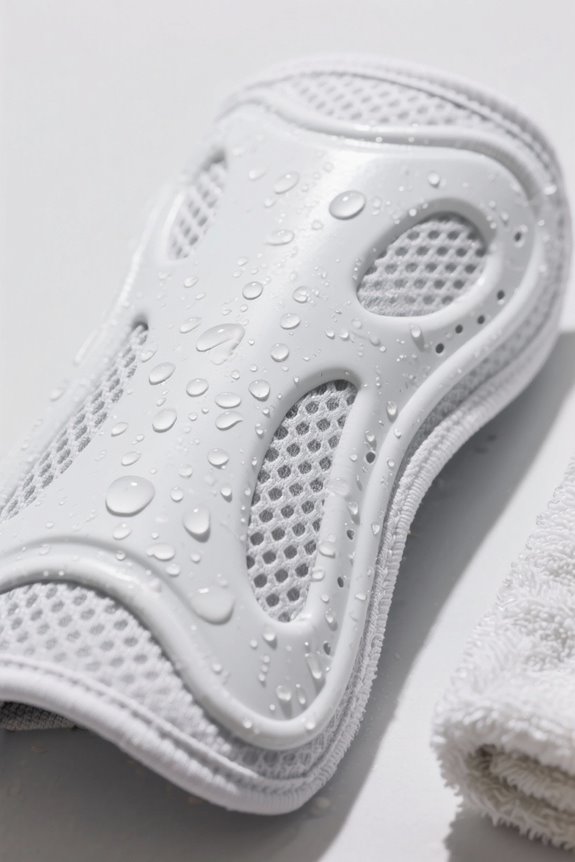
Proper drying techniques are essential for maintaining the integrity and performance of soccer shin guards after cleaning. To guarantee effective drying duration, shin guards should be laid flat in a well-ventilated area, allowing for maximum airflow. It is critical to avoid direct sunlight and any heat sources, as these can warp or damage materials. For best results, air drying should take at least 8–12 hours, ideally overnight. Separating straps and Velcro helps promote circulation, expediting the drying process. Using a drying rack prevents moisture entrapment, while placing a fan nearby can accelerate evaporation. To protect structure and color, never use mechanical dryers, as excessive heat can diminish padding effectiveness and overall guard lifespan. Additionally, selecting a breathable design can help prevent moisture buildup during play, further enhancing the longevity of the shin guards.
Regular Inspection and Maintenance

After drying, it is important to regularly inspect and maintain soccer shin guards to confirm they remain effective in protecting players. A thorough wear inspection evaluates the exterior for cracks or dents, which can hinder protective performance. Internally, check padding for wear indicators, like thinning or disintegration that compromises comfort and shock absorption. Additionally, assess straps and closures for fraying or loss of elasticity, as these prevent proper fitting. Material quality should also be monitored; regularly observe for brittleness in the plastic shell, as well as the integrity of stitching and bonding points. By conducting these inspections consistently, players can confirm their shin guards provide ideal safety and functionality throughout the season. Regular maintenance practices can enhance the lifespan of your shin guards, ensuring they continue to perform at their best.
Storage Recommendations

Storage recommendations play an essential role in maintaining the performance and longevity of soccer shin guards. To guarantee ideal condition, store them in a cool, dry area away from direct sunlight and heat sources to prevent warping and fading of materials. Utilizing breathable materials such as mesh sports bags allows for effective moisture management by promoting airflow, thereby reducing humidity. In humid environments, consider adding a dehumidifier or moisture absorbers to control excess moisture. For long-term storage, wrap shin guards in dry, soft cloth and combine them with desiccant packets in sealed bags to absorb residual moisture. Avoid plastic bags, as they trap moisture and may encourage mold growth, potentially degrading the shin guards’ quality over time. Additionally, ensuring proper moisture-wicking features helps maintain the integrity of the shin guards by preventing the buildup of sweat and bacteria.
Washing Methods and Frequency

Cleaning soccer shin guards regularly is crucial to maintain their hygiene and overall performance. Immediate post-use cleaning involves wiping down the guards with a damp cloth or antibacterial wipes to prevent dirt buildup. Every few weeks, a hand washing with mild detergent in lukewarm water is recommended, using soft brushes for gentle scrubbing. For deeper cleaning, soaking shin guards in a detergent-water mixture for 15 minutes is effective. Monthly machine washing may also be feasible for some models; however, it is important to use a gentle cycle and protective mesh bags to prevent damage. To guarantee longevity, avoid harsh chemicals, and always air dry shin guards to maintain their form. Regular maintenance optimizes both safety and durability, as cleaning and maintenance can significantly extend the life of your shin guards.
Odor and Bacteria Control
How can athletes effectively manage odor and bacteria in their soccer shin guards? Proper air drying after each use is essential, as it prevents moisture retention, a primary cause of bacterial growth. To enhance odor control, athletes may utilize odor-absorbing powders, such as baking soda or antifungal solutions, which effectively neutralize odors and inhibit bacterial development. Freezing methods present an alternative approach; placing shin guards in the freezer overnight can kill bacteria through extreme cold, rejuvenating the equipment. Athletes should also store shin guards in well-ventilated areas, avoiding enclosed environments that promote mold. Additionally, specialized deodorizing sprays can target odors and prolong freshness. These combined practices foster a healthier environment, reducing odors and extending the life of shin guards. Proper maintenance of shin guards is crucial to ensure their longevity and effectiveness in protecting players during matches.
Choosing the Right Cleaning Products
Selecting appropriate cleaning products is essential for the effective maintenance of soccer shin guards. Users should opt for mild detergents or gentle soaps that contain essential ingredients, ensuring they do not damage materials or adhesives. Antibacterial soaps provide an effective solution for removing bacteria without resorting to harsh chemicals. It is vital to avoid bleach and aggressive detergents, as these can degrade both plastic and fabric components. Eco-friendly options, such as sports gear-specific laundry detergents, can help maintain hygiene while being gentle on materials. For quick clean-ups, antibacterial wipes are useful. By choosing the right products carefully, athletes can maximize the longevity and effectiveness of their shin guards, promoting overall performance on the field. Additionally, ensuring that shin guards are made with breathable materials can enhance comfort during cleaning and wear.
Handling Stubborn Stains
Even with careful cleaning, stubborn stains can sometimes persist on soccer shin guards, necessitating targeted handling techniques for effective removal. Stain removal techniques begin with directly applying a suitable cleaning agent to the stained area, allowing it to soak for several minutes. Using a soft-bristled brush, the individual should gently scrub, focusing on the stain’s edges before moving inward. If the stain remains, reapply the cleaning solution and repeat the process. For deeper stains, soaking the affected area in lukewarm water mixed with mild detergent for 15–20 minutes may help. It is essential to rinse thoroughly to remove any residual cleaning agents, ensuring both hygiene and material integrity are preserved for ideal shin guard maintenance. Additionally, proper maintenance, including regular cleaning and appropriate storage, significantly enhances both glove longevity and grip performance.
Maintaining Velcro Straps
Maintaining Velcro straps on soccer shin guards is essential for ensuring both performance and safety during play. Regular inspection of Velcro is vital to identify issues such as fraying, loss of grip, or clogged hooks, which can impair functionality. To enhance Velcro longevity, players should prevent contact with dirt, mud, and excessive moisture. For cleaning, gently brush away surface debris using a dry toothbrush, avoiding disinfectant wipes that can damage the hooks. Hand washing straps in mild soap and lukewarm water, while ensuring thorough rinsing and complete air drying, also helps maintain hygiene. Additionally, ensuring that breathable fabrics are used in shin guard designs can improve overall comfort during play. Store shin guards with straps hanging loosely and fastened to prevent unnecessary wear, especially considering varying Velcro types and strap lengths used across different shin guards.
Signs It’s Time to Replace Your Shin Guards
Recognizing the signs that indicate a need for replacement is vital for ensuring player safety and performance on the field. Visible damage such as cracks, splits, or breaks in the plastic shell compromises protection and necessitates immediate replacement. Bent or misshapen guards may fail to properly distribute impact forces, increasing injury risk considerably. Additionally, wear indicators, including frayed straps or deteriorated padding, reduce the effectiveness of the guard even if the shell remains intact. Guards that slide during play indicate an inadequate fit, while persistent odors and signs of mold suggest hygiene issues. Regular inspections for cushioning foam compression or seam separation are important, as these factors can severely impair protective integrity and overall performance. It’s essential to replace shin guards regularly to maintain optimal protection and ensure that athletes are adequately shielded during intense play.
Tips for Extending the Lifespan of Shin Guards
To extend the lifespan of soccer shin guards, regular and proper maintenance is vital. Implementing preventive measures, such as gentle cleaning techniques, guarantees both hygiene and longevity. A mild soap mixed with lukewarm water is recommended for routine washing to prevent material degradation. Avoid using harsh chemicals, as these can weaken the structure, compromising protective functionality. Proper drying practices, like air drying in a well-ventilated space, further minimize damage. Additionally, awareness of material types guides players in selecting appropriate cleaning methods. Regular inspection for cracks or damage reveals maintenance needs early. By rotating the use of multiple shin guards, players reduce the strain on individual pairs, ultimately enhancing the overall lifespan of this essential equipment.
Frequently Asked Questions
Can I Use Bleach to Clean My Shin Guards?
Using bleach to clean shin guards is not advisable due to safety concerns. Instead, safer cleaning alternatives, such as mild soap or disinfectant sprays, effectively sanitize while preserving the materials and integrity of the equipment.
How Often Should I Replace My Shin Guards?
Shin guards typically require replacement every 1–3 seasons, with average lifespan depending on usage. Key replacement indicators include visible wear, damage, or reduced protective performance, needing regular inspection for safety assurance during games.
Are There Specific Brands Recommended for Cleaning Shin Guards?
Certain brands like Matguard and Nike provide recommended detergents and best cleaning methods for shin guards. Utilizing anti-bacterial soaps and mild detergents can enhance cleanliness while maintaining the integrity of various shin guard materials.
Can I Personalize My Shin Guards With Stickers or Decals?
Stickers and decals provide effective personalization options and customization techniques for shin guards, enhancing appeal and individuality. However, users should consider the potential risks, including damage and maintenance challenges, before applying these decorative elements.
What Should I Do if My Shin Guards Cause Skin Irritation?
When experiencing skin irritation from shin guards, remedies include ensuring a proper shin guard fit and applying topical corticosteroids. Discontinue use temporarily, maintain hygiene, and consult a dermatologist if symptoms persist or worsen.