As an Amazon Associate, we earn from qualifying purchases. Some links on this site are affiliate links at no extra cost to you. Our recommendations are based on thorough research and editorial judgment.


How Do Weather Conditions Affect Goalkeeper Glove Selection?

Weather conditions greatly affect goalkeeper glove selection. In wet weather, specialized materials like “Aqua” latex offer superior grip, with palm thickness around 4mm to balance grip and waterproofing. For dry climates, high-quality latex maintains grip and durability, preventing wear from friction and dust. The glove cut and fit also play a crucial role, influencing control and comfort. By understanding these factors, players can make informed choices for ideal performance during various conditions, which will be further explored.
Key Takeaways
- Wet conditions require gloves with specialized palm materials like “Aqua” latex for enhanced grip and moisture handling.
- In dry weather, high-quality latex palms are essential for maintaining grip and durability against friction and dust.
- All-weather gloves utilize advanced materials, ensuring effective performance in both wet and dry environments.
- The glove cut and fit significantly affect grip, comfort, and control, with negative cuts offering a snug fit.
- Durable latex variants ensure consistent grip and longevity, while thicker palms provide resistance against repeated impact.
Impact of Wet Weather on Glove Selection
When considering glove selection, wet weather plays a crucial role in determining the appropriate characteristics that enhance performance on the field. Specialized palm materials, particularly latex designed for wet conditions, offer superior wet grip compared to alternative materials. These latex variants, often termed “Aqua” latex, incorporate features for moisture absorption, enabling better ball contact during play. Palm thickness, usually around 4mm, balances grip and waterproofing effectively. The preferred glove cuts for wet weather, such as roll finger and negative cuts, minimize water pooling while providing a snug fit. Secure closure systems with elastic or Velcro straps guarantee stability, preventing slippage during intense actions. Overall, selecting gloves engineered for wet conditions greatly impacts a goalkeeper’s performance in rainy weather. Furthermore, roll finger designs increase catching area and improve touch for better grip responsiveness in wet conditions.
Recommended Products

PALM: innovative uhlsport AQUAGRIP combines Aqua additives with high-grip elements for an ultimate grip level in wet conditions.
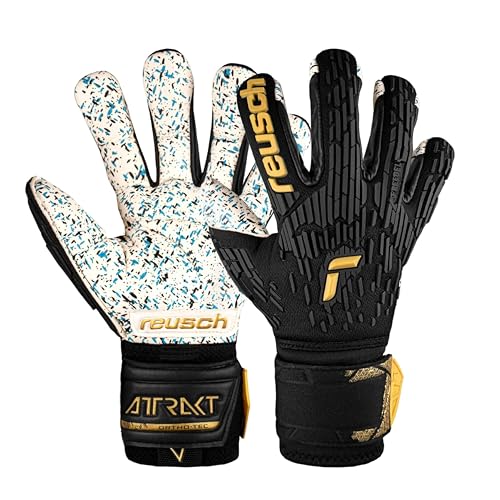
R-Grip Fusion latex palm offers maximum grip in all weather conditions

The ultimate grip, even in wet conditions!
Effects of Dry Weather and Hot Climate

Dry weather and hot climates present unique challenges for goalkeepers, necessitating specific glove selections that maximize performance. Gloves made with high-quality latex palms enhance grip retention and guarantee consistent performance in dry conditions. Durable latex, such as standard or hard-ground varieties, withstands increased friction and dust, contributing to palm durability. Goalkeepers should opt for various cut styles, like roll finger or negative cut, as they influence comfort and control. Additionally, breathable materials are essential for preventing overheating, assuring ventilation around the hand. Choosing gloves with secure wrist straps is vital to avoid slippage during dives. Overall, suitable glove selection in these conditions greatly impacts a goalkeeper’s ability to make critical saves effectively and safely. Furthermore, the quality of grip can vary between brands and models, making it essential to choose gloves that provide optimal performance in hot weather.
Recommended Products
R-Grip Fusion latex palm offers maximum grip in all weather conditions

SUPERGRIP+ is exactly what it says. High-performance foam with the ultimate grip.
Supergrip+: The colour-neutral natural latex, combined with adhesive particles specially developed by uhlsport, provides maximum grip and the best possible ball control in dry weather as well as top performance in wet weather conditions
Versatility of All-Weather Gloves

All-weather gloves are essential for goalkeepers who face varying weather conditions throughout a game. These gloves feature advanced performance features that enhance grip and control in wet and dry environments. Most all-weather gloves utilize specialized latex materials, including German Contact Latex, which provides durability and a strong grip. Technologies like All Conditions Control (ACC) maintain stickiness regardless of moisture or temperature, ensuring effective ball handling. Grip technologies such as GluePrint and Grip3 wrap around essential fingers to improve control. Additionally, the latex thickness is typically around 4mm, balancing cushioning with ball control. These versatile gloves are designed to endure harsh weather while minimizing slippage, making them a valuable asset for goalkeepers at any level. Proper maintenance, including regular cleaning and air drying away from direct sunlight, is crucial for extending the lifespan of these gloves.
Recommended Products

PALM: R-Grip Fusion Foam. This new latex offers the best grip in the reusch range. The fusion latex is sprinkled with hard ground and soft ground foam for greater grip and durability

GLUEPRINT TECHNOLOGY: The tackiness and grip get enhanced exactly in those zones where it is needed the most. The positioning of the ink follows a precise pattern that is designed to cover exactly those areas of the palm that get in most contact with the ball when catching

[ELITE+ DUAL GRIP LATEX] 4mm latex with extra sticky matter particles for excellent grip in all weather conditions
Importance of Glove Cut and Fit

How does the cut and fit of goalkeeper gloves impact performance on the field? The construction of gloves markedly affects a goalkeeper’s grip and control during play. For instance, negative cut gloves feature internal stitching that creates a snug fit, conforming closely to the fingers and enhancing tactile feedback. This precise fit is ideal for goalkeepers prioritizing ball responsiveness. However, tighter cuts may restrict finger movement, potentially impacting flexibility. In contrast, hybrid cuts offer a balance between snugness and flexibility, accommodating various hand shapes and fit preferences. Choosing the appropriate glove cut is vital as it not only influences comfort but also affects protection by evenly distributing ball impact. Hence, selecting the right fit directly correlates with overall performance and injury prevention. Furthermore, gloves with enhanced grip technology provide additional support during various weather conditions, ensuring optimal performance.
Recommended Products
SUPERGRIP+ is exactly what it says. High-performance foam with the ultimate grip.

Palm: Roche Grip Fusion Cut: Evolution Negative Cut; Cuff: Adaptive Flex Cuff; Functions: Ventilation Channel, Molded Structure, 3D Thumb Crotch, Thumb Wrap, AdaptiveFlex Closure System, Extended Grip Zones

The Duo technology with 3D latex dots on the inner side of the highly grippy and tacky palm foam prevent from any slipping of the hand and boost the tactility and impact absorption for maximized ball control.
Material Durability and Weather Resistance

Durability in goalkeeper gloves greatly influences their performance, particularly in challenging weather conditions. A well-constructed glove utilizes high-quality latex variants, such as German latex, to guarantee grip consistency. For wet conditions, Aqua and Contact latex excel, absorbing moisture and providing superior wet-weather grip without degrading quickly. Conversely, cheaper latex materials can wear out notably faster, particularly in harsh, muddy environments. To attain ideal latex performance, many gloves employ thicker, impact-resistant latex palms that withstand repeated stress. In addition, abrasion-resistant panels on the backhand enhance durability and integrity. Selecting goalkeeper gloves with balanced features allows keepers to maintain grip consistency and durability, regardless of the weather, guaranteeing effective performance throughout the season while managing moisture and wear. Furthermore, the right breathable materials can improve comfort during play, enabling goalkeepers to focus on their performance without distractions.
Recommended Products

UNMATCHED IMPACT PROTECTION: Features 3.5mm of high-grade, soft latex and 3mm of impact foam to ensure palm protection and superior grip; Includes a reinforced latex punch zone for advanced ball control

WELCOME TO THE PROS: You are your team's last line of defense; Excel as a teammate and player with specialized, roll-negative, hybrid-cut soccer goalkeeper gloves by Storelli; Includes premium mesh storage bag

[SUSTAINABLE DESIGN] These goalkeeper gloves are made with a blend of recycled and renewable materials, reducing their environmental impact.
Frequently Asked Questions
How Do Different Grip Patterns Affect Glove Performance in Various Conditions?
Research indicates that 70% of professional goalkeepers prefer gloves with advanced grip technology. Different grip patterns impact performance; roll finger cuts excel in wet conditions, emphasizing weather adaptability while balancing grip and durability for varied playing environments.
What Role Does Glove Weight Play in Goalkeeper Performance During Matches?
Glove weight greatly influences goalkeeper performance, as lighter materials enhance agility and quick reactions. Temperature impacts glove effectiveness; heavier gloves may provide insulation in cold, but can hinder overall mobility and performance during matches.
How Often Should Goalkeepers Replace Their Gloves Based on Weather Conditions?
Like a delicate flower succumbing to harsh storms, goalkeeper gloves suffer from weather impact, necessitating replacement every two weeks in wet conditions, while dry environments may extend glove longevity to three to four months with proper care.
Are There Specific Maintenance Tips for Prolonging Glove Life in Wet Weather?
Wet weather maintenance emphasizes immediate cleaning to prevent damage, proper drying techniques to avoid mold growth, and using gloves designed for moisture absorption. Following these practices can considerably prolong glove life during wet conditions.
Can Wearing Gloves Cause Hand Injuries Under Extreme Weather Conditions?
Wearing gloves can indeed contribute to hand injuries under extreme weather conditions, particularly through heat stress in high temperatures and an increased frostbite risk in cold environments, emphasizing the necessity for appropriate glove choices and fit.


