As an Amazon Associate, we earn from qualifying purchases. Some links on this site are affiliate links at no extra cost to you. Our recommendations are based on thorough research and editorial judgment.


What Size Goalkeeper Gloves Provide The Best Fit?

The best fit for goalkeeper gloves depends on accurate hand measurements. Measure hand length from the palm base to the longest finger, and also measure the circumference at the widest part. Most gloves should fit snugly but not too tightly, ideally with a gap of 1/4 to 1/2 inch beyond the fingertips. Different brands vary in sizing; consequently, consulting specific size charts is essential. Proper fit enhances grip and control, leading to better performance on the field. Further details on glove types and adjustments await.
Key Takeaways
- Measure hand length and circumference accurately, rounding up for comfort and flexibility to ensure a better fit.
- Consult specific brand size charts as sizing can vary significantly among different manufacturers.
- A snug fit reduces excess material, enhancing grip quality while preventing slipping and discomfort during play.
- Choose the appropriate glove cut based on personal preference for tighter or looser fits, affecting comfort and mobility.
- Regularly re-measure youth athletes due to their growth, ensuring continued proper fitting for optimal performance.
Understanding Hand Measurements for Glove Sizing
When selecting goalkeeper gloves, understanding hand measurements is essential for achieving a suitable fit. Proper hand measurement techniques involve checking both hand length and circumference. For hand length, one should measure from the base of the palm to the tip of the middle finger, using measuring tools options like a tape measure, ruler, or string. It is advisable to round up measurements to make sure gloves won’t feel too tight. Measuring circumference involves wrapping a flexible tape measure below the knuckles, excluding the thumb, to capture the widest part of the palm. This thorough approach guarantees comfort, allowing the selection of gloves that accommodate varying finger lengths while providing sufficient space beyond the fingertips for peak performance during play. Additionally, selecting a slightly larger size can improve coverage without losing control, ensuring a snug fit that boosts grip efficiency and comfort during extended use.
Interpreting Size Charts and Hand Dimensions

Interpreting size charts effectively is crucial for selecting the right goalkeeper gloves, as each brand may have unique sizing metrics. Most size charts rely on either hand circumference or hand length from the palm’s base to the middle finger tip. Accurate measurements should be taken while the hand is relaxed, avoiding clenched positions to guarantee reliable sizing. Size values are usually provided in centimeters and inches, with common sizes ranging from 4 to 12. For ideal goalkeeper performance, some brands suggest rounding up to the next size for additional comfort. Understanding these dimensions and how they correspond to glove material helps players enhance grip and control while preventing discomfort during play, making sure that gloves fit snugly without being overly tight. Additionally, choosing gloves made from durable materials can further improve performance and longevity on the field.
Recommended Practices for Glove Sizing

Choosing the correct size for goalkeeper gloves is crucial, as it directly impacts performance and comfort during play. Proper glove compatibility relies on accurate measurements. Players should measure their hand length and circumference carefully, rounding up to the next whole inch before adding approximately one inch for comfort. A gap of 1/4 to 1/2 inch beyond the fingertips guarantees both tightness and movement flexibility, while sizing myths often mislead players into choosing gloves that are either too tight or too loose. Additionally, players must consider features like finger protection, which can affect the initial fit and sizing. Ultimately, following these recommended practices fosters a balance between control, performance, and protective comfort in goalkeeper gloves. Choosing gloves with strong adhesive can enhance finger protection and overall performance during gameplay.
Brand-Specific Sizing Differences

Variations exist among different brands concerning goalkeeper glove sizing, which can affect how players select their gloves. Brand comparisons reveal notable differences, such as Adidas gloves typically running true to size but feeling slightly snug. Renegade GK, in contrast, offers gloves that generally run smaller, designed for a tighter initial fit. Keeperstop advises rounding up the size based on hand length, emphasizing variability across brands. N1 gloves suggest going up a size if measurements fall on the upper limit, while T1TAN utilizes a Size Finder tool to guarantee precision. This sizing variability necessitates players consult specific brand sizing charts to find the best fit for their unique hand dimensions, accommodating the diverse glove options available on the market. Additionally, choosing gloves with high-quality latex can further enhance performance and comfort during play.
Importance of Proper Fit for Goalkeepers
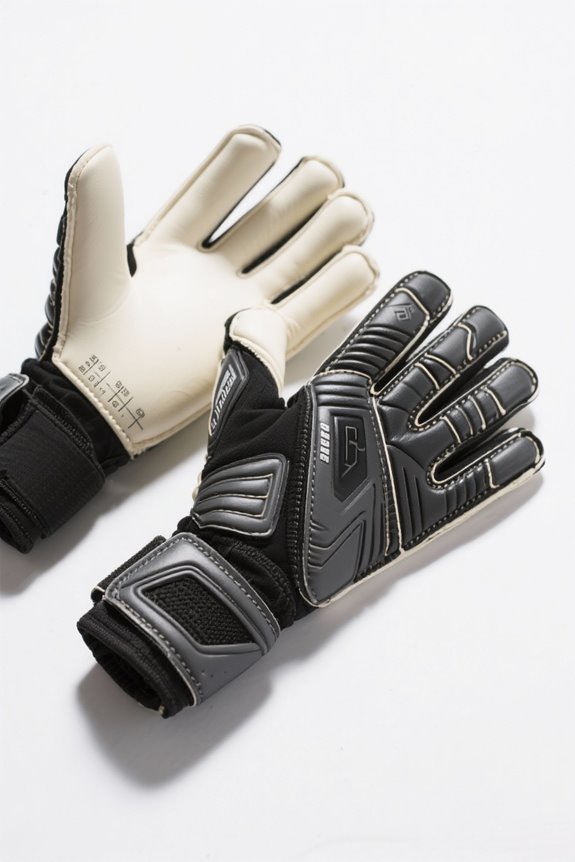
Proper fit is essential for goalkeepers, as it directly impacts their performance and safety on the field. Properly fitting gloves enhance handling and accuracy, allowing quicker reactions during high-speed saves. Goalkeeper glove technology incorporates materials durability, ensuring gloves withstand the rigors of play while providing adequate protection against common injuries. Gloves that fit snugly minimize excess material, which can interfere with grip and control, maximizing save success. An accurate fit prevents slipping and reduces the risk of blisters or discomfort from overly large gloves. In addition, correctly sized gloves support mobility and comfort, enabling a full range of motion, which is critical for effective response to shots. Hence, proper fit is fundamental to a goalkeeper’s efficiency and safety. Additionally, a well-fitted glove enhances grip quality which is crucial for successful ball control and saves.
Effects of Glove Fit on Performance and Control
The fit of goalkeeper gloves considerably influences a player’s performance and control on the field. Properly fitted gloves improve grip variations and enhance overall ball handling by guaranteeing a snug fit that reduces slippage. This increased sensitivity allows for more precise catches, punches, and distributions, which directly impacts game effectiveness. Additionally, well-fitted gloves align padding over vulnerable areas, aiding in injury prevention by reducing risks such as hyperextension or sprains. Conversely, gloves that are either too loose or overly tight can limit movement and flexibility, impairing quick reactions during play. Consequently, the right fit not only optimizes grip and ball control but also guarantees maximum protection against potential hand injuries. Ultimately, a proper fit is essential for a goalkeeper’s confidence and performance. Furthermore, similar to how resistance bands improve warm-up routines, the right gloves can enhance a goalkeeper’s readiness for game situations.
How to Measure Your Hand for Gloves
How can a goalkeeper accurately measure their hand for glove fitting? Using proper hand measurement techniques guarantees a precise fit. First, measure from the tip of the middle finger to the base of the palm, assuring the hand is fully extended and flat. To measure circumference, wrap a flexible tape measure around the widest part of the hand, excluding the thumb, while keeping the hand relaxed. It is important to take measurements from the dominant hand, as size may vary slightly. When making glove fitting adjustments, consider rounding up measurements to avoid a tight fit. Small gaps at the fingertips can enhance performance, while different brands may emphasize length or circumference differently, necessitating consultation of brand-specific charts. Additionally, ergonomic designs in goalkeeper gloves can significantly improve comfort and performance during play.
Rounding Up Measurements: When and Why
When should a goalkeeper consider rounding up their measurements for glove fitting? Rounding techniques are recommended when a goalkeeper’s hand falls between sizes, particularly regarding length measurements from the palm base to the fingertip. It is typically advised to add 0.5 to 1 size for a comfortable fit. This practice accommodates variations in hand width and finger length that measurements may not capture. Sizing guidelines suggest that gloves should offer 1/4″ to 1/2″ of fingertip clearance, ensuring comfort and easy movement. Rounding up aids in performance by allowing flexibility, while avoiding excessive looseness that could hinder control. Additionally, goalkeepers using gloves with finger spines benefit from a slightly larger fit during the initial break-in period. Choosing gloves with a snug fit ensures better control and reduces the risk of blisters during play.
Considerations for Youth Glove Sizing
Selecting the right size for youth goalkeeper gloves requires careful consideration of various factors, as accurate fitting directly impacts performance on the field. Youth glove materials play a significant role in comfort and flexibility; therefore, selecting the right fit is crucial. To achieve ideal sizing practices, one must measure hand length from the base of the palm to the tip of the longest finger, and hand width at the widest part. As youth athletes grow quickly, frequent re-measurement is necessary. Generally, youth gloves range from 4.5 to 5.5 inches in hand length and should allow for a slight overhang of approximately 1/4” to 1/2” beyond the fingertips for comfort. Always consult brand-specific sizing charts to guarantee the best fit. Additionally, considering features like enhanced grip can further improve a young goalkeeper’s performance and confidence on the field.
The Role of Glove Cuts in Sizing Choices
The choice of glove cut greatly influences the sizing decisions that goalkeepers must navigate when selecting their gloves. Each cut type offers distinct benefits that directly impact fit preference. For instance, Negative cut gloves provide a snug fit, ideal for those seeking minimum excess material for enhanced ball feel and control. Conversely, Roll Finger cuts, known for their external stitching, accommodate wider hands and generally support a looser fit. Flat Palm cuts excel in offering maximum finger mobility, appealing to beginners or those desiring a broader fit. Hybrid cuts blend these characteristics, allowing goalkeepers to customize their sizing according to their specific needs. Therefore, understanding the impact of cut types on fit is essential for achieving the best performance and comfort. Additionally, finger protection materials play a crucial role in ensuring safety and enhancing overall glove performance during gameplay.
Navigating Online Purchases Without Try-Ons
Maneuvering online purchases for goalkeeper gloves poses challenges, particularly when fitting without the benefit of physical try-ons. When engaging in online shopping, players must accurately measure their hands, focusing on the length from the palm to the middle fingertip and the circumference just below the knuckles. Rounding up to the next size can prevent tight fits. Additionally, variability in brand sizing charts adds to sizing hurdles; therefore, consulting specific size charts is crucial. Users should also consider printing digital measuring tools for accuracy. To alleviate concerns about incorrect sizing, selecting brands with flexible return policies can enhance confidence when purchasing. Ultimately, precise measurements and awareness of individual brand differences are important in achieving a suitable fit.
Tips for Break-In Period and Comfort Adjustments
When breaking in goalkeeper gloves, players should understand that the process is vital for achieving ideal comfort and performance. To enhance glove flexibility, players can gently bend and flex the fingers, focusing on the sides to create a proper closure. An additional method involves taping the fingers around a softball for several days, allowing the gloves to shape naturally. Furthermore, moisture management is essential; wetting gloves before use improves grip and protects against abrasion on various surfaces. Regular cleaning after play helps maintain the gloves’ condition, promoting durability. Finally, storing gloves in breathable bags prevents odor buildup and preserves their shape, further enhancing comfort and overall glove performance over time.
Frequently Asked Questions
How Often Should I Replace My Goalkeeper Gloves?
Top professional goalkeepers change gloves every 3 to 4 games, highlighting the importance of glove lifespan. For amateurs, performance decline typically becomes noticeable every 3 to 4 months, demanding timely replacements to maintain peak function.
Can I Wash My Gloves Without Damaging Them?
Washing techniques for goalkeeper gloves should involve lukewarm water and specialized washes. Proper glove drying entails air drying in a cool, shaded area, avoiding direct sunlight, to preserve latex quality and extend glove lifespan.
What Should I Do if My Gloves Smell Bad?
To combat unpleasant odors, utilize glove deodorizing techniques, such as applying natural odor eliminators like diluted rubbing alcohol or antimicrobial sprays. Regular washing and thorough drying also contribute greatly to odor prevention and glove longevity.
Are Finger Spines Worth the Extra Cost?
The 75% of goalkeepers reported fewer injuries using finger spines justifies their extra cost. By enhancing finger protection, these spines offer significant benefits, including improved confidence and reduced injury risk, making them worthwhile for many players.
How Do I Know if My Gloves Are Too Tight?
To determine if gloves are too tight, one should conduct a fit assessment alongside a comfort evaluation. Key indicators include pinched fingers, redness after removal, and difficulty in hand movements during play.


