As an Amazon Associate, we earn from qualifying purchases. Some links on this site are affiliate links at no extra cost to you. Our recommendations are based on thorough research and editorial judgment.


Why Are Spring Loaded Rebounders More Effective For Skill Development?

Spring-loaded rebounders enhance skill development through their unique design that facilitates muscle strength, coordination, and cardiovascular efficiency. The dynamic movements activate fast-twitch muscle fibers, improve balance, and guarantee low-impact exercise, particularly beneficial for joints. This training method engages stabilizer muscles, fostering better proprioception and spatial awareness. Additionally, the fun atmosphere created promotes sustained participation, which is essential for skill retention. Understanding these benefits underscores the effectiveness of rebounders in various physical training contexts.
Key Takeaways
- Spring-loaded rebounders activate stabilizer muscles, enhancing coordination and balance essential for skill development during physical activities.
- The unpredictable motion of rebounders improves proprioceptive feedback, fostering body awareness and movement control crucial for skill acquisition.
- Rebounding promotes dynamic stabilization, allowing for rapid adjustments that enhance reaction times and motor performance in skill-centric tasks.
- The low-impact design of rebounders reduces joint stress, enabling continuous practice without discomfort, which aids consistent skill development.
- Engaging and enjoyable environments created by rebounders motivate participants, increasing adherence and fostering a positive atmosphere for skill learning.
Enhanced Muscle Strength for Skill Acquisition
Enhanced muscle strength is essential for effective skill acquisition, as it directly impacts athletic performance and physical activity. Trampoline-based plyometric training has shown significant muscle fiber adaptation, leading to rapid gains in muscle mass and explosive power in both young and older adults. The fascicle length of the vastus lateralis muscle increases by 6–8% after structured training, indicating a physiological change that enhances strength training progression. Increased pennation angle post-training correlates with improved force production, particularly in older participants. Additionally, rebounding utilizes fast-twitch muscle fibers, critical for skills that require speed and agility. The multi-directional demands of bouncing activate full-body musculature, leading to balanced strength development and improved dynamic balance, essential for executing various athletic skills effectively. Incorporating moisture management technology in training gear can further enhance performance by keeping athletes comfortable during intense workouts.
Recommended Products

MEDICINE BALL REBOUNDER TRAINER – Designed for explosive strength training, this medicine ball rebounder supports overhead throws, sit-up tosses, core drills, and dynamic rebound exercises.

Reduces impact on joints & muscles by up to 80%

BUTTON LOCKING SYSTEM: Features a high-quality button locking system for easy assembly, increased strength, and superior resistance against ball impacts.
Improved Cardiovascular and Metabolic Efficiency for Endurance Skills

Engaging with spring-loaded rebounders greatly enhances cardiovascular and metabolic efficiency, which is essential for developing endurance skills. Rebounding elevates heart rates to moderate-to-vigorous intensity, often reaching about 76.5% of maximum heart rate. This higher intensity improves aerobic conditioning and contributes to significant metabolic adaptation. Research shows that rebounding engages the heart and lungs more effectively than traditional exercises, leading to a higher caloric burn rate. Specifically, rebounding burns 68% more calories than jogging in the same timeframe. Enhanced oxygen uptake during rebounding strengthens respiratory systems, facilitating longer durations of activity. Consequently, this increased cardiovascular demand supports improved endurance, helping athletes to perform sustained aerobic exercises while maintaining lower perceived exertion levels, ultimately leading to better overall fitness. Additionally, incorporating tools like agility ladders can further enhance training by improving coordination and speed, complementing the endurance benefits gained from rebounding.
Superior Balance and Coordination Development

Spring-loaded rebounders play a vital role in the development of superior balance and coordination, as they require constant adjustments to maintain stability during dynamic activity. These devices activate stabilizer muscles around the ankles, knees, hips, and spine, enhancing balance dynamics through micro-adjustments. Such engagement is superior to static drills, reinforcing core and lower limb strength that is fundamental for coordination nuances. Additionally, the unpredictable motion of rebounders heightens proprioceptive feedback, improving body awareness and joint position sense. This continuous destabilization challenges postural stability systems, cultivating a refined ability to adapt during complex movements. Consequently, spring-loaded rebounders are integral for fostering both static and dynamic balance, essential for effective skill performance in various sports and daily activities. Moreover, using heavy-duty rubber bases can further enhance safety and stability during training sessions.
Recommended Products

Patented Bungee Suspension instead of hard steel springs: Our unique technology, developed over 20 years, provides a smooth and silent bounce. Every movement is gentle on your joints and spine.
Patented bungee ring suspension instead of hard steel springs: Our unique technology, developed over 20 years, provides a smooth and silent bounce. Every movement is gentle on your joints and spine.

Patented bungee suspension instead of hard steel springs: Our unique technology, developed over 20 years, provides a smooth and silent bounce. Every movement is gentle on your joints and spine.
Joint-Friendly Design for Skill Practice

When considering joint protection in skill practice, the design of modern rebounders markedly contributes to user safety and performance. Spring rebounders utilize elastic surfaces and steel springs that effectively absorb impacts, reducing joint stress compared to traditional hard surfaces. This feature supports low-impact exercise regimens, facilitating continuous joint motion with minimized mechanical stress, which is essential for joint-friendly skill practice. The consistent bounce enhances skill refinement, allowing users to develop precise timing and coordination. High durability and structural stability from the robust spring frames guarantee reliable performance over time, maintaining joint alignment during repeated use. Additional safety features, such as non-slip surfaces and padded edges, further protect vulnerable joints while promoting safe, effective skill drills. Furthermore, the versatility of adjustable angles in rebounders allows users to target specific skills, catering to various training needs.
Recommended Products

Patented Bungee Suspension instead of hard steel springs: Our unique technology, developed over 20 years, provides a smooth and silent bounce. Every movement is gentle on your joints and spine.

Patented bungee suspension instead of hard steel springs: Our unique technology, developed over 20 years, provides a smooth and silent bounce. Every movement is gentle on your joints and spine.
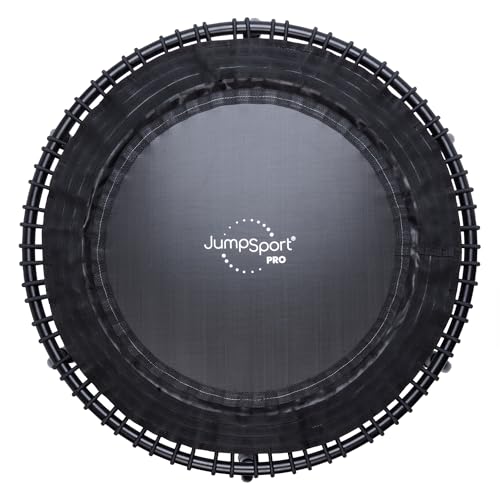
LONG-LASTING VERSATILE HOME GYM. 44" steel frame and legs, backed by a lifetime warranty, offers a long-lasting versatile platform uniquely designed to make fitness fun and accessible at home.
Boosting Motor Performance Through Rebounding

Rebounding substantially boosts motor performance by targeting coordination and proprioceptive development through its unique physical dynamics. The mini-trampoline’s design elicits rapid neuromuscular responses, contributing to enhanced motor skill development that exceeds static training methods. Continuous bouncing promotes dynamic stabilization, as the body’s muscles engage in constant micro-adjustments on an unstable surface, improving balance and coordination. This unique activity heightens proprioceptive awareness, allowing for better spatial orientation during complex movements. Additionally, the extensive muscle engagement from rebound exercises builds functional strength across major muscle groups while minimizing joint stress. As a result, the improvements in coordination and body control provide transferable skills applicable to other sports and physical activities, facilitating overall athletic performance enhancement and injury reduction. Furthermore, engaging in activities that require proper fit in athletic gear can significantly amplify the benefits gained from rebound training.
Psychological Benefits Supporting Skill Learning
Engagement in physical activities, such as rebounding, greatly influences psychological well-being and skill acquisition. Rebounding effectively enhances emotional regulation by releasing neurotransmitters like endorphins and serotonin, promoting positive moods that notably reduce stress and anxiety. This improvement fosters psychological resilience, which supports individuals in facing challenges during skill learning. Increased enjoyment derived from rebounding encourages consistent practice, essential for mastering new skills. Additionally, the stimulating impact of rhythmic bouncing contributes to heightened cognitive engagement, enabling improved concentration and mental clarity. Such mental states lead to greater cognitive flexibility, enhancing an individual’s capacity to absorb and apply new information effectively, consequently creating an encouraging environment for skill acquisition and personal growth. The use of moisture-wicking materials in athletic gear can further enhance comfort during physical activities, contributing to overall performance and enjoyment.
Rehabilitation and Injury Prevention Through Rebounding
Although often overlooked in traditional rehabilitation methods, spring-loaded rebounders offer significant benefits for injury prevention and recovery processes. The low-impact design of these rebounders absorbs most of the impact forces, thereby reducing stress on the spine and joints during rehabilitation exercises. This feature makes rebounders suitable for individuals with chronic musculoskeletal conditions, such as arthritis. Rebounding effectively strengthens the muscles and ligaments surrounding key joints, enhancing joint stability and reducing the risk of re-injury. Additionally, studies indicate that regular use of rebounders can improve dynamic balance and functional mobility, which are essential injury prevention techniques. Overall, incorporating rebounders into rehabilitation programs may facilitate improved recovery outcomes while promoting safe, effective exercise options for diverse populations. Furthermore, their adjustable angles allow for versatile training, accommodating various rehabilitation exercises tailored to individual needs.
Recommended Products

Patented bungee ring suspension instead of hard steel springs: Our unique technology, developed over 20 years, provides a smooth and silent bounce. Every movement is gentle on your joints and spine.

SILENT, LOW-IMPACT MINI TRAMPOLINE FOR ADULTS: Premium mega-strong bungee rebounder system with 60 connectors, twice as many as most rebounders, that ensures a gentle, joint-friendly bounce. Supports lymphatic drainage, muscle toning, and better posture for home workouts, rehab, and holistic fitness.

UNMATCHED COMFORT AND SUPPORT: Experience the optimized performance of the Maximus PRO Bungee Rebounder, offering a unique soft bounce for joint-friendly exercise. Our mini trampoline reduces impact, protects your knees, and supports up to 400lbs, making it ideal for people concerned about joint stress but eager to stay active and fit indoors.
Effective Engagement in Skill-Centric Activities
Skill-centric activities, particularly those utilizing spring-loaded rebounders, foster significant development in motor skills and physical capabilities across various age groups. Engaging in rebounding enhances skill engagement, as participants perform movements that require quick reaction and balance. The dynamic environment of the rebounder challenges users to execute rapid, powerful hip flexion and extension cycles, facilitating improved coordination. In addition, the variety of exercises—such as twisting and side-to-side movements—maintains activity focus by targeting a broad range of motor skills. As users adapt to varying levels of challenge, they develop not only muscle strength and endurance but also balance and stability. This integrative approach ultimately supports thorough motor performance, making spring-loaded rebounders a versatile tool for skill development. Furthermore, studies suggest that adjustable angles on rebounders can significantly enhance training by simulating real-game scenarios.
Recommended Products

SILENT, LOW-IMPACT MINI TRAMPOLINE FOR ADULTS: Premium Mega-Strong bungee rebounder system with 72 connectors, twice as many as most rebounders, for a gentle, joint-friendly bounce. Extra-large mat (87cm/34”) and 120cm/48” frame improve balance, coordination, core strength, joint stability, muscle tone, and bone density.
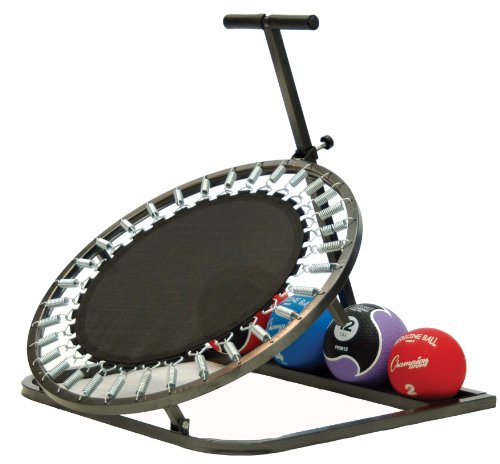
28" diameter multi-purpose rebounder is perfect for medicine ball beginner and rehabilitation exercises

Low-Impact, Joint-Friendly Rebounding: Built with natural latex bungee cords, each cord contains 160+ latex filaments and has passed 100,000 jump durability tests. With 3× stretch and up to 60% less impact, it delivers a softer landing and smoother, more comfortable fitness experience
Long-Term Adherence to Skill Development Programs
How can organizations guarantee long-term adherence to skill development programs? Organizations must demonstrate long-term commitment by allocating sufficient resources, typically up to 11% of their budget, to training initiatives. They should integrate continuous learning within the workplace, as 68% of employees prefer training in their work environment. This approach fosters skill retention and engagement, which correlates with improved job satisfaction and retention rates. Significantly, 94% of employees would remain longer at organizations investing in their development. Additionally, companies should employ formal evaluations to assess training effectiveness, focusing on measurable outcomes rather than participation alone. This strategy enhances accountability, encouraging sustained participation in skill development efforts and ensuring that employees recognize the value of ongoing learning in their careers. Moreover, incorporating soccer training aids can significantly enhance skill development and performance.
Transference of Skills to Daily Activities
The transference of skills acquired through rebounding exercises to daily activities is a critical aspect of neuromuscular coordination and motor learning. Rebounding enhances balance, coordination, and core strength, necessary for effective skill integration in daily tasks. The exercises stimulate the vestibular system, allowing individuals to make continuous micro-adjustments that improve stability while walking, climbing stairs, or manipulating objects. Additionally, improved lower limb strength from rebounding reduces the risk of injury during functional activities. Enhanced cardiovascular fitness promotes endurance, enabling individuals to sustain energy levels during prolonged tasks. Overall, these adaptations lead to functional adaptability, fostering a seamless shift of skills from rebound training to the demands of everyday life, resulting in increased efficiency and safety in all physical activities. Moreover, compression socks can further enhance performance by providing targeted support and improving blood circulation during such activities.
Fun and Enjoyable Learning Environment
Creating a fun and enjoyable learning environment during rebounding sessions greatly enhances participant engagement and motivation. The playful atmosphere of rebounding workouts shifts the experience from traditional, often tedious, exercise routines to lively, enjoyable movement that encourages participation. Even participants who initially feel reluctant frequently engage, thanks to the “happy bubble effect,” where laughter and elevated mood become noticeable. This emotional engagement markedly contributes to adherence. Although formal studies on participation rates are lacking, anecdotal evidence supports that perceived exertion remains low during rebounding, despite moderate-to-vigorous intensity. Consequently, participants are more likely to engage in longer and frequent workouts, as competitive or negative moods tend to soften, fostering a sense of camaraderie and team spirit among participants.
Frequently Asked Questions
What Age Groups Can Benefit From Spring-Loaded Rebounders?
Approximately 80% of youth athletes experience injury risks in traditional sports. Spring-loaded rebounders benefit various age groups, fostering age-appropriate skill acquisition, enhancing developmental benefits, and promoting coordination and strength without the high impact of conventional exercises.
Are Rebounders Effective for Athletic Skill Development?
Rebounders are effective for athletic skill development, offering numerous rebounder benefits that enhance strength, coordination, and endurance. Regular use promotes skill acquisition, leading to improved performance in various sports while minimizing the risk of injuries.
How Does Rebounding Compare to Traditional Workouts for Skill Learning?
Rebounding benefits include enhanced neuromuscular efficiency and coordination, considerably outperforming traditional workouts for skill learning. The workout comparison highlights improved balance and proprioceptive response, leading to superior skill acquisition and motor performance over conventional exercise methods.
Can Rebounders Enhance Cognitive Skills During Training?
Rebounders can indeed enhance cognitive skills during training, promoting cognitive enhancement and mental agility. Engaging in rebounding exercises stimulates neural pathways, improving memory and concentration while fostering better balance and coordination in athletes of all ages.
What Safety Measures Should I Consider When Using a Rebounder?
Before each jump, like a tightrope walker inspecting their rope, users must prioritize safety by conducting equipment inspections, ensuring surface stability, following guidelines, and performing regular rebounder maintenance to prevent injuries and enhance their overall experience.


