As an Amazon Associate, we earn from qualifying purchases. Some links on this site are affiliate links at no extra cost to you. Our recommendations are based on thorough research and editorial judgment.


Why Do Some Goalkeepers Prefer Removable Finger Protection?

Some goalkeepers prefer removable finger protection because it enhances safety while promoting customization. The finger spines within the gloves prevent hyperextension, allowing forward movement that safeguards against injuries. They can modify glove stiffness by removing or reinserting spines, providing flexibility during training. This tailored approach boosts psychological confidence, enabling keepers to make instinctive saves without hesitation. Ultimately, the benefits of injury prevention and enhanced performance lead many to favor this innovative design. Further details reveal even more advantages.
Key Takeaways
- Removable finger protection allows goalkeepers to customize glove stiffness based on their play style for optimal flexibility and dexterity.
- Enhanced safety from spines reduces injury risk by preventing hyperextension and minimizing cumulative finger damage over time.
- Goalkeepers experience increased confidence, enabling them to commit fully to challenging saves without hesitation.
- Customizable finger protection adjusts to various training intensities and match conditions, optimizing performance while ensuring comfort.
- The technology supports longevity by reducing chronic issues and recovery time, enabling goalkeepers to sustain their careers.
Injury Prevention and Enhanced Safety
Effective injury prevention is essential for goalkeepers, and removable finger protection serves as an important mechanism in safeguarding against finger injuries. This technology incorporates plastic spines into goalkeeper gloves, which stiffen against backward bending under pressure impact, preventing hyperextension. By allowing forward movement, the spines protect against injuries like sprains and fractures during high-impact events, such as shots and diving. Risk assessment becomes key, as these spines can be selectively applied to fingers based on previous injuries. The removable nature of the spines allows goalkeepers to adjust their protection level according to the intensity of play or training sessions. Consequently, the implementation of this protective gear not only minimizes injury risk, but also enhances safety and performance in goalkeeping. Moreover, the integration of Fingersave spines is particularly beneficial for goalkeepers seeking to reduce injury susceptibility while maintaining flexibility.
Customization for Optimal Flexibility

Customization in goalkeeper gloves is essential for achieving ideal flexibility, enabling goalkeepers to adapt their finger protection according to their play style and specific demands of the game. This adaptive design allows athletes to modify glove stiffness by removing or reinserting finger spines, creating a balance between support and mobility. For instance, goalkeepers can increase flexibility during lighter training sessions for enhanced finger dexterity while depending on sturdier protection in high-impact scenarios. Additionally, tailor-made adjustments accommodate various playing positions, aligning with player preferences for roles like sweeper-keeper. This flexibility guarantees that goalkeepers can experiment without a permanent commitment, refining their finger support according to evolving tactical requirements and comfort levels. Custom designs ultimately optimize overall performance on the field. Moreover, finger protection systems are crucial for ensuring safety during matches, further enhancing the importance of this customization.
Boosting Confidence and On-Field Performance
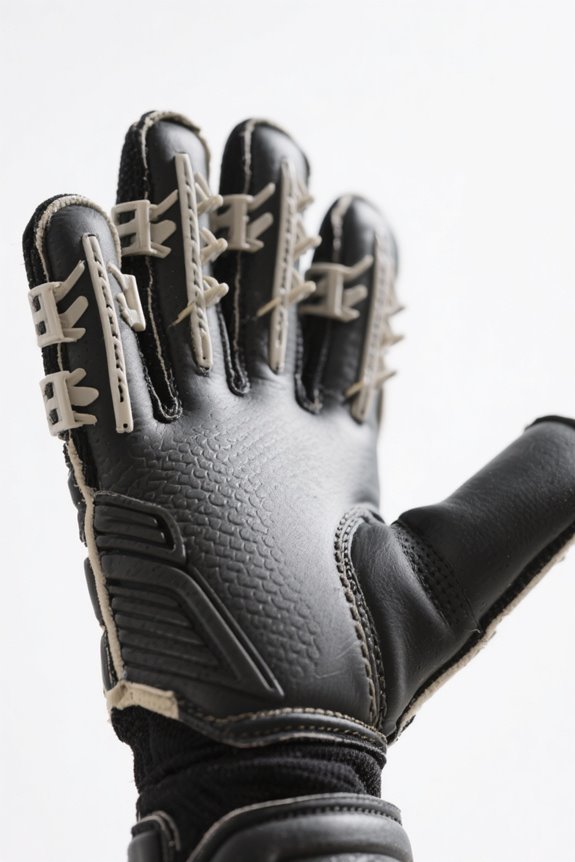
Boosting confidence is crucial for goalkeepers, as it directly influences their on-field performance. When goalkeepers utilize removable finger protection, they experience psychological security, which alleviates anxiety about finger injuries during saves. This increased confidence allows them to fully commit to challenging catches or punches without hesitation.
Moreover, reliable protection leads to faster reflex activation and improved decision-making on the pitch, enabling goalkeepers to focus on positioning rather than potential injury. Studies show that trust in their gloves considerably increases the frequency of instinctive saves. By customizing their protective gear, goalkeepers can balance safety and comfort to enhance psychological readiness, which is essential in high-pressure moments, such as penalty shootouts, ultimately optimizing their on-field effectiveness. Additionally, using gear that provides durable protection can further enhance a goalkeeper’s confidence during intense gameplay.
Extending Career Longevity for Goalkeepers

While finger protection considerably contributes to the safety of goalkeepers, it also plays an essential role in extending their careers. Regular use of protective technology limits cumulative finger damage, a key factor in age-related performance. Seasoned keepers who experience chronic finger issues find that this protection reduces exacerbations, allowing continued participation at elevated levels. Additionally, fewer acute injuries translate into less missed game time and decreased downtime from rehabilitation. Enhanced recovery from matches occurs due to reduced post-match soreness and inflammation. As a result, the longevity of a goalkeeper’s career is supported by maintaining hand functionality, while also decreasing the risk of chronic injuries that can hinder performance over time. This combination guarantees sustainable success in goalkeeping. Moreover, gloves designed with Backbone finger save systems provide an extra layer of protection, further safeguarding goalkeepers from potential injuries.
Suitability for Different Age Groups in Goalkeeping
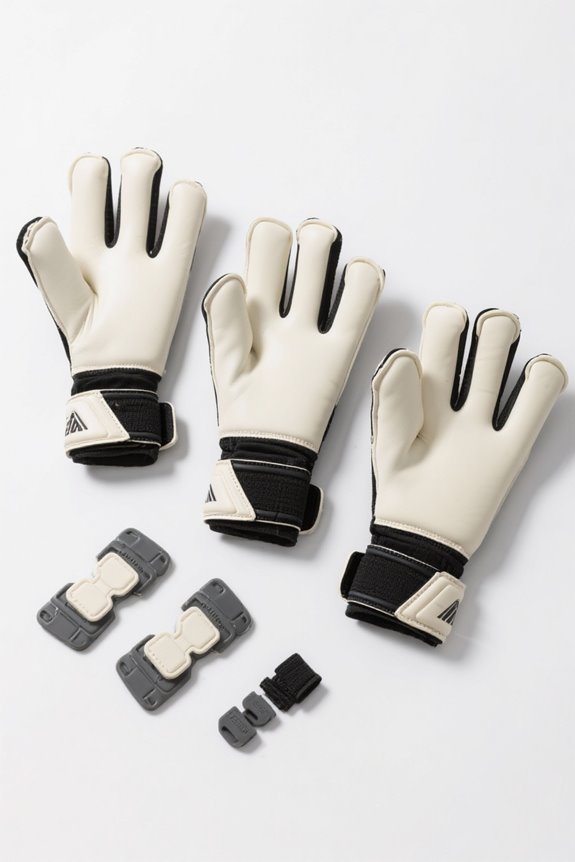
Suitability for different age groups in goalkeeping involves understanding the specific needs and developmental stages of players. Young goalkeepers under age 12 generally do not require finger protection, as shot speeds are lower, reducing the risk of hyperextension. Age specific recommendations advise against using finger spines, which may limit natural finger strengthening essential for proper catching technique. Over time, reliance on spines could lead to improper habits, increasing injury risk. For older youth and adult keepers, finger protection becomes increasingly relevant due to higher-impact shots that can cause injury. The progressive introduction of finger protection is suggested after foundational skills and finger strength have developed, emphasizing training technique implications for effective skill acquisition and long-term safety in goalkeeping. Additionally, understanding the importance of durability and material selection is vital as it directly impacts the effectiveness and longevity of the gloves used during training.
Achieving a Balance Between Protection and Comfort
Achieving a balance between protection and comfort is essential for goalkeepers, as both elements greatly impact performance and safety on the field. Removable finger protection systems allow goalkeepers to customize their gloves, enhancing finger flexibility while maintaining a natural grip. These systems feature plastic spines that prevent hyperextension yet permit forward movement, vital for effective catching and throwing. By selectively adding or removing spines, goalkeepers can reduce stiffness, improving comfort without sacrificing protection. This adaptability becomes particularly beneficial during training or recovery from injuries, allowing individuals to gradually regain full range of motion. Ultimately, effective glove customization aids goalkeepers in optimizing performance across different match conditions while ensuring that both protection and comfort are prioritized. Additionally, utilizing high-quality finger tape options can further enhance support and minimize injury risks during play.
Frequently Asked Questions
How Do Removable Finger Spines Affect Grip Strength During Play?
Removable finger spines enhance grip stability by preventing hyperextension, yet restrict finger flexibility. This can limit natural grip strength during play, impacting a goalkeeper’s ability to catch the ball effectively, particularly under pressure.
Can Removable Finger Protection Be Adjusted Mid-Game?
Removable finger protection can be adjusted mid-game, though practical constraints often limit this. Effective finger adjustment techniques enhance on-field usability, allowing goalkeepers to manage performance-related needs, but require careful handling to avoid compromising safety and integrity.
Are There Specific Brands Known for Quality Finger Protection?
Certain brands, such as Storelli, Reusch, and Uhlsport, are well-known for quality finger protection. Brand comparisons highlight their superior material quality, innovative designs, and tailored features, enhancing goalkeeper performance and maximizing finger safety during play.
How Do Weather Conditions Influence the Choice of Finger Protection?
How do weather conditions shape the selection of finger protection? Weather adaptability becomes essential, as temperature implications affect glove stiffness and flexibility, prompting goalkeepers to choose removable options based on varying environmental conditions for ideal performance and comfort.
What Are the Cost Differences Between Protective and Non-Protective Gloves?
The cost comparison between protective and non-protective gloves reveals protective options ranging from $45 to $180, focusing on grip and safety, while non-protective gloves are typically cheaper, emphasizing glove durability but sacrificing some performance.


