As an Amazon Associate, we earn from qualifying purchases. Some links on this site are affiliate links at no extra cost to you. Our recommendations are based on thorough research and editorial judgment.


Why Do Professional Goalkeepers Use Different Gloves For Training?

Professional goalkeepers utilize different gloves for training to enhance durability and reduce costs. Training gloves are crafted from tougher materials, allowing them to withstand the intense wear of practice sessions on various surfaces. They are generally priced under $50, making them more accessible for frequent use. Additionally, these gloves promote grip development and refine catching techniques. Understanding glove characteristics, including grip and design, is essential for peak performance in matches, revealing deeper insights into glove selection.
Key Takeaways
- Professional goalkeepers use training gloves for their durability, allowing them to withstand intense practice conditions without wearing down quickly.
- Training gloves are cost-effective, priced under $50, which is advantageous for frequent use and reduces replacement frequency.
- Training gloves prioritize tough latex for durability, while match gloves focus on superior ball control, making them suitable for different settings.
- Effective glove rotation between training and match gloves enhances grip quality and prolongs the lifespan of premium match gloves.
- Training gloves simulate harsh conditions, preparing goalkeepers for better adaptability during real-game situations while refining grip and technique.
The Importance of Durability in Training Gloves
Durability is a crucial factor when selecting training gloves for professional goalkeepers, as it directly impacts their performance and safety during practice sessions. The choice of material greatly affects glove longevity, especially regarding synthetic turf, which increases wear patterns due to high abrasion. Gloves made from premium German latex enhance grip and resilience, but their effectiveness diminishes without proper maintenance, such as regular cleaning. Goalkeepers must also consider their training surfaces; mud and dirt can degrade latex if left uncleaned. Reinforced padding and ergonomic designs extend the life of gloves by minimizing damage from ground interactions. Additionally, rotating gloves during training mitigates continuous stress, ensuring maximum durability and performance in varying conditions. Proper care practices are essential for achieving the best glove longevity. Furthermore, understanding visibility and color options in equipment can also play a role in a goalie’s training effectiveness.
Cost Efficiency of Training Gloves
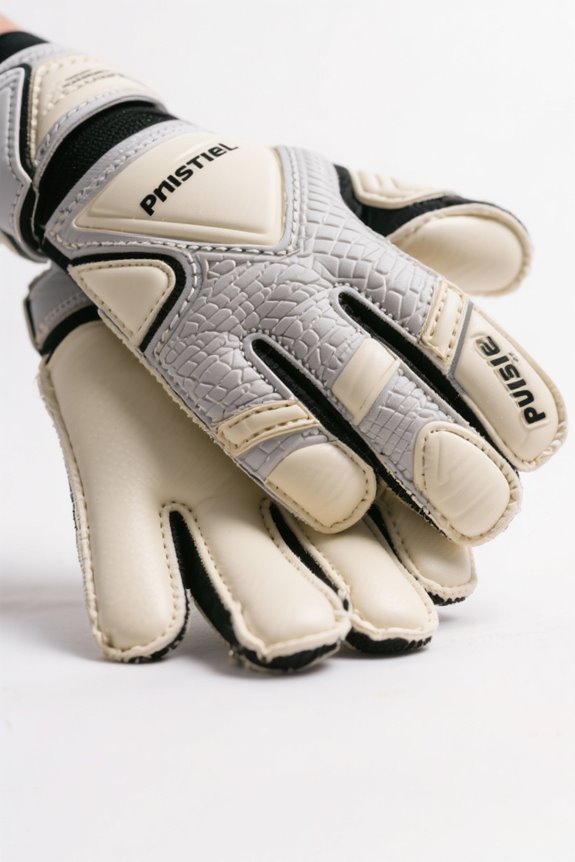
Although training gloves are often less expensive than match gloves, they offer significant cost efficiency for professional goalkeepers during practice sessions. Training glove affordability stems from using durable synthetic materials instead of premium latex. This design allows for a lower price point, often under $50, while maintaining satisfactory grip and durability. These gloves endure repetitive impacts better than match gloves, leading to less frequent replacements. By using training gloves, goalkeepers protect their investment in high-performance match gear. Additionally, brands like T1TAN provide quality gloves at lower prices, supporting cost-effective performance for budget-conscious athletes. Overall, utilizing training gloves effectively reduces overall glove expenditures and extends the lifespan of more expensive match gloves, optimizing performance without financial strain. Furthermore, durability factors in gloves are crucial for ensuring that training gloves withstand the rigors of practice.
Developing Grip and Technique

Developing grip and technique is essential for goalkeepers aiming for excellence in their position. Training gloves often use latex types like Super Soft, which promote grip enhancement without excessive tack. This less sticky material allows goalkeepers to improve their ball handling abilities without becoming overly reliant on grip. Roll finger glove designs provide a secure fit, aiding hand positioning and reinforcing proper technique refinement. By using training gloves with moderate grip, goalkeepers can focus on hand-eye coordination and catching mechanics, reducing the chances of compensating for errors. Additionally, the ergonomic features of training gloves offer tactile feedback, strengthening neuromuscular conditioning for precise ball control, essential in various weather conditions, ultimately enabling goalkeepers to adapt their techniques effectively. Moreover, the use of advanced latex palms ensures excellent grip in varied weather conditions, enhancing overall performance during training.
Training Gloves vs. Match Gloves: A Comparative Analysis

When comparing training gloves to match gloves, multiple factors influence their respective functionalities and purposes. Training gloves prioritize durability; they are constructed with tougher, denser latex to endure intense practice sessions. This material performance resists wear from dirt and turf better than softer match gloves, which, while offering ideal grip during games, wear down quickly under heavy use. Goalkeepers often select training gloves designed for specific weather conditions to maintain grip and durability. Conversely, match gloves provide superior ball control but feature less protective layering, impacting longevity. The cost difference is notable; training gloves are more affordable and intended for frequent use, while match gloves are high-performance gear, utilized selectively to maximize their effectiveness in competitive environments. Additionally, proper sizing is crucial for achieving optimal grip and control, especially in training scenarios.
Understanding Glove Cuts and Fits

Understanding the various glove cuts is essential for goalkeepers, as it directly impacts their performance and comfort on the field. Each cut offers a different fit and glove flexibility, catering to individual fit preferences. Negative cut gloves, with internal stitching, provide a snug fit that enhances ball control, making them ideal for precise catches. Roll finger gloves wrap latex around the fingers, offering improved grip and a touch of padding. Flat cut gloves offer a looser fit, allowing for greater flexibility but compromising some control. Hybrid cuts merge characteristics of multiple styles, balancing comfort and performance. Goalkeepers must choose a glove cut that aligns with their playing style, as each cut uniquely affects grip, comfort, and durability during training. Additionally, selecting gloves with enhanced grip technology can significantly improve a goalkeeper’s ability to catch and control the ball under various conditions.
The Role of Finger Protection in Training
Frequently, finger protection plays an essential role in a goalkeeper’s training regimen, serving primarily to prevent injuries from high-impact ball strikes. Gloves equipped with modular protection systems enhance finger injury prevention by utilizing durable materials, such as embedded polyurethane spines that limit hyperextension. When the ball strikes one or two fingers, excessive stress can lead to sprains or fractures; protection systems mitigate these risks effectively. Many gloves feature removable spines, allowing for customization based on individual training needs and injury histories. Goalkeepers can adjust the rigidity of finger supports according to their training intensity. This adaptability enables them to practice more confidently, appreciably reducing cumulative stress on fingers during routine training sessions. Enhanced safety fosters improved skill development. Additionally, using gloves with reinforced spines contributes significantly to a goalkeeper’s overall safety and performance during training.
Palm Materials: Balancing Durability and Grip
Goalkeepers must carefully choose palm materials in their training gloves to find the right balance between durability and grip, as these factors greatly impact performance. Training palm materials like soft natural latex provide excellent grip in dry conditions but wear out quickly. Meanwhile, hard-wearing latex is more durable, suitable for rough surfaces, but offers slightly less grip. Silicone palms deliver impressive durability and grip, although their performance diminishes in wet conditions. Some gloves use low-grip designs, like the ANTIgrip technology, allowing goalkeepers to focus on improving ball-handling techniques. By prioritizing durability in training gloves, professionals preserve their game gloves for competitive situations where superior grip performance is essential. This strategic selection enhances skill development while ensuring longevity in equipment, particularly when utilizing options like high-quality latex that can withstand rigorous training sessions.
The Impact of Thickness on Performance
Thickness considerably influences the performance characteristics of professional goalkeepers’ training gloves. The thickness trade-offs are critical, as increased padding enhances impact absorption for injuries while improving ball control after powerful shots. However, overly thick gloves may reduce grip sensitivity, impairing a goalkeeper’s tactile feedback. Ideally, a moderate thickness of around 3-4mm offers a balance, maintaining grip quality and ball feel. Thicker palms can improve performance in harsher weather by retaining more latex and enhancing stickiness. Training gloves are specifically designed to withstand repetitive contact, prioritizing protection over maximum tactile sensation. Consequently, goalkeepers must find the right thickness that provides adequate grip and comfort while ensuring durability and safety during intense training drills. The selection of gloves should consider performance factors that can affect a goalkeeper’s effectiveness on the field.
Practical Considerations for Goalkeeper Training
Effective training for goalkeepers requires careful consideration of various factors, particularly when selecting training gloves. The choice of gloves considerably influences glove technology and training techniques. Training gloves, designed for durability, withstand harsh surfaces, unlike match gloves, which prioritize grip. This durability extends the lifespan of expensive match gloves. Training techniques may incorporate gloves with reduced grip, fostering adaptability to various ball control scenarios. Goals such as strength-building lead to selecting heavier gloves, while lighter gloves enhance speed in drills. In addition, training gloves offer comfort with adjustable features, focusing on fit and breathability. Proper maintenance is facilitated by their robust materials, allowing frequent cleaning without damage. Ultimately, these practical considerations optimize training effectiveness and enhance performance for goalkeepers. Additionally, gloves with breathable materials ensure comfort during prolonged use, further supporting effective training sessions.
Glove Rotation Strategies for Goalkeepers
Selecting the appropriate glove rotation strategies considerably enhances the overall performance and equipment longevity for goalkeepers. Effective glove rotation prevents premature wear and tear by guaranteeing that match gloves, typically made from softer latex, are not subjected to the rigors of training sessions. This prolongs their life, allowing for long-lasting performance during actual games. Incorporating training gloves designed for durability creates a barrier against degradation, while having a third pair available guarantees readiness for unforeseen circumstances. Additionally, systematically alternating gloves allows sufficient drying and recovery time, helping maintain grip quality and prevent odors. Ultimately, employing a thoughtful glove rotation strategy enhances both financial efficiency and technical skill development, guaranteeing goalkeepers maximize their investment in quality gear. Durable goalkeeper gloves offer reliable performance for both training and matches.
Simulating Match Conditions in Training
Simulating match conditions during training is essential for goalkeepers seeking to enhance their performance and adaptability in real-game scenarios. Training gloves are designed with durability in mind, using latex that withstands frequent use while providing sufficient grip for typical conditions. In contrast, match gloves feature premium latex with superior tackiness for controlling the ball during varying weather conditions. The use of different cuts in training gloves helps goalkeepers mimic the hand shapes and catching techniques required in an actual match. This variation promotes muscle memory and emotional readiness, allowing goalkeepers to adapt their mindset and responses during high-pressure situations. By prioritizing environmental realism, goalkeepers can effectively prepare for the rigors of competitive play while preserving the integrity of their match gloves.
Enhancing Skill Development Through Training Gloves
While training gloves serve a practical purpose in goalkeeper development, they are also crucial tools for enhancing skill acquisition. The use of reduced grip gloves encourages players to refine their catching techniques through concentrated hand positioning and control. This focus on skill retention is essential for goalkeepers, as it builds consistent mechanics transferable to match conditions. Incorporating glove customization, such as varying latex density and palm cut, allows for tailored training experiences, supporting the development of ball feel and control. Additionally, the durable materials used in training gloves withstand repetitive use, ensuring prolonged sessions do not compromise skill focus. Ultimately, these gloves serve to cultivate fundamental techniques while protecting goalkeepers from injury during intense training activities.
Budgeting for Goalkeeper Equipment
Budgeting for goalkeeper equipment requires careful consideration of various factors that contribute to the overall cost. Goalkeeper gloves, vital for performance, vary greatly in price based on technology and materials, which impacts budget limits. Additional padded clothing, shin guards, and specialized soccer boots add to the total expenses. Beginners may find entry-level gear suitable, allowing for financial management without excessive spending. Moreover, seeking used equipment helps reduce costs while maintaining usability. Prioritizing essential equipment and planning purchases based on wear facilitates more effective equipment maintenance. Balancing quality and cost is important, as this guarantees longevity and performance efficiency, minimizing the need for frequent replacements and supporting both training and competition readiness within established budgets.
The Impact of Glove Choice on Performance
Choosing the right goalkeeper gloves greatly influences on-field performance, impacting grip, control, and overall effectiveness during both training and matches. High-performance latex, such as Giga Grip, provides significant grip enhancement, ensuring reliable catches in varied weather conditions. Gloves designed for training often focus on durability, using harder latex compounds, which sacrifice some grip but prolong lifespan. The glove mechanics, including the cut type—negative cuts for precision, roll finger cuts for surface grip, and flat cuts for comfort—further affect performance. A well-fitted glove optimizes ball control, reducing slippage during plays. Fundamentally, the choice of gloves must align with the specific demands of the situation, whether prioritizing grip in matches or durability during practice.
Frequently Asked Questions
How Often Should I Replace My Training Gloves?
Professional goalkeepers may replace training gloves every two weeks due to intense usage. Training glove durability hinges on factors like glove grip technology and proper care, impacting their longevity and performance in practice sessions.
Can I Use Match Gloves for Training Purposes?
Using match gloves for training compromises match glove durability due to their premium latex focus. Training glove features, like enhanced protection and thicker palms, are better suited for repetitive practice, extending their lifespan and effectiveness in daily sessions.
What Size Gloves Do Professional Goalkeepers Prefer?
Professional goalkeepers typically prefer glove sizes between 9 and 11, balancing fit preference with grip technology. A snug fit guarantees control, while advanced materials enhance protection, demonstrating a delicate interplay between comfort and performance during play.
Are There Specific Brands Known for Training Gloves?
Several brands are renowned for training gloves, highlighting essential training glove features like durability and grip, while encouraging proper goalkeeper glove care to enhance longevity. Popular choices include Reusch, Nike, Storelli, and West Coast Goalkeeping.
How Do Weather Conditions Affect Glove Performance?
How do weather effects influence grip variations? Inclement weather diminishes glove performance by altering latex properties, impacting flexibility and tackiness. Conversely, dry conditions enhance grip, leading to diverse glove designs for peak performance in varying environments.


