As an Amazon Associate, we earn from qualifying purchases. Some links on this site are affiliate links at no extra cost to you. Our recommendations are based on thorough research and editorial judgment.

Why Do Indoor And Outdoor Soccer Balls Have Different Construction?

Indoor and outdoor soccer balls have different constructions to enhance performance in their respective environments. Outdoor balls are size 5, with a circumference of 68-70 cm and weight 410-450 grams, while indoor balls are size 4, measuring 62-66 cm and weighing 400-440 grams. Materials also vary; outdoor balls use durable synthetic leather, while indoor balls employ softer felt fabric for control. These specific design choices affect bounce, handling, and overall gameplay dynamics, leading to tailored experiences for players. Explore further to uncover additional insights.
Key Takeaways
- Outdoor soccer balls are larger and heavier, providing better aerodynamics and stability for long-distance play in varied weather conditions.
- Indoor soccer balls are designed with softer materials and lower bounce to enhance control and precision on smooth surfaces.
- The construction of outdoor balls uses durable materials like premium PU, while indoor balls feature felt fabric for better grip and maneuverability.
- Indoor balls are inflated to lower pressure, promoting controlled touches, whereas outdoor balls have higher pressure for a firmer feel and greater rebound.
- Different stitching methods and panel designs cater to the specific durability and playing style required for indoor versus outdoor environments.
Size and Weight Differences
The differences in size and weight between indoor and outdoor soccer balls play an essential role in the dynamics of the game. Outdoor soccer balls generally conform to Size 5 standards, which have a circumference of 68-70 cm and weight ranging from 410 to 450 grams. In contrast, indoor soccer balls, including futsal balls, typically fall into Size 4, with a smaller circumference of 62-66 cm and weight differences often around 400-440 grams. These size variations enhance control on confined surfaces, while the weight differences help reduce bounce, optimizing gameplay. The heavier indoor balls allow for better stability, catering to fast-paced environments. Ultimately, the distinctions in size and weight guarantee that players adapt effectively to various playing conditions and skill levels. Additionally, the use of high-quality materials in futsal balls contributes to their durability and performance during play.
Material Composition and Cover
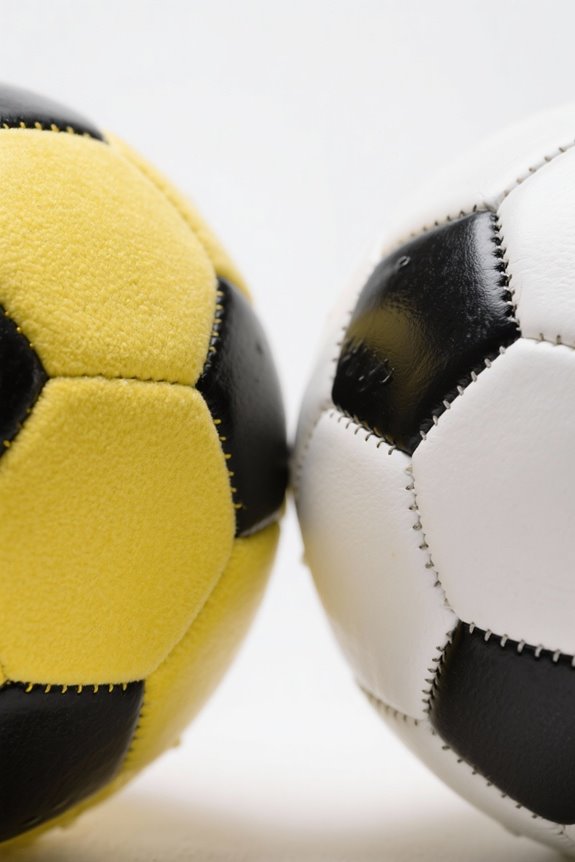
Material composition and cover type greatly influence the performance and suitability of soccer balls for indoor versus outdoor play. Outdoor soccer balls typically utilize cover materials such as polyurethane (PU) or polyvinyl chloride (PVC), which offer durability and varying levels of softness. In contrast, indoor soccer balls often feature a felt fabric covering, which enhances control on smooth surfaces by providing indoor textures that reduce rebound and prevent wall marks. Additionally, higher-end outdoor models may incorporate premium PU synthetic leather for superior grip and handling. The choice of cover material considerably affects the ball’s playability, with indoor balls designed to maintain softness and enhance user experience in confined spaces, where less bounce is desirable. Furthermore, the visibility and display quality of scoring tools used during indoor and outdoor games can also influence player performance and engagement.
Bounce and Inflation Pressure
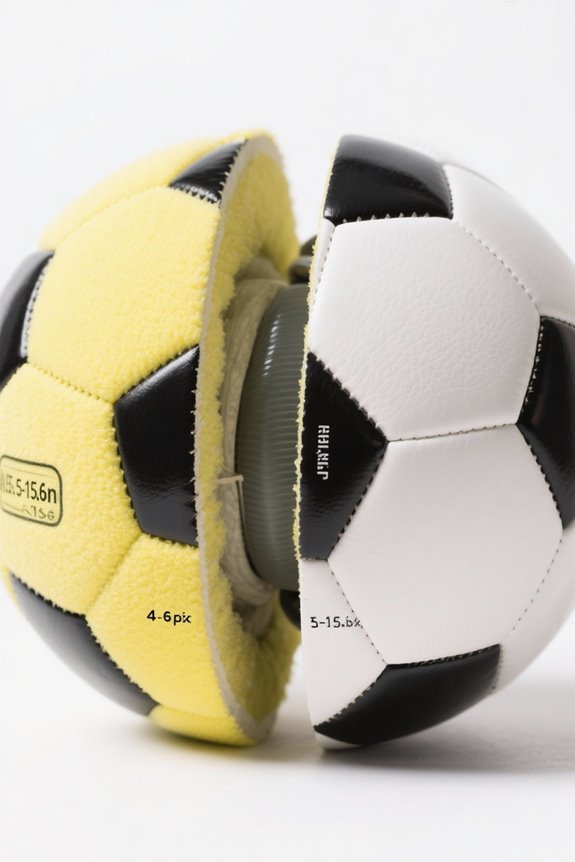
Differences in bounce and inflation pressure greatly impact the performance of indoor and outdoor soccer balls. Indoor soccer balls typically have a lower bounce due to their construction and weight, which supports controlled play on hard, smooth surfaces. These balls are inflated to a lower pressure, promoting softer touches and enhancing accuracy in confined spaces. Conversely, outdoor soccer balls are designed with higher inflation pressure to guarantee a firmer feel and greater responsiveness on grass and turf. The bounce dynamics vary considerably; outdoors, the higher bounce facilitates longer passes and shots. Maintaining proper inflation standards is essential for each ball type, as it directly influences bounce characteristics and overall handling, promoting peak performance in the intended playing environment. Additionally, the use of specialized materials in the construction of outdoor soccer balls helps improve durability and performance under various weather conditions.
Construction Technique and Panel Design
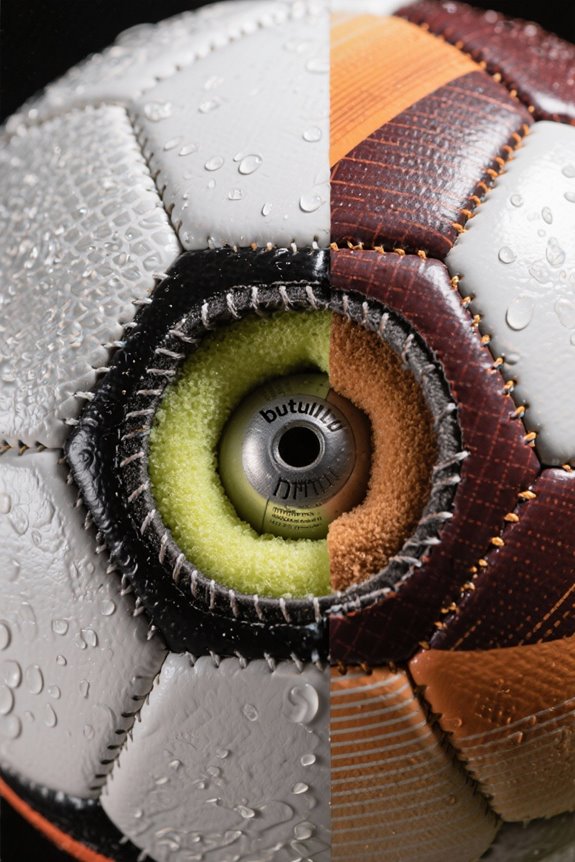
When comparing indoor and outdoor soccer balls, construction techniques and panel designs play an essential role in determining their suitability for specific playing conditions. Indoor soccer balls typically feature 32 panels, hand-stitched to guarantee durability, grip, and control during play on smooth surfaces. Their stitching techniques create tight seams that offer a softer touch and predictable rebounds. In contrast, outdoor soccer balls may also have 32 panels, but modern designs with fewer panels enhance aerodynamics. These balls often utilize a combination of machine stitching and panel bonding, specifically thermal bonding, which improves water resistance and extends durability. This difference in panel design and construction method reflects the specific needs of indoor versus outdoor soccer environments, affecting performance considerably. Additionally, outdoor soccer balls are often designed with high durability ratings to withstand various weather conditions and rough playing surfaces.
Durability Requirements
Durability requirements for soccer balls considerably differ between indoor and outdoor applications due to varying environmental factors and playing surfaces. Outdoor balls typically utilize robust materials such as synthetic leather or TPU, ensuring they withstand abrasive wear patterns and exposure to elements. These materials meet durability standards essential for sustaining performance on rough terrains. In contrast, indoor balls, often covered in felt or softer synthetics, prioritize softness and control, rendering them less durable for outdoor use. Additionally, outdoor balls often feature butyl bladders for better air retention and resilience, while indoor balls may use latex bladders that lose air more quickly. As a result, the construction materials and designs considerably influence the functional lifespan and reliability of soccer balls in their respective environments. Furthermore, outdoor balls are designed with high-quality materials that enhance durability and control, making them suitable for turf and hard ground.
Play Environment Adaptation
Understanding how soccer balls adapt to their play environments reveals critical design decisions that affect performance and control. Indoor soccer balls utilize felt or suede covers, enhancing grip on smooth surfaces and minimizing sliding. These materials also contribute to a softer touch and controlled bounce, allowing for more precise plays in confined spaces. In contrast, outdoor balls are crafted from robust polyurethane or PVC to withstand harsher surface variations such as grass and dirt. The design of outdoor balls incorporates higher inflation pressures, promoting longer flight paths and durability under various weather conditions. Additionally, adjustments in size and weight further guarantee that each ball suits its respective playing conditions, optimizing control and longevity for players in diverse environments. Soccer balls designed for all-weather use maintain consistent performance during rain or snow conditions.
Impact on Gameplay Dynamics
The design of soccer balls greatly impacts gameplay dynamics, influencing various aspects of performance and player interaction. An impact assessment of ball construction reveals that outdoor soccer balls, with larger panels and slick surfaces, encourage stability and speed in open environments. In contrast, indoor soccer balls feature a traditional 32-panel design and rougher textures, promoting precise control in confined spaces. These differing characteristics lead to distinct gameplay strategies; for example, the heavier weight of indoor balls produces limited bounce, altering how players time their actions. Conversely, the lighter outdoor balls allow longer passes, affecting shot power and accuracy. Consequently, the construction influences players’ decision-making processes and tactical approaches during matches. Additionally, the use of high-quality materials in outdoor balls enhances performance and durability, further impacting how players engage with the game.
Control and Handling Characteristics
Control and handling characteristics of indoor and outdoor soccer balls are dictated by their design, materials, and intended play environments. Indoor soccer balls, typically smaller and heavier, enable technical finesse through refined touches due to reduced bounce and enhanced grip from their felt covers. This design minimizes slippage, allowing players to maneuver with greater precision in tight spaces. Conversely, outdoor balls, constructed from lighter synthetic materials, optimize for tactical advantages on grass fields, promoting increased roll and flight distance. Their higher inflation pressure encourages longer passes and dynamic shooting but requires different handling techniques. Overall, the distinct characteristics of each ball type greatly influence player control and performance, adapting to the demands of their respective playing surfaces. Furthermore, the use of advanced thermal bonding techniques in outdoor soccer balls enhances durability and minimizes water absorption, ensuring consistent performance across various weather conditions.
Weather Resistance and Longevity
When evaluating soccer balls for outdoor play, the differences in weather resistance and overall longevity become paramount. Outdoor soccer balls, constructed with polyurethane or high-quality vinyl, feature weatherproof coatings that prevent water absorption, maintaining their weight and performance, even in humidity and rain. In contrast, indoor balls utilize softer materials like felt, designed for smooth surfaces, lacking resistance to outdoor elements. The bladder types further distinguish these balls; outdoor models typically include butyl rubber bladders for superior air retention and durability, while latex bladders, common in indoor balls, lose air rapidly. Additionally, outdoor balls employ reinforced stitching and molded panels to withstand environmental wear, ensuring longevity across varied playing conditions, unlike their indoor counterparts that prioritize other characteristics. Choosing the right ball based on size variations can significantly enhance both performance and safety on the field.
Safety Considerations in Design
Ensuring safety in soccer ball design encompasses various factors that directly affect player well-being during games. Indoor soccer balls are crafted with softer materials like felt, which reduce abrasions on hard surfaces, promoting impact prevention essential for player safety. The ball’s foam-filled bladders offer lower rebounds, minimizing unexpected trajectories and potential injuries in tighter environments. Additionally, indoor balls are generally smaller and slightly heavier, enhancing control and reducing the risk of high-speed impacts. Lower inflation pressure also aids in cushioning impacts, protecting players’ feet and joints. Overall, these design elements work collaboratively, creating safer play conditions and considerably lowering the likelihood of strains, sprains, or other injuries commonly associated with playing soccer indoors. Furthermore, the use of moisture-wicking properties in soccer gear can also contribute to player comfort and safety during intense play.
Frequently Asked Questions
How Do Different Soccer Ball Sizes Affect Player Performance?
Different soccer ball sizes greatly impact player performance by influencing youth development and game strategy. Smaller balls enhance control and agility, while larger ones promote endurance and adaptability, shaping overall tactical execution during matches.
Can Indoor Balls Be Used Outdoors, and Vice Versa?
Using indoor balls outdoors compromises outdoor durability, while outdoor balls indoors disrupt gameplay with exaggerated bounce. The gripping nature of indoor balls struggles on rough terrain, further emphasizing the importance of appropriate ball selection for ideal performance.
What Role Do Ball Colors Play in Gameplay?
Ball colors enhance visibility, aiding players in tracking movement and improving reaction times. The psychological effects of bright colors can boost focus and alertness, influencing gameplay intensity and fostering better communication among teammates during matches.
How Often Should Soccer Balls Be Replaced for Optimal Performance?
Soccer balls should be replaced based on established replacement schedules, typically every 3-6 months for recreational use and more frequently for competitive play. Ideal materials enhance durability, but regular inspections are essential to maintain performance.
Are There Specific Brands Known for Superior Indoor or Outdoor Balls?
Brand comparison reveals that Adidas and Nike excel in outdoor ball technology, while Mikasa and Puma lead in indoor spheres. Each brand leverages unique materials and designs to enhance performance tailored to their respective environments.


