As an Amazon Associate, we earn from qualifying purchases. Some links on this site are affiliate links at no extra cost to you. Our recommendations are based on thorough research and editorial judgment.

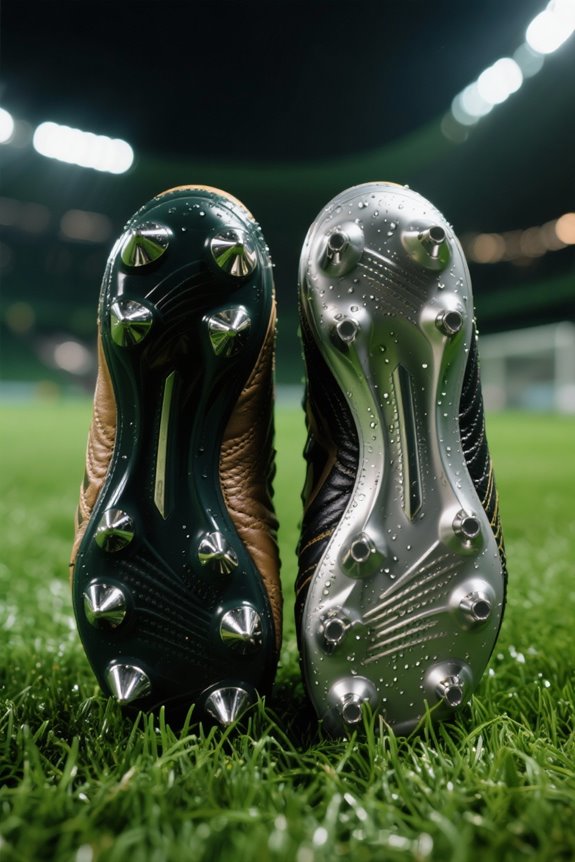
How To Choose Between Conical And Bladed Stud Configurations?

When choosing between conical and bladed stud configurations, players should consider their playing surface, style, and movement needs. Conical studs, which enhance rotational freedom, are suitable for natural grass, promoting agility during quick turns. Bladed studs excel on firm ground, offering superior traction but limiting rotational movement, making them ideal for defenders and strikers. Additionally, safety concerns arise on harder surfaces, as bladed designs may increase injury risks. Knowledge of these factors can greatly influence selection and performance.
Key Takeaways
- Conical studs are better for natural grass, promoting agility and safer rotational movements, while bladed studs enhance traction on firm surfaces for quick acceleration.
- Consider your playing surface; conical studs work well on softer conditions, while bladed studs excel on hard, artificial turf for explosive speed.
- Evaluate your playing position; midfielders benefit from conical studs for agility, while defenders and strikers may require bladed studs for maximum push-off power.
- Assess injury risks; conical studs offer greater safety and lower injury chances, especially for youth players, compared to potentially risky bladed configurations.
- Weigh the cost and performance; conical studs typically offer durability and lower maintenance costs, while bladed studs may deliver superior performance at a higher expense.
Understanding Traction and Grip Characteristics
Traction and grip characteristics play an essential role in optimizing athletic performance, particularly in sports that require fast movements and directional changes, such as soccer and football. Conical studs utilize traction mechanics that enable smoother rotational movements, allowing athletes to pivot efficiently with reduced joint stress. Their rounded shape minimizes foot entrapment, lowering the incidence of ankle and knee injuries. Conversely, bladed studs provide aggressive grip through larger surface areas, enhancing forward acceleration but limiting rotational freedom. This design impacts grip sensitivity, which can increase the risk of foot sticking during sharp cuts. Ultimately, understanding how stud shape influences traction mechanics and grip sensitivity helps athletes choose the right configuration for their specific playing styles and surface conditions. Additionally, selecting the right cleat type based on playing conditions is crucial for maximizing performance on the field.
Comparing Playing Surface Compatibility
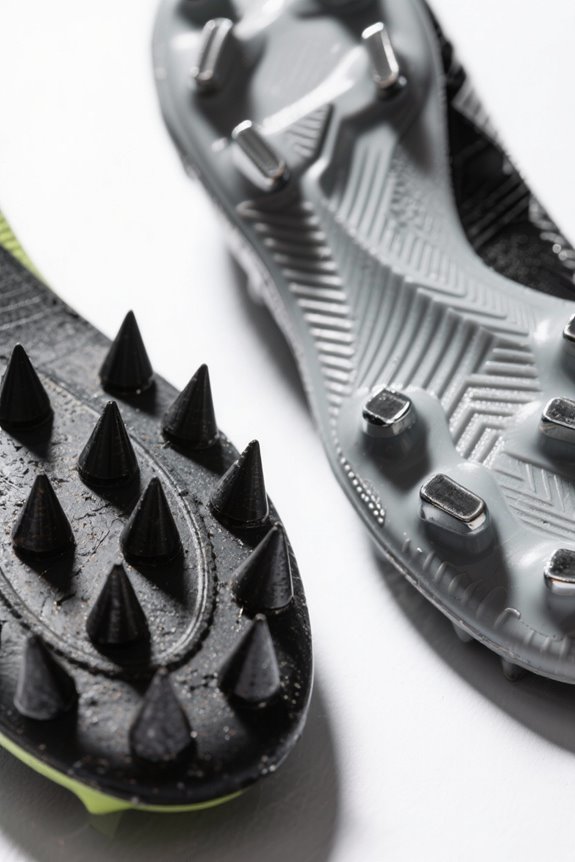
A player’s choice of stud configuration considerably influences performance, particularly when considering various playing surfaces. Conical studs are generally preferable for natural grass due to their rotational freedom, which aids quick turns. Bladed studs excel on firm grass but may cause discomfort on uneven surfaces due to excessive penetration. On artificial grass, conical studs offer safer, easier rotational release while minimizing surface wear, whereas bladed studs can increase injury risk. For multi-ground versatility, conical studs help adapt to different field conditions, while hybrid designs balance traction and agility. Turf conditions favor conical studs for improved mobility and reduced friction, while indoor surfaces typically require flat-soled shoes, limiting the use of both stud types according to player preferences and environmental needs. Additionally, stud configuration directly influences grip quality on turf, making it essential to choose the right type for optimal performance.
Evaluating Player Movement and Style
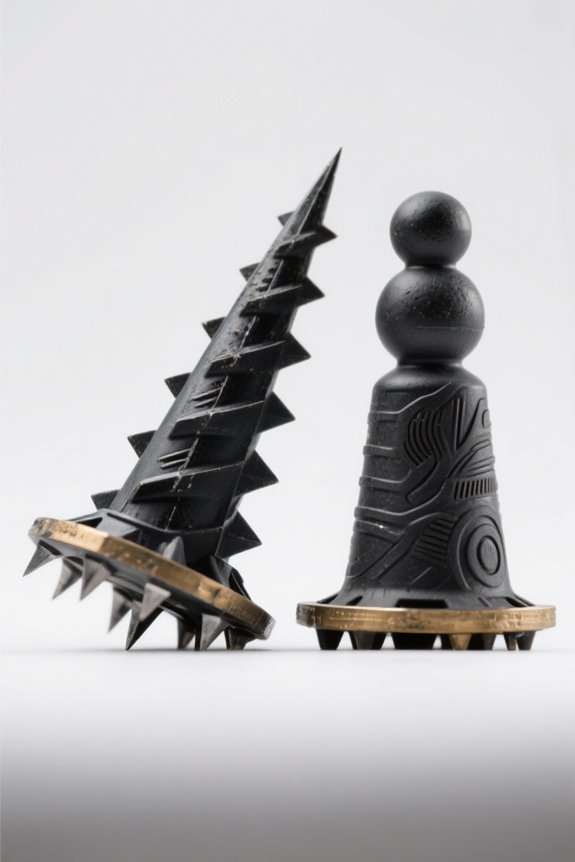
How do different stud configurations impact player movement and style on the field? Conical studs enhance player agility by promoting easier rotational movement, enabling quick pivots and turns while reducing resistance. This design benefits players who rely on quick directional changes, particularly midfielders. In contrast, bladed studs maximize push-off power, aiding explosive acceleration in straight-line sprints, often preferred by attackers. However, bladed studs may limit movement precision, making rapid lateral movements less efficient. Players seeking balance might opt for mixed configurations, which utilize both stud types, enhancing straight speed while preserving rotational capabilities. Ultimately, the choice of stud configuration affects how players navigate the field, influencing their overall performance based on unique movement styles and roles. Additionally, considering the material quality of the studs can further enhance performance and durability on the field.
Analyzing Injury Risks and Safety Considerations
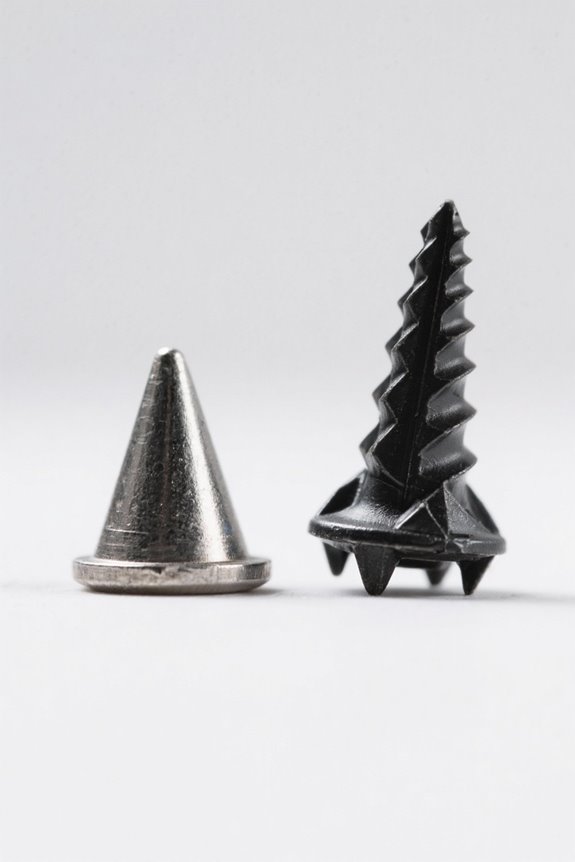
When choosing stud configurations for soccer cleats, players must carefully consider the associated injury risks and safety factors that can substantially impact performance. Conical studs generally provide injury prevention strategies by offering more rotational freedom, which minimizes stress on joints during directional changes. In contrast, bladed studs enhance traction but may increase the risk of non-rotational knee and ankle injuries, particularly on hard surfaces where foot locking occurs during turns. Player safety guidelines emphasize selecting appropriate stud types based on age, playing surface, and playing style. Youth athletes, in particular, benefit from conical or mixed configurations, reducing the likelihood of overuse injuries as their joints are still developing. Proper selection can substantially mitigate potential injury risks. Additionally, advanced outsole designs can significantly enhance traction on the field, further affecting player safety and performance.
Examining Manufacturer Innovations in Stud Designs
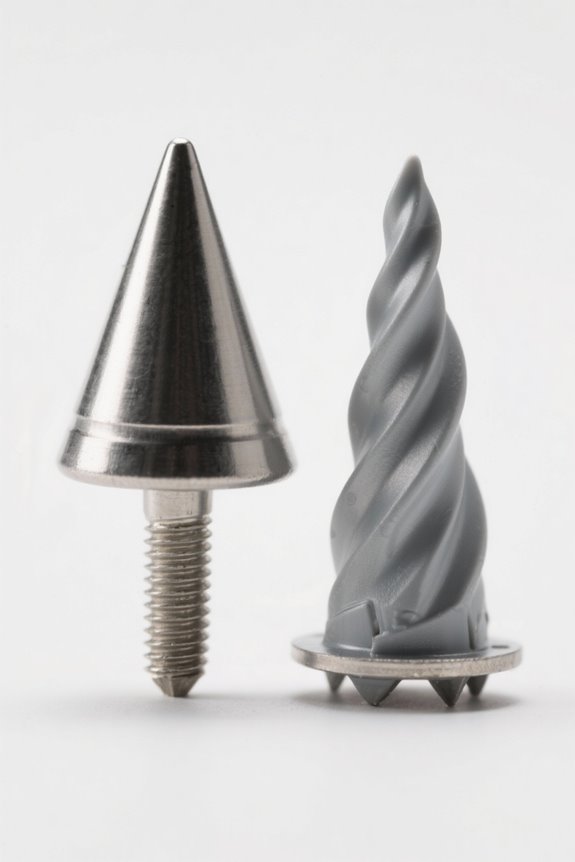
As advancements in footwear technology continue to evolve, manufacturers are implementing innovative designs for stud configurations that enhance player performance and safety. Key manufacturer innovations include Nike’s circular stud clusters, which improve rotational traction, and their Hyper-Reactive configuration for multi-directional grip. Adidas focuses on hybrid patterns blending conical and bladed studs to optimize balanced performance. Puma employs lightweight materials and strategic stud placement to enhance grip. Mizuno’s all-conical patterns prioritize agility and turf compatibility. Under Armour invests in 3D-printed soleplates for customizable stud layouts. These innovations reflect a shift to data-driven design and position-specific patterns. Overall, modern stud designs are increasingly tailored to meet the diverse needs of players while optimizing performance and reducing injury risks. Additionally, traction designs support peak performance based on individual playing styles.
Exploring Hybrid Stud Configurations
Hybrid stud configurations represent a strategic advancement in footwear design, merging the benefits of conical and bladed studs within a single cleat. These hybrid designs optimize performance by balancing aggressive traction from bladed studs and rotational freedom from conical studs. Players requiring both stability and quick directional changes benefit from this combination, particularly when playing on various surfaces such as firm ground (FG) and artificial grass (AG). The strategic placement of these studs allows for enhanced playing versatility, reducing the need for multiple pairs of cleats. In addition, hybrid patterns minimize stress on the ankles during sharp turns, lowering injury risks. Moreover, multi-ground stud configurations are specifically designed to optimize traction on grass and turf, making them ideal for various playing conditions. Major brands continue to innovate within this space, highlighting the increasing market demand for adaptable and efficient footwear solutions.
Assessing Practical Usage Scenarios
How do different stud configurations impact gameplay on various surfaces? Player preferences heavily influence the choice of stud configuration, as conical and bladed studs serve distinct purposes based on field conditions. Conical studs excel on artificial turf, offering superior mobility and smoother turns, ideal for players like midfielders who prioritize agility. Conversely, bladed studs provide aggressive traction on firm ground, making them suitable for forwards requiring quick acceleration. Grass surfaces can accommodate both stud types, depending on the desired grip and movement. Evaluating practical usage scenarios involves understanding how each configuration affects performance, including traction, stability, and maneuverability, allowing players to select the best stud type to enhance their gameplay on different surfaces and satisfy their individual needs. Additionally, the choice of multi-studded rubber outsoles can significantly influence a player’s agility and speed on turf surfaces.
Balancing Performance vs. Budget Considerations
Balancing performance and budget considerations is essential for players selecting the right stud configuration. Players must evaluate budget factors like initial price and long-term maintenance costs when choosing between conical and bladed studs. Conical studs typically offer a lower cost, increased durability, and comfort, making them appealing for budget-conscious athletes. In contrast, bladed studs might demand higher investment due to their complex design, but they provide superior traction and acceleration in specific conditions. However, this performance comes with potential injury tradeoffs, particularly for players prioritizing safety and joint health. Ultimately, players should weigh these performance tradeoffs against their budget constraints, ensuring that their selection aligns with their playing style and physical needs while considering the overall value for money. Additionally, it is crucial to choose equipment that enhances physical performance by improving strength, speed, agility, and endurance, which can impact overall playing effectiveness.
Identifying the Ideal Stud Type for Different Positions
When determining the ideal stud type for different positions in soccer, players must consider how each stud design enhances performance in relation to their specific role on the field. Conical studs provide increased mobility, making them suitable for midfielders and wingers who require agility for quick directional changes. Conversely, bladed studs offer superior traction due to their larger surface area, which is essential for defenders and goalkeepers, as well as strikers needing stability during rapid acceleration. Understanding these position needs allows players to select appropriate stud technology, optimizing support and performance. Ultimately, the choice between conical and bladed studs hinges on balancing agility with stability to meet specific playing requirements on the field. Additionally, keeping footwear fresh with odour control technology in soccer cleat bags can further enhance performance by ensuring players are always ready to play.
Investigating the Impact of Turf on Stud Choices
Turf surfaces in soccer, characterized by synthetic fibers and rubber infill, greatly influence stud choices for players. The firm, consistent nature of turf necessitates specific stud designs to enhance performance. Unlike natural grass, a turf surface impacts players’ grip and stability, as it offers less natural penetration. As stud design evolution progresses, bladed studs increasingly gain prominence due to their larger flat surfaces, enhancing traction during quick movements. Conversely, conical studs provide rotational freedom but may lack ideal grip on abrasive turf. Both stud types must adapt to turf characteristics, with turf-specific shoes generally using short rubber studs for better distribution of pressure, minimizing joint stress, and enhancing comfort, thereby mitigating injury risks on the unforgiving synthetic surface. The optimal stud layout is crucial for maximizing traction and control on turf, which can significantly affect a player’s performance during matches.
Highlighting the Preferences of Recreational Players
Recreational players often emphasize comfort and affordability when selecting soccer cleats, with many prioritizing ease of use over technical specifications. Player preferences often lean toward conical studs, as they offer smoother rotation and a lower risk of injury on uneven surfaces. Decision factors include the play style and experience level, with less experienced players favoring designs that minimize joint stress. While some may choose bladed studs for enhanced speed, they often overlook surface suitability, potentially increasing the risk of injury. In recreational leagues where field conditions vary, mixed stud patterns provide a versatile option, balancing grip and agility. Ultimately, comfort, safety, and price remain key elements in the footwear selection process for recreational athletes.
Reviewing Recommendations for Professional Players
Professional players face unique challenges in selecting the appropriate stud configurations for their soccer cleats, as they must consider various factors that directly impact performance. They prioritize traction suited for pitch conditions, which guarantees consistent performance during tournaments. Player feedback emphasizes the significance of stud types based on predominant shot types and footwork requirements. For ideal performance analytics, specific configurations are often favored: conical studs deliver better rotational freedom, while bladed studs provide superior traction in linear movements. Durability is vital for repeated high-level play, along with comfort and injury risk management. Ultimately, personal preferences and biomechanical needs guide each athlete’s stud choice, enabling them to maintain both availability and peak performance throughout competitions.
Understanding Weather Conditions and Stud Impact
Weather conditions play an essential role in determining the appropriate stud configuration for soccer cleats, as different surfaces respond distinctly to varying elements. The weather impact on stud performance can be significant. For example, wet and muddy fields often require longer studs to enhance grip and stability. In contrast, firm ground conditions, typically found in dry weather, are better suited for shorter studs that reduce discomfort during intense play. Furthermore, conical studs can become clogged with mud, potentially hindering performance. As a result, players should consider interchangeable stud systems to adapt to changing weather conditions effectively. Understanding the interaction between weather and stud type is crucial for maximum performance on diverse playing surfaces, ensuring players maintain control and stability during games.
Considering Footwear Durability and Longevity
Footwear durability and longevity are critical factors that directly impact a player’s performance on the field. The choice between conical and bladed stud configurations often hinges on overall shoe construction and material quality. Bladed studs, made from TPU, provide stiffness but may experience accelerated wear on abrasive surfaces, such as artificial turf. Conversely, conical studs offer better flexibility and uniform wear patterns, reducing stress concentrations. Effective footwear maintenance, including regular cleaning of studs and timely inspections for damage, can enhance longevity. Additionally, premium cleats typically feature reinforced zones in high-wear areas, further ensuring durability. Rotating between different pairs of cleats also helps to evenly distribute wear, maximizing the footwear’s lifespan and maintaining peak performance during play.
Deciding Between Single-Surface and Multi-Ground Options
Choosing the appropriate cleat configuration can markedly influence a player’s performance, especially when considering whether to opt for single-surface or multi-ground options. Single-surface cleats provide specific performance enhancements tailored for distinct surfaces, maximizing stability on firm ground or mobility on artificial turf. Players focused on top performance often prefer these cleats due to their specialized design. Conversely, multi-ground cleats offer versatility, as they accommodate various playing surfaces, appealing to casual athletes or those frequently switching fields. While multi-ground benefits include convenience and cost-effectiveness, they may lack the performance edge of single-surface options. Ultimately, players should assess their play style, field conditions, and budget when choosing between these two configurations to optimize their performance on the pitch.
Frequently Asked Questions
How Do Stud Designs Affect Overall Player Comfort During Games?
Overall player comfort during games considerably hinges on stud designs, with studies revealing 30% increased discomfort from bladed configurations. Player feedback indicates conical studs enhance comfort levels, promoting agility and reducing injury risk during prolonged play.
Can Stud Configurations Influence a Player’s Speed or Stamina?
Stud configurations markedly influence speed dynamics and stamina management. Bladed studs enhance acceleration, while conical studs promote easier rotational movement, ultimately reducing joint strain and improving player endurance during matches, depending on the playing surface.
What Role Does Foot Size Play in Stud Configuration Choice?
Foot physiology plays a vital role in stud configuration choice, as size impact determines stability and fit. Larger feet may require conical studs for balance, while smaller feet often prioritize comfort with versatile mobility options.
Are There Specific Maintenance Tips for Different Stud Types?
In the domain of stud maintenance, a stitch in time saves nine. Conical and bladed studs demand tailored care; proper cleaning and inspections enhance stud durability and traction, ensuring ideal performance on various playing surfaces.
How Often Should Players Replace Their Studded Footwear?
Players should replace studded footwear based on usage frequency, typically every 6-18 months. Worn shoes decrease footwear durability and increase player injury risks, as compromised traction and support can lead to slips and discomfort.