As an Amazon Associate, we earn from qualifying purchases. Some links on this site are affiliate links at no extra cost to you. Our recommendations are based on thorough research and editorial judgment.

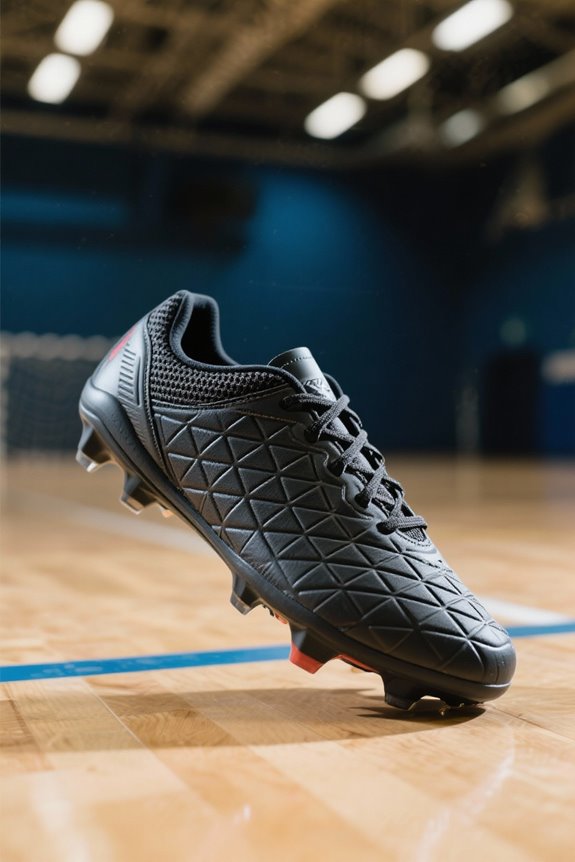
Why Do Indoor Soccer Shoes Have Flat Rubber Outsoles?

Indoor soccer shoes feature flat rubber outsoles designed for ideal traction on smooth surfaces. These outsoles enhance stability and control during rapid movements, reducing slip risks and potential injuries. The flat design guarantees uniform contact with the court, improving balance while enabling quick direction changes. The construction utilizes lightweight materials that promote agility and comfort, ultimately supporting high-intensity play. Understanding the specifics of footwear design can further elucidate the importance of selecting appropriate shoes for indoor soccer activities.
Key Takeaways
- Flat rubber outsoles enhance grip on smooth surfaces, allowing for quick lateral movements without slipping during indoor soccer matches.
- They provide stable traction, improving agility and control, which is essential for effective gameplay on indoor courts.
- The lightweight design of flat outsoles contributes to increased footwork speed and reduces player fatigue during high-intensity play.
- Rubber compounds used in flat outsoles ensure compliance with facility regulations by preventing surface damage and avoiding marks on courts.
- Cushioned midsoles in indoor soccer shoes absorb impact, reducing stress on joints and minimizing injury risk during gameplay.
Optimized Traction on Indoor Surfaces
When discussing indoor soccer shoes, it is crucial to recognize how optimized traction on indoor surfaces greatly impacts player performance. Traction mechanics involve the interaction between the shoe’s rubber sole and the court surface, which is often smooth. Flat rubber outsoles enhance grip through intricate tread patterns that accommodate various foot movements. These patterns provide precise surface interaction, allowing athletes to perform quick lateral cuts and rapid direction changes without slipping. Rubber materials guarantee a high friction coefficient, preventing unwanted slides during play. Additionally, non-marking compounds uphold court regulations while maintaining traction during dynamic maneuvers. The combination of stable surfaces and multidirectional tread designs supports a player’s control and agility, which are essential in fast-paced indoor soccer and futsal environments. Furthermore, durability importance ensures that players’ footwear can withstand the rigors of intense play without losing performance quality.
Protection for Indoor Court Flooring
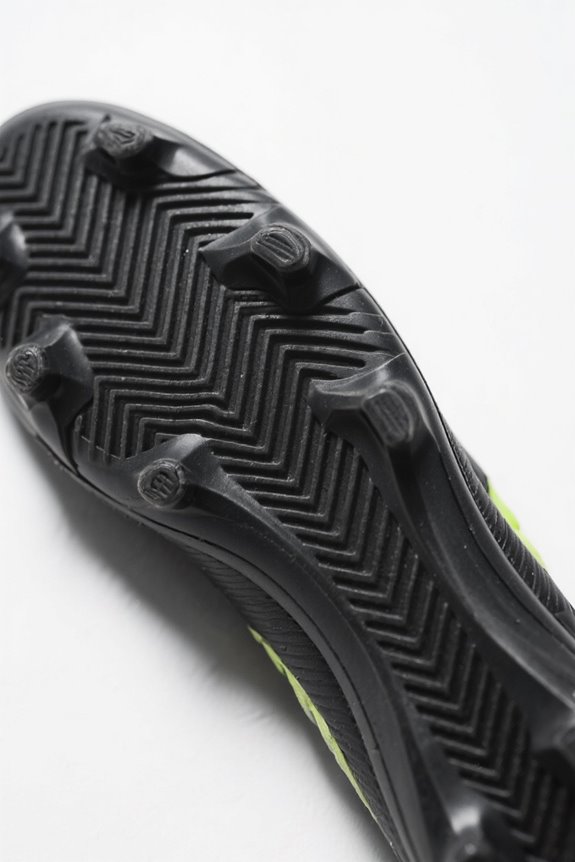
Effective protection of indoor court flooring relies on the choice of appropriate footwear, specifically shoes with flat rubber outsoles designed to minimize potential damage. These outsoles promote floor integrity by reducing abrasiveness and wear on surfaces made of PVC or vinyl. By creating a uniform contact area, flat rubber soles evenly distribute pressure, limiting stress points that can lead to surface degradation. The rubber’s elasticity also cushions impacts, mitigating premature surface abrasion or cracks. Additionally, the use of non-staining materials, such as rubber, helps in maintaining surface preservation, preventing chemical reactions or discoloration. Compliance with flooring specifications protects warranty conditions and prolongs the lifespan of high-frequency use venues, effectively minimizing repair costs. Overall, proper footwear is essential for sustaining court conditions. Furthermore, budget-friendly options ensure that players can access suitable footwear without breaking the bank.
Enhanced Safety and Injury Prevention
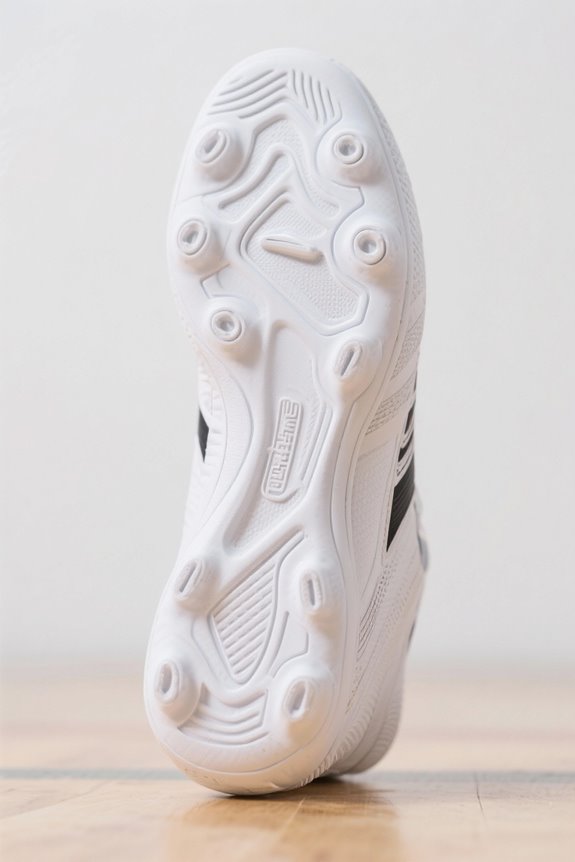
Understanding the importance of proper footwear in enhancing safety and preventing injuries is essential for indoor soccer players. Flat rubber outsoles greatly reduce slip risk on smooth surfaces, as they provide excellent traction on polished gym floors. Injury statistics show that improved grip correlates with fewer falls and sliding injuries during play. Additionally, these outsoles, combined with cushioned midsoles, help absorb impact forces, minimizing stress-related injuries like shin splints and plantar fasciitis. The stable design of flat soles supports balance and reduces the likelihood of ankle rolls. Moreover, the non-marking rubber prevents abrasions, cuts, and friction burns, thereby promoting overall player safety. These features collectively contribute to lower injury rates for athletes engaged in dynamic indoor activities. Furthermore, proper fit and sizing is crucial for maximizing comfort and performance, which directly influences safety during play.
Performance Benefits for Indoor Soccer
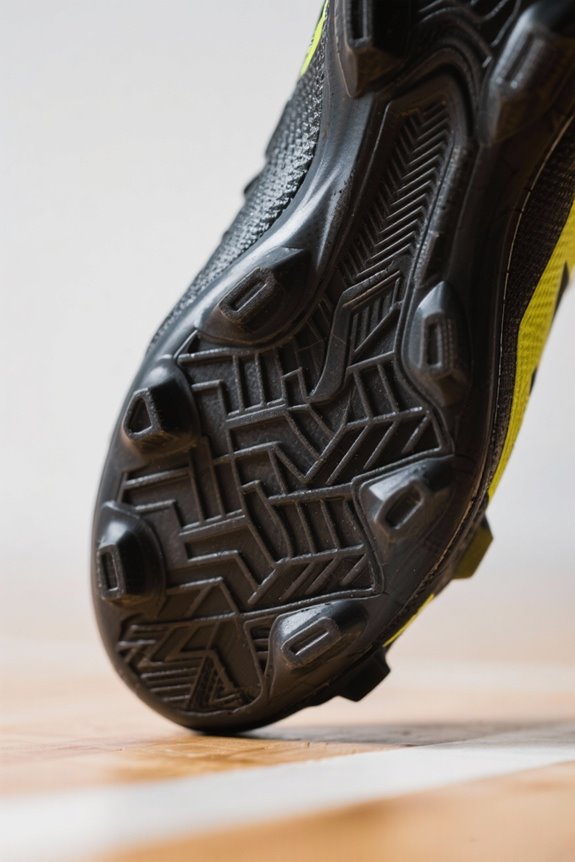
Proper footwear not only enhances player safety but also greatly improves performance on the indoor soccer field. Flat rubber outsoles provide ideal traction on smooth surfaces, enabling players to maintain stability and control during rapid movements. Enhanced agility results from the ability to pivot and turn quickly, minimizing resistance. Additionally, lightweight construction allows for faster footwork, increasing overall player performance. The design supports skill development by facilitating smoother shifts during dribbling and defense. Comfort features, such as shock-absorbing midsoles, reduce foot fatigue, allowing players to maintain high intensity throughout matches. The flat sole design maintains contact with the court, improving balance and awareness, which are vital for effective gameplay and skill enhancement. Choosing shoes with non-marking rubber outsoles is essential for preventing slipping during indoor play.
Durable Materials for Longevity
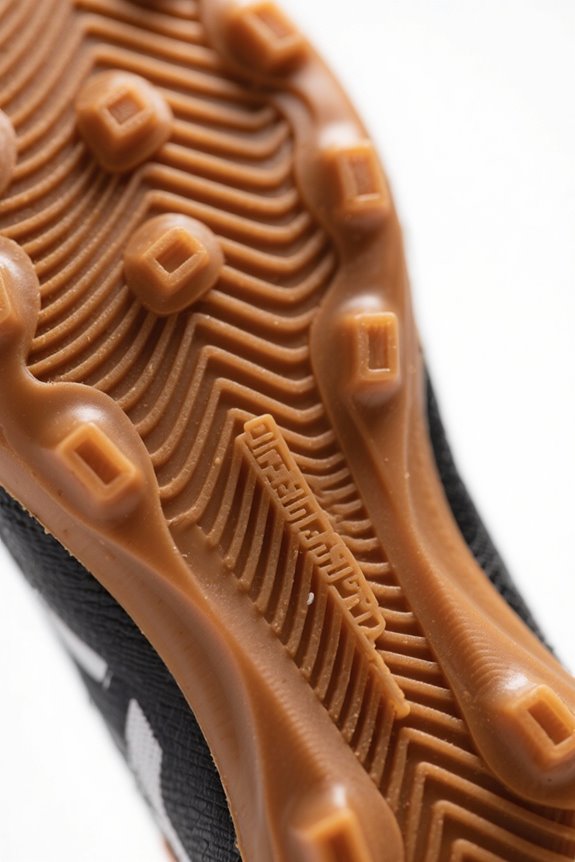
When considering the longevity of indoor soccer shoes, the selection of durable materials plays an essential role in ensuring ideal performance and extended use. Rubber outsoles offer excellent grip on smooth surfaces and are engineered for flexibility and durability, allowing natural foot movement while resisting abrasion. This is important, as indoor courts require materials that withstand wear from hard, abrasive surfaces. While thermoplastic polyurethane (TPU) provides wear resistance, it is more common in other shoe models. Additionally, advanced rubber blends enhance durability, often incorporating silica or carbon black fillers. Outsole engineering promotes even wear distribution, minimizing localized damage that can reduce shoe life. Ultimately, precise material selection and innovative design determine how well the shoe performs and lasts over time. Moreover, quality stitching significantly impacts the overall longevity of the shoes, ensuring they withstand the rigors of intense play.
Differences From Outdoor and Turf Shoes
Indoor soccer shoes feature specific designs and materials tailored for performance on smooth surfaces, distinguishing them from outdoor and turf shoes. The outsole materials of indoor shoes consist of flat, non-marking rubber optimized for traction on polished courts. This allows players to pivot and turn swiftly without slipping. In contrast, turf shoes possess multiple raised rubber nubs that provide grip on artificial turf, making them unsuitable for indoor play due to excessive wear. Additionally, indoor shoes prioritize lightweight construction and flexibility, enhancing agility, whereas turf shoes incorporate reinforced padding for durability against rough surfaces. These differences in shoe design result in distinct performance characteristics, making it essential for players to use the appropriate footwear for their respective playing environments. For example, proper traction and performance is crucial for maintaining control during indoor matches.
Role of Flat Design in Stability
The flat design of indoor soccer shoes plays a vital role in providing stability on hard court surfaces, as it guarantees a broad contact area that increases ground adherence. This design enhances stability benefits by distributing pressure evenly across the foot, preventing unbalanced points that can lead to ankle rolling. The soles feature multidirectional tread patterns that improve traction during lateral movements, ensuring players maintain control while pivoting or accelerating. Additionally, the low-profile sole helps keep the center of gravity low, further enhancing balance and agility. Non-marking rubber allows for grip without excessive stickiness, reducing the risk of slips. Ultimately, the flat design maximizes performance by promoting safe, confident movements on smooth surfaces. Moreover, the emphasis on proper footwear can significantly enhance player performance during indoor games.
Impact Absorption and Foot Comfort
Foot comfort and impact absorption are essential aspects of indoor soccer shoe design, influencing player performance and well-being. Effective shock attenuation is achieved through specialized midsole cushioning systems that absorb impact forces from frequent running and abrupt stops. These cushioning layers mitigate stress on joints and muscles, enhancing player endurance during extended play. Simultaneously, footwear flexibility is provided by flat rubber outsoles using soft rubber compounds, allowing natural foot motion while maintaining traction. This flexibility reduces strain on the arch and forefoot during dynamic movements, promoting comfort. Additionally, the wide, flat platform design guarantees even force distribution across the foot, preventing discomfort and reducing injury risk, further enhancing the overall playing experience on hard courts. Microfiber towels can also aid in keeping players dry and comfortable during practice sessions, enhancing their overall performance.
Compliance With Facility Regulations
Compliance with facility regulations is vital for ensuring player safety and maintaining the integrity of indoor soccer venues. These regulations explicitly prohibit cleated shoes to avoid damage to synthetic or hardwood surfaces, which are often expensive to repair. Facilities require footwear that meets specific standards, such as clean, non-marking flat soles, to preserve hygiene and maintain the playing field. Players must adhere to these footwear standards, as non-compliant shoes can lead to ejection from the field. In addition, compliance with such rules is enforced by referees and league officials, ensuring fairness and safety during games. Regulatory adherence is essential not only for player safety but also for aligning with insurance requirements, ultimately protecting both players and facilities from potential liabilities. Additionally, using weather-resistant materials in footwear can enhance player comfort during indoor matches.
Improved Agility and Quick Movements
Achieving improved agility and quick movements in indoor soccer is greatly influenced by the design and performance features of indoor soccer shoes. The flat rubber outsoles maximize contact with smooth surfaces, enhancing traction for quick footwork. Intricate patterns on the rubber improve grip, which helps prevent slips during rapid stops and lateral agility maneuvers. Furthermore, these shoes feature lightweight designs that minimize fatigue, allowing for faster movements without resisting the court surface. The low-profile soles reduce ankle rolling risks during quick directional changes. Additionally, enhanced balance and stability are provided by the flat outsole design, which guarantees proper weight distribution and encourages precise foot placement. All these features collectively support players aiming to improve their indoor soccer performance. Moreover, a proper fit maximizes traction and responsiveness during play, making it crucial for optimal performance.
Frequently Asked Questions
Can I Use Indoor Soccer Shoes Outdoors Occasionally?
Occasional outdoor use of indoor soccer shoes is possible on clean, dry surfaces. However, their durability diminishes quickly on abrasive terrains, limiting outdoor surface compatibility and affecting performance during subsequent indoor play. Caution is advised.
How Should I Clean My Indoor Soccer Shoes?
To clean indoor soccer shoes, use gentle shoe cleaning techniques. Remove dirt, scrub with a soapy solution, rinse thoroughly, and dry naturally. Regular maintenance guarantees longevity and peak performance for these athletic shoes.
What Size Should I Choose for Indoor Soccer Shoes?
When selecting indoor soccer shoes, fit recommendations suggest choosing a size slightly smaller than regular shoes. Size comparison varies by brand, so checking specific sizing charts is essential for an ideal fit and performance.
Are Indoor Soccer Shoes Suitable for Other Sports?
Indoor soccer shoes are suitable for alternative sports that require traction and agility on smooth surfaces, like futsal, basketball, and volleyball. Their design offers shoe versatility, enhancing performance across various indoor athletic activities.
How Often Should I Replace My Indoor Soccer Shoes?
As time marches on, indoor soccer shoes succumb to wear and tear; typically, players are advised to replace them every 6 to 12 months, as performance impact diminishes with deterioration, risking agility and game effectiveness.