As an Amazon Associate, we earn from qualifying purchases. Some links on this site are affiliate links at no extra cost to you. Our recommendations are based on thorough research and editorial judgment.

How Do Firm Ground Cleats Differ From Artificial Grass Cleats?

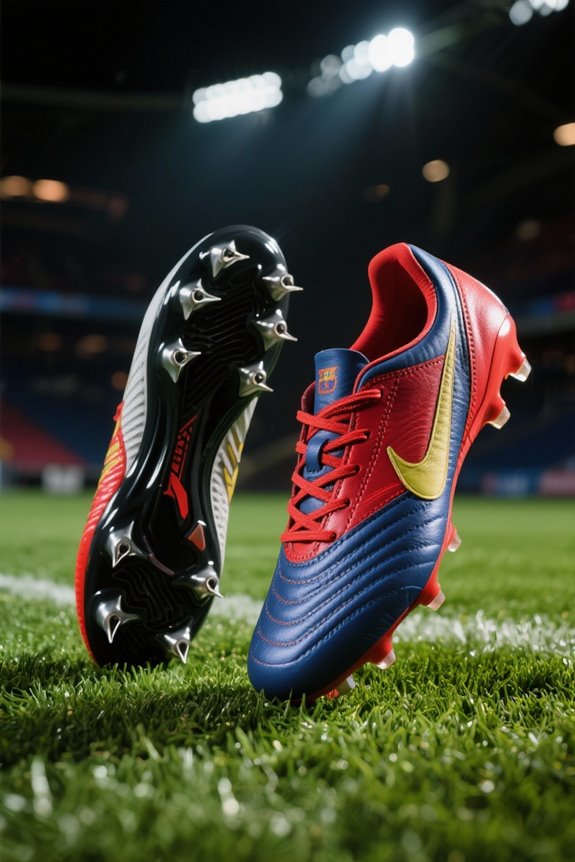
Firm ground (FG) cleats utilize longer, conical or bladed studs for traction on natural grass surfaces, while artificial grass (AG) cleats feature shorter, closely spaced studs designed for synthetic fields. The FG cleats risk losing grip on artificial surfaces due to the potential “bottoming out” of longer studs. Conversely, AG cleats provide stable traction, promote safety, and minimize injury risk. Understanding these differences is essential for selecting appropriate footwear based on playing conditions and enhancing performance. Further insights on this topic are available.
Key Takeaways
- FG cleats feature longer, conical studs designed for optimal traction on natural grass surfaces.
- AG cleats have shorter, closely spaced studs to minimize turf damage on synthetic grass.
- FG cleats risk inadequate grip on artificial surfaces, leading to potential injuries like ACL tears.
- AG cleats offer enhanced comfort with better pressure distribution and flexibility, reducing joint impact.
- The durability of AG cleats is superior on synthetic fields, minimizing wear and maintenance costs.
Design and Stud Configuration Differences
When comparing firm ground (FG) cleats to artificial grass (AG) cleats, their design and stud configurations reveal significant differences tailored to specific playing surfaces. FG cleats feature longer, conical or bladed studs, spaced farther apart to penetrate natural grass effectively. This allows for strong traction during play on grass, particularly in dry or slightly damp conditions. In contrast, AG cleats utilize shorter, closely spaced, conical studs designed to distribute weight evenly across synthetic surfaces. This stud spacing minimizes turf damage and reduces injury risk. While FG cleats maximize grip on natural terrain, AG designs prioritize even pressure distribution to protect players’ joints, demonstrating the need for specialized footwear based on differing field conditions and performance requirements. Additionally, material quality significance plays a crucial role in determining the overall durability and effectiveness of each type of cleat.
Performance and Traction
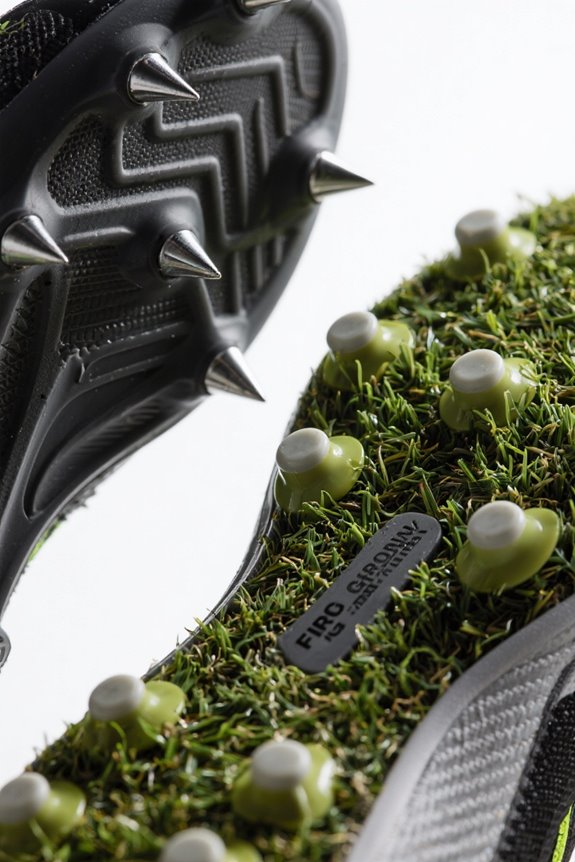
Performance and traction in football depend heavily on the choice of cleats, with significant differences observed between firm ground (FG) and artificial grass (AG) models. FG cleats excel in natural grass due to long, pronounced studs that enhance traction efficiency by penetrating soft soil. However, these studs risk “bottoming out” on artificial surfaces, leading to inadequate grip and mobility. In contrast, AG cleats have shorter, conical studs designed for effective surface interaction on synthetic grass, ensuring stable traction without excessive penetration. This design prevents foot sticking, facilitating smoother movements over artificial grass. To conclude, FG cleats provide peak performance on natural surfaces, while AG cleats are tailored for reliable traction on synthetic fields, promoting player safety and efficiency. Additionally, choosing the right cleat bag with odor control technology can help maintain freshness and organization for your footwear.
Injury Risk and Safety

The choice of cleats considerably impacts injury risk and safety for athletes, particularly in the context of firm ground (FG) versus artificial grass (AG) designs. FG cleats, designed with longer studs for enhanced traction on natural grass, increase the likelihood of non-contact injuries on artificial turf surfaces. Specifically, athletes are 1.6 times more likely to experience anterior vital ligament (ACL) injuries due to excessive traction and joint stress caused by these cleats. Conversely, turf-specific cleats utilize shorter, rubberized studs that support safer movements and reduce force on ligaments. Implementing injury prevention strategies, including athlete education on the proper footwear for surface conditions, plays an essential role in minimizing injury risks and enhancing overall safety on the field. Additionally, selecting cleats with effective shock absorption can further reduce the risk of injuries by alleviating stress on joints during play.
Durability and Wear Considerations

To guarantee peak performance and longevity, athletes must consider the durability and wear characteristics of their cleats, particularly when selecting between firm ground (FG) and artificial grass (AG) options. FG cleats typically feature longer, widely spaced studs designed for natural soil, which may wear down quickly on abrasive synthetic surfaces. In contrast, AG cleats utilize shorter, numerous studs that evenly distribute pressure, enhancing stud longevity and minimizing concentrated wear. The rubber-infused outsoles of AG cleats offer superior outsole protection, resisting cracking from hard turf. Studies indicate that using AG cleats on artificial grass reduces surface degradation, thereby extending the lifespan of synthetic fields. Proper cleat-surface matching is essential for maximizing performance and reducing maintenance costs for playing surfaces. Additionally, the all-weather designs of soccer goal corner targets highlight the importance of choosing equipment suited for specific conditions.
Comfort and Fit Characteristics
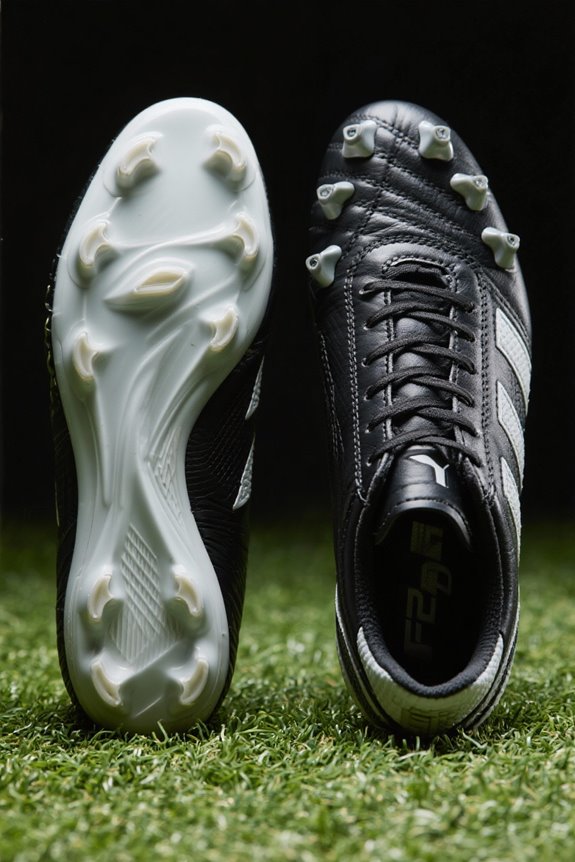
Cleat comfort and fit are essential factors that influence an athlete’s performance and enjoyment on the field, particularly when distinguishing between firm ground (FG) and artificial grass (AG) cleats. FG cleats typically feature longer, fewer studs that provide a snug fit optimized for natural surfaces, but this design can create pressure points on harder artificial turf. In contrast, AG cleats include shorter, more numerous studs that promote even pressure distribution, enhancing cushioning levels and reducing discomfort. The flexibility of AG soles, often made from rubber, protects joints by absorbing impact, while FG rigid plates may lead to fatigue. Overall, the fit variations in AG cleats better accommodate foot movement and swelling, making them suitable for artificial grass play. Additionally, proper fit is crucial as it can greatly enhance performance and comfort during play.
Frequently Asked Questions
Can I Wear FG Cleats on AG Surfaces?
Wearing FG cleats on AG surfaces is not advisable due to significant football surface compatibility issues. The cleat traction differences lead to reduced stability and increased risk of injuries, making AG-specific cleats a safer choice.
How Do I Choose the Right Size for Cleats?
Foot measurements taken at day’s end allow for accurate cleat sizing. Brands vary, so consulting size charts and considering factors like material stretch and width guarantees the correct fit for ideal performance and comfort.
Are There Specific Brands Better for FG or AG Cleats?
Brand comparisons reveal that leading companies like Nike and Adidas specialize in cleat technology tailored for FG and AG surfaces, with distinct models like Mercurial and Predator optimized for performance and safety on their respective fields.
How Often Should I Replace My Cleats?
In the theater of sports, cleats demand an encore every 4–12 months. Ignoring this may lead to dismal performance impacts and sad cleat lifespans, jeopardizing glory on the field, or worse, spraining ankles in futile desperation.
Do Cleats Affect My Playing Style or Performance?
Cleat choice markedly influences playing style and performance impact. Correct cleats enhance traction and stability, facilitating quick movements, while improper footwear can hinder agility, causing discomfort and reducing overall effectiveness on the field.