As an Amazon Associate, we earn from qualifying purchases. Some links on this site are affiliate links at no extra cost to you. Our recommendations are based on thorough research and editorial judgment.

How Do Multi Ground Cleats Perform On Different Surfaces?

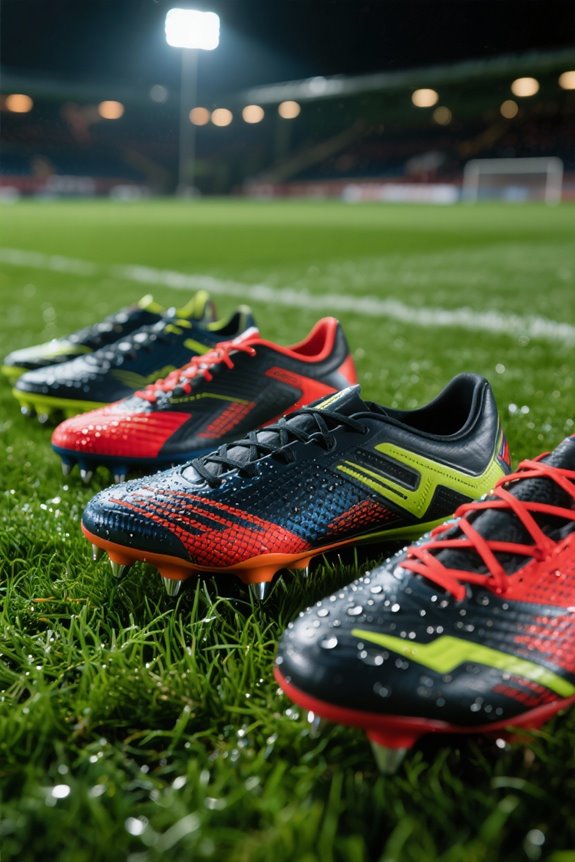
Multi ground cleats (MG cleats) perform well on various surfaces, particularly firm natural grass and artificial turf. They contain a hybrid configuration of circular and bladed studs that provide adequate traction and pressure distribution. These cleats excel on dry, hard-packed fields due to their shorter studs, facilitating comfort without excessive ground pressure. However, MG cleats struggle on wet, muddy surfaces where specialized cleats perform better. Understanding their design and performance can further highlight their benefits in different conditions.
Key Takeaways
- Multi ground cleats provide adequate traction on firm natural grass due to their hybrid stud design, enhancing grip without excessive penetration.
- On artificial grass, MG cleats perform less effectively than AG-specific cleats, leading to reduced grip and potential injury risks.
- They struggle on wet, soft, or muddy surfaces, increasing the risk of slipping and compromising stability during play.
- MG cleats feature evenly spaced studs that promote pressure distribution, enhancing comfort and performance on dry, hard-packed fields.
- These cleats offer durability and versatility across surfaces, making them a cost-effective investment for players needing adaptable footwear.
Overview of Multi Ground Cleats
Multi ground cleats, often referred to as MG cleats, serve a critical role in providing athletes with footwear that functions effectively on diverse playing surfaces. Designed for versatility, MG cleats feature a unique combination of circular and bladed studs optimized for varied ground conditions. This distinct stud configuration allows for a performance comparison against other cleat types, such as firm ground (FG) and soft ground (SG) cleats. MG cleats are particularly suitable for dry or moderately firm natural grass fields and perform well on artificial grass, offering balanced traction without excessive digging. However, they are less effective in very soft or muddy conditions, where SG cleats excel with longer, metal studs that provide deeper penetration and grip. Additionally, multi-studded outsoles contribute significantly to agility and speed during play, enhancing overall performance on turf surfaces.
Design Features of Multi Ground Cleats
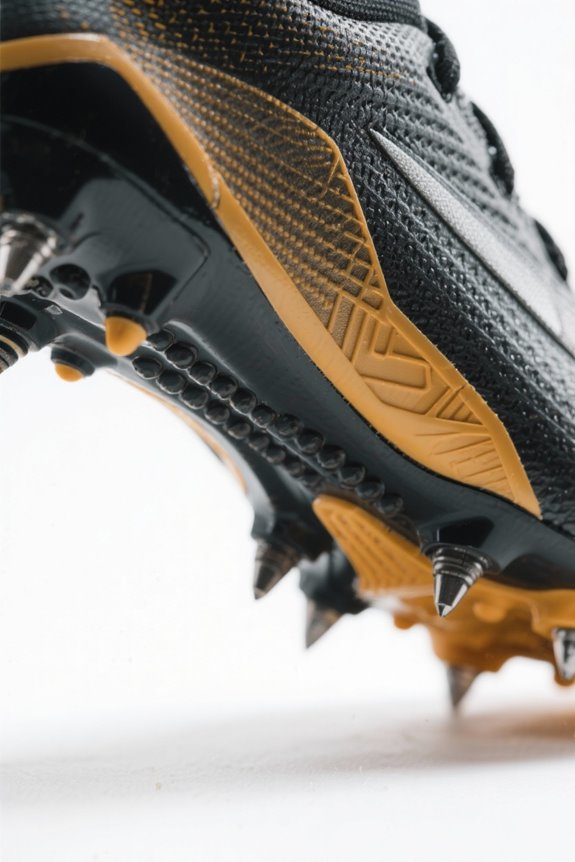
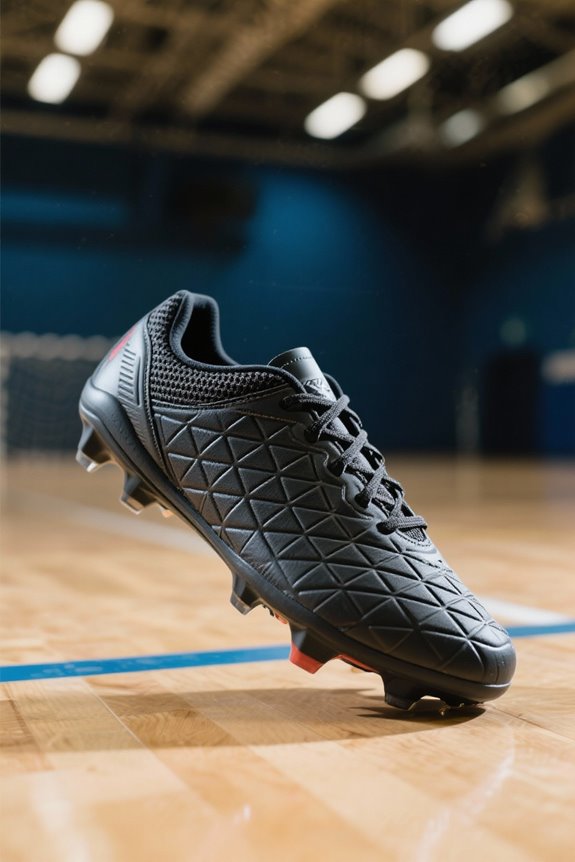
Designed to cater to the demands of diverse playing surfaces, the structure of multi ground cleats incorporates several innovative features that enhance athletic performance. Their hybrid stud configuration combines conical and bladed shapes to optimize traction and agility. Studs are shorter than those on soft ground cleats, yet longer than pure turf options, allowing for a balanced performance across varying terrains. Additionally, the evenly distributed stud layout guarantees effective weight dispersion, preventing excessive penetration on hard or artificial grounds. The durable soleplate offers flexibility and cushioning, catering to both natural grass and synthetic fields. With materials designed for breathability and moisture management, multi ground cleats present significant design benefits, guaranteeing stability, traction optimization, and durability throughout active use. Proper fit and sizing are essential to maximize the performance of these cleats on different surfaces.
Benefits of Hybrid Soleplates
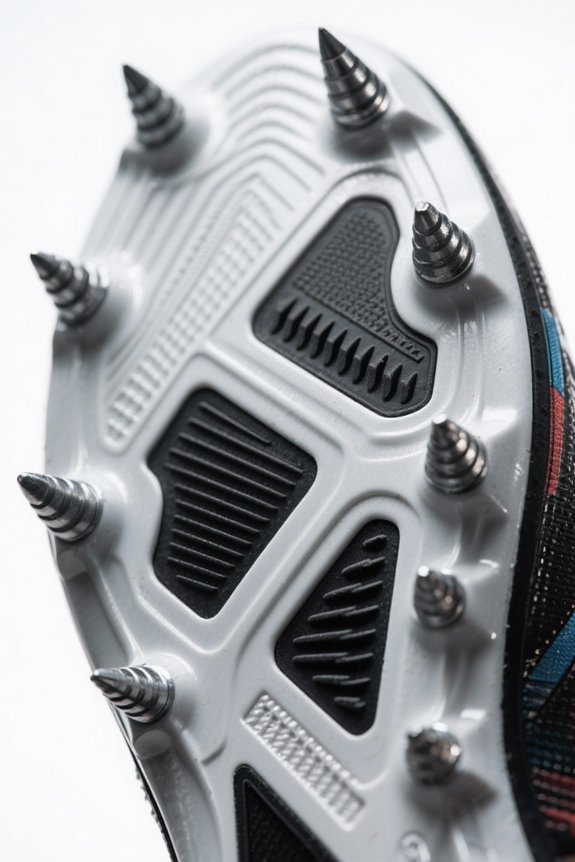
The benefits of hybrid soleplates in athletic footwear are significant, particularly when addressing performance across multiple surfaces. Hybrid technology combines elements of firm ground and artificial grass soleplates, creating a versatile design with optimized stud arrangements. This composition, which features a combination of bladed and conical studs, enhances traction and stability during play. Player feedback consistently indicates improved comfort thanks to reduced stud pressure and cushioned midsoles that absorb shock. Additionally, the moderate stud length prevents over-penetration on artificial turf while maintaining grip on firm grass. Durability is enhanced through robust materials that resist wear from varied surfaces, contributing to the longevity of the cleats. Overall, these features make hybrid soleplates a preferred choice for modern athletes. Furthermore, traction and outsole performance play a crucial role in maximizing the effectiveness of hybrid cleats across different playing environments.
Performance on Firm Natural Grass
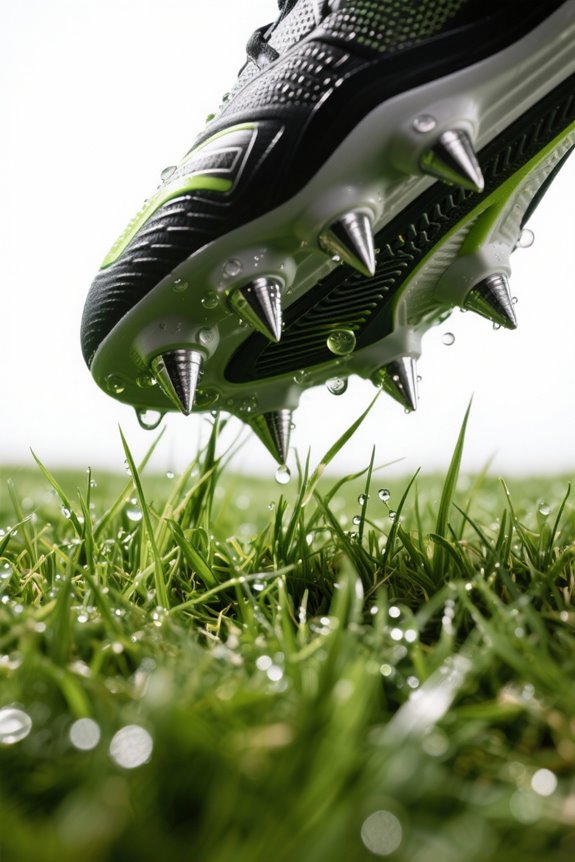
Performance on firm natural grass is a key consideration for athletes seeking reliability in their footwear. Multi ground cleats deliver adequate traction on this surface due to their combination of conical and bladed studs, which promotes stability and quick pivoting. Player feedback highlights the effectiveness of these studs in enhancing grip without excessive penetration, allowing for even pressure distribution and improved comfort. This construction prevents studs from sinking deeply into hard ground conditions, reducing discomfort during play. Compared to firm ground cleats, MG cleats are versatile, effectively supporting performance on both firm natural and artificial surfaces. Their durability is notable, as materials resist wear, ensuring longevity, which is critical for athletes frequently playing on firm grass fields. Additionally, multi-ground cleats are designed to adapt to varying conditions, making them ideal for unpredictable weather scenarios.
Optimal Conditions for Use on Natural Grass
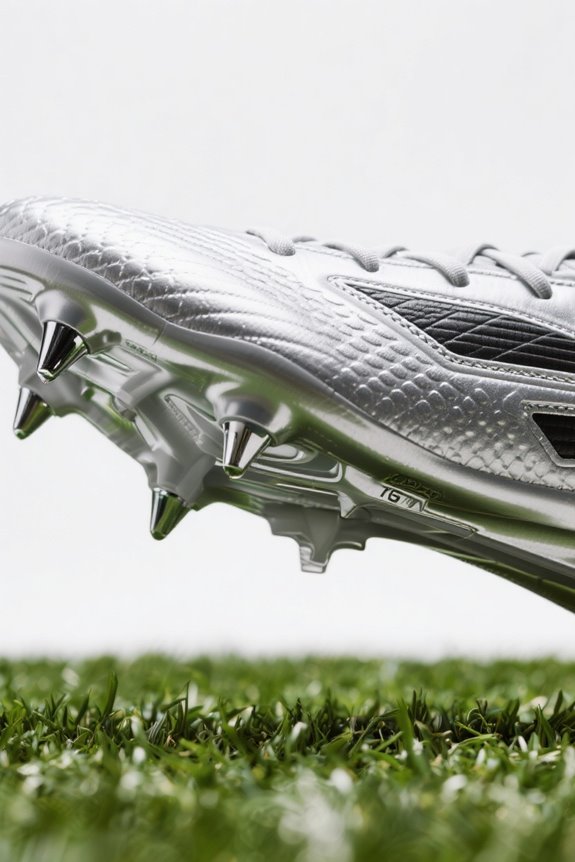
Ideal conditions for using Multi Ground (MG) cleats on natural grass depend on several factors, including field firmness and moisture levels. MG cleats excel on grass that is firm but not overly hard, ensuring good cleat performance during play. These cleats are designed for dry or slightly damp conditions, offering a balance between grip and stability. Fields that have medium firmness support the cleat’s mixed stud pattern, which combines bladed and conical studs for effective traction. The shorter studs help distribute pressure evenly, reducing the risk of slipping or damaging turf. However, they are less effective in very soft or muddy conditions, where longer studs are better suited. As a result, choosing MG cleats correlates with specific playing conditions for ideal performance. Additionally, it’s important to consider the weight capacity of the cleats when selecting the right type for different surfaces.
Performance on Artificial Grass and Turf
Multi Ground (MG) cleats are designed to adapt to various playing surfaces, including artificial grass and turf. These cleats feature both bladed and conical studs, providing moderate traction on turf. However, while they have multi ground advantages, their performance is generally inferior compared to AG-specific cleats, which are better suited for artificial surfaces. The stud design in MG cleats fails to penetrate the turf infill effectively, resulting in reduced grip, impacting overall turf performance. MG cleats may also increase injury risks due to lesser cushioning, failing to absorb impact forces adequately. Consequently, players may experience discomfort and insufficient traction, hindering their agility and confidence during play on synthetic surfaces, emphasizing the importance of using appropriate footwear for different playing environments. Additionally, proper fit and traction and stability are essential when selecting cleats for optimal performance on artificial grass fields.
Advantages of Multi Ground Cleats on Turf
While traditional cleats may cater to specific playing surfaces, the advantages of using Multi Ground (MG) cleats on turf are significant. MG cleats feature a specialized stud pattern that enhances turf adaptation, promoting peak traction dynamics. The combination of short bladed and conical studs allows for adequate grip on both natural and artificial surfaces, preventing excessive penetration into the turf. This design caters to quick movements and stability, reducing the risk of injury caused by over-gripping. MG cleats also offer improved comfort, distributing pressure evenly across the foot to decrease fatigue. Their durable construction protects both the footwear and the artificial surface, ensuring longevity while maintaining performance during intense athletic activities on turf. Additionally, mid cut designs provide enhanced ankle support, which is crucial for maintaining stability during rapid directional changes.
Limitations on Wet, Soft, or Muddy Surfaces
The performance of Multi Ground cleats on wet, soft, or muddy surfaces is considerably limited compared to their specialized counterparts. In performance comparisons, these cleats have shorter, molded plastic studs that struggle to penetrate slippery, soaked soil effectively, reducing grip and increasing slip risk. Their stud configuration lacks the adaptability required for varying soil conditions, in which soft ground cleats excel. The accumulation of mud can clog the studs of MG cleats, further compromising stability and traction during swift maneuvers. While MG cleats may perform adequately on damp surfaces, they do not match the grip and performance of soft ground cleats on saturated fields, particularly when maximum traction is imperative for player safety and performance. Additionally, specialized NOCSAE certified shin guards help enhance player safety by providing necessary protection against impacts during play.
Risks Associated With Playing on Soft Ground
When players engage in sports on soft ground, they face several risks that can affect both their safety and performance. Skin abrasions frequently occur when cleats interact with soft surfaces, creating openings in the skin that increase infection risks. The warm, moist conditions found on soft ground can promote the growth of bacteria, which thrive in cuts or scrapes sustained during play. Moreover, untreated abrasions can lead to severe infections, such as staph infections, if proper wound care is not followed. Regular cleaning and disinfection of cleats are essential to minimize these skin infection risks. Consequently, players should prioritize adequate wound treatment after playing on soft ground to prevent complications from seemingly minor injuries. Additionally, using breathable fabrics in knee pads can help manage moisture and reduce the risk of skin infections.
Injury Risk Management With Multi Ground Cleats
Effective injury risk management with multi-ground cleats involves the careful selection of footwear to match varying playing surfaces. Injury prevention strategies highlight the importance of choosing the appropriate cleat type. For instance, firm ground (FG) and soft ground (SG) cleats can cause excessive traction on artificial turf or harder surfaces, increasing the likelihood of injuries such as ACL tears. Footwear selection guidelines recommend turf (TF) model cleats for artificial grass, as they markedly reduce repetitive impact injuries. Multi-ground cleats should feature rounded studs instead of bladed designs to minimize lateral foot pressure. Additionally, proper cleat height and design are vital to optimize traction while preventing biomechanical overload, therefore ensuring player safety during dynamic movements. Choosing the right type of playing surface can significantly impact injury rates and overall performance.
Pressure Distribution and Comfort Levels
Pressure distribution and comfort levels in multi-ground cleats greatly influence player performance on varying surfaces. The design of these cleats features shorter, widely spaced studs that enhance pressure optimization by distributing forces evenly across the foot. This arrangement reduces peak plantar pressure, thereby alleviating localized foot discomfort during gameplay. Comfort factors vary with surface type; multi-ground cleats excel on dry, hard-packed fields and artificial turf, while they may falter on wet or soft ground due to inadequate stud penetration. The balanced geometry of the stud placement provides stability and grip without excessive ground pressure. Ultimately, multi-ground cleats facilitate shifts between surfaces, contributing to overall comfort and enhancing the player’s performance across different playing conditions.
Durability on Varied Surfaces
Durability in multi-ground (MG) cleats is essential for maintaining performance across a range of playing surfaces. MG cleats feature molded plastic and rubber studs that exhibit different wear patterns when used on artificial turf, dry soil, or sandy areas. The abrasion-resistance of these materials considerably slows wear on synthetic surfaces, while shorter studs help distribute pressure on hard ground, increasing longevity. However, extreme abrasion from surfaces like hard-packed sand accelerates wear due to high friction. Environmental impact also plays a role; wet and muddy conditions can enhance the degradation of cleat materials. Overall, MG cleats are designed with reinforced outsoles that provide stability and protect against mechanical wear, ensuring functional durability across varied environments.
Suitability for Mixed Use and Versatility
While MG cleats meet the diverse demands of various playing surfaces, they also excel in adaptability for mixed-use scenarios. These cleats are designed for players who frequently shift between fields, including firm natural grass and artificial turf. Player experiences reveal that MG cleats effectively provide traction on conditions like light gravel or frozen pitches. Their hybrid stud configuration allows for superior grip and stability, essential for enhancing performance. While not suitable for extreme conditions like deep mud, MG cleats are versatile enough to accommodate various player roles, from casual to competitive athletes. This adaptability minimizes the need for multiple pairs, offering a practical and cost-effective solution for players facing diverse surface conditions.
Cost-Effectiveness of Multi Ground Cleats
Multi Ground (MG) cleats deliver significant cost-effectiveness for players traversing a variety of playing surfaces. The range of MG cleats accommodates different budgets, with prices starting around $65 for entry-level options and reaching up to $265 for top-tier models. This variety reflects price sensitivity in the market, allowing players to select cleats that meet their performance needs without overspending. MG cleats consolidate the need for multiple footwear types by performing adequately on both natural grass and artificial turf. However, players should consider that cheaper models may compromise advanced materials, impacting durability. Overall, investing in MG cleats represents a thoughtful choice for players prioritizing functionality across surfaces without incurring excessive costs, aligning with current market trends.
Frequently Asked Questions
Can Multi Ground Cleats Be Used for Indoor Soccer?
Multi ground cleats are generally unsuitable for indoor soccer due to poor indoor performance and surface compatibility. Their design, intended for outdoor terrains, can lead to reduced traction and increased risk of injury on hard surfaces.
How Do Multi Ground Cleats Compare to Regular Turf Shoes?
Multi ground cleats generally outperform regular turf shoes in traction on natural grass, while turf shoes excel on artificial surfaces. This performance comparison emphasizes the necessity of selecting footwear based on specific playing conditions for ideal shoe traction.
Do Multi Ground Cleats Provide Ankle Support?
In the domain of athletics, a tree’s strength lies not in its branches but its roots. Multi ground cleats, however, prioritize traction over ankle stability, as their low-cut cleat design offers minimal ankle support.
Can Multi Ground Cleats Be Customized for Individual Fit?
Multi ground cleats can be customized for individual fit through design alterations such as varied stud layouts and flexible uppers, alongside fitting techniques like using orthotic inserts to enhance comfort and support for unique foot shapes.
What Is the Lifespan of Multi Ground Cleats With Regular Use?
The lifespan of multi-ground cleats typically ranges from six months to a year, influenced by durability factors including usage frequency. More regular play accelerates wear, necessitating replacement more often for competitive players.