As an Amazon Associate, we earn from qualifying purchases. Some links on this site are affiliate links at no extra cost to you. Our recommendations are based on thorough research and editorial judgment.

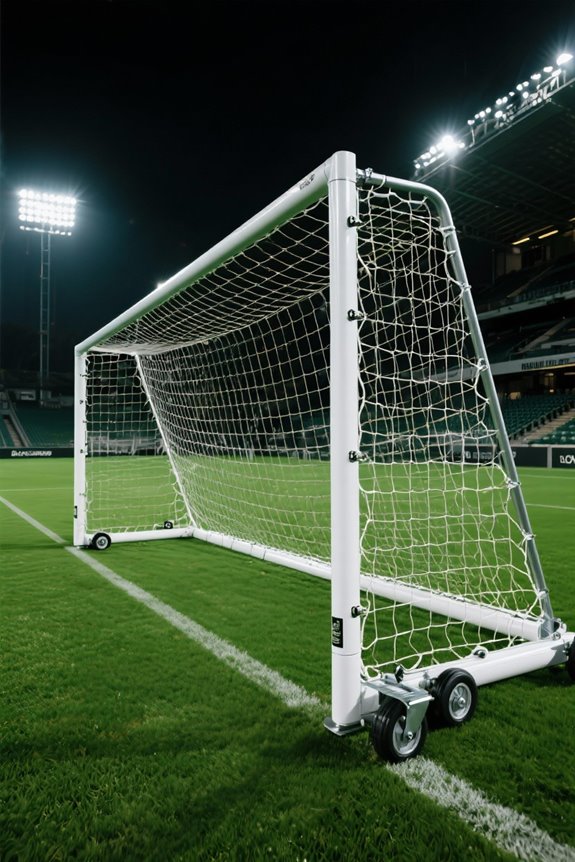
How Do Portable Goals Compare To Permanent Installation Goals?

Portable goals, usually made from lighter materials, last around 2-5 years, while permanent goals constructed from heavy-duty steel can endure for decades. Installation of permanent goals requires substantial digging and concrete footings, enhancing stability, but portable goals offer more mobility and convenience for casual play. Although portable options have lower initial costs, their frequent replacements increase long-term expenses. Consequently, choosing between these goals involves considerations of durability, maintenance needs, and overall investment value. More insights on this topic await.
Key Takeaways
- Portable goals are budget-friendly with lower initial costs but may require frequent replacements due to a lifespan of only 2-5 years.
- Permanent goals have higher upfront costs but offer long-term savings and require minimal maintenance over their decades-long lifespan.
- Installation of permanent goals involves extensive setup while portable goals allow for quick assembly and takedown, enhancing mobility.
- Portable goals are prone to localized wear on the field due to their lightweight design, while permanent goals minimize surface damage.
- Permanent installations provide stability and durability against harsh weather, unlike portable goals that can struggle in severe conditions.
Durability and Stability of Goals
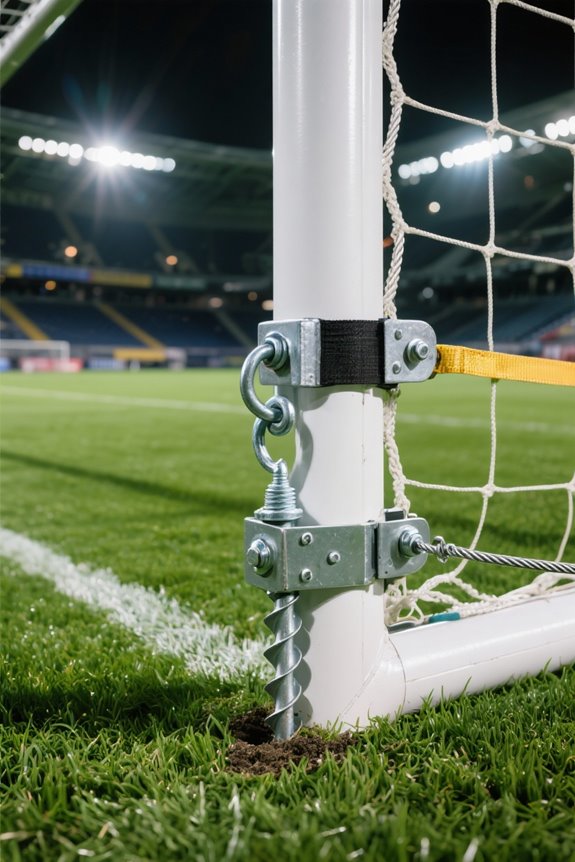
When comparing the durability and stability of portable and permanent goals, important distinctions arise that influence their use and longevity. Portable goals typically use lighter materials like polycarbonate or acrylic, which impacts their goal longevity. Consequently, they generally last two to five years, while permanent goals, constructed from heavy-duty materials like steel, exhibit far greater structural integrity. Permanent goals resist wear and tear, especially under harsh outdoor conditions, compared to their portable counterparts that are more vulnerable to environmental factors like wind and sun exposure. Additionally, portable goals require reliable anchoring systems to mitigate tipping risks, whereas permanent goals provide better weight distribution and stability, reducing potential safety hazards during use. Furthermore, durable materials used in permanent goals enhance their ability to withstand various outdoor elements, making them a more reliable option for long-term training.
Installation Requirements for Different Goal Types
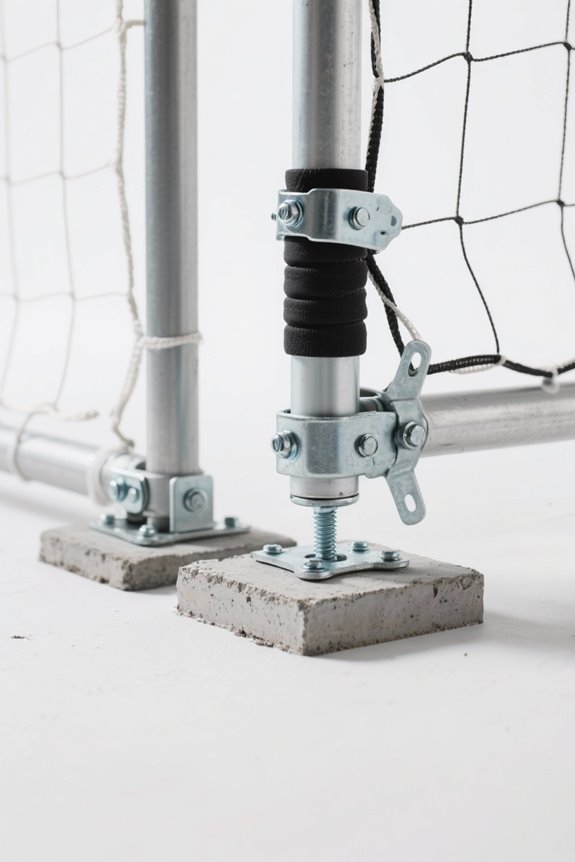
Installing different types of goals involves distinct requirements that must be carefully considered to confirm safety and effectiveness. Permanent goal installation typically necessitates digging holes approximately 16-18 inches in diameter and 45-50 inches deep, ensuring proper alignment along the centerline of the playing field. Installation tools required include hand shovels or power augers for precise hole creation, as well as survey instruments for alignment verification. Gravel is added for drainage, and drainage tubes are installed to prevent water accumulation. Concrete is essential for securing goalposts, with the amount generally between 10 and 14 bags, allowing for adequate curing time of at least 72 hours. These elements confirm that the goal structure remains stable and functional over time. Additionally, heavy-duty materials are critical to ensure the longevity and durability of the installed goals.
Mobility and Flexibility of Portable Goals
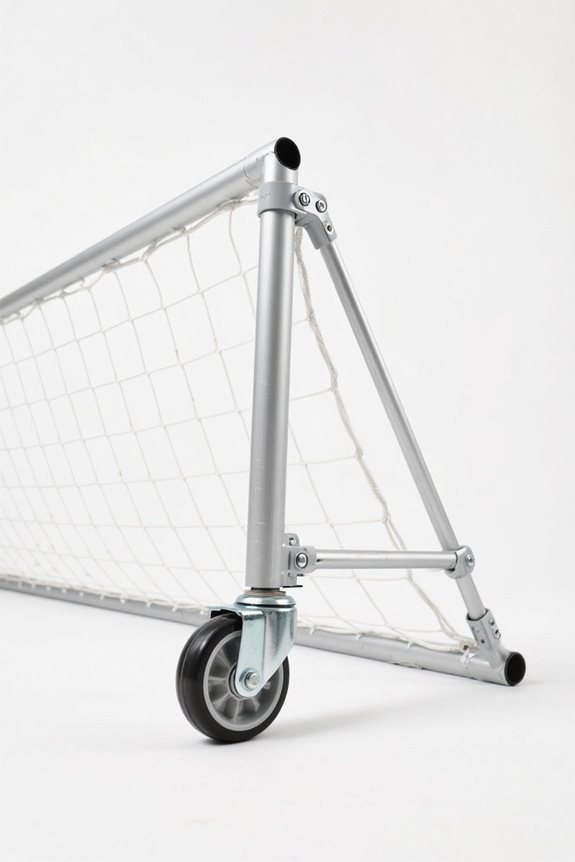
Portable goals offer significant advantages in mobility and flexibility, making them suitable for a variety of training environments and casual play. The lightweight construction allows one or two individuals to easily transport these goals to different locations, enhancing their mobility benefits. Their compact design fits conveniently in a car trunk, facilitating transport to parks, schools, or other training sites. With quick setup and takedown processes, often requiring no tools or minimal effort, coaches can implement flexible training sessions with little disruption. Additionally, portable goals are available in various sizes, accommodating diverse playing spaces and allowing for creative field layouts that adapt to multiple sports. This adaptability is essential for effective training and recreational activities. Furthermore, the quick assembly feature of pop-up goals promotes spontaneous play, making them a favorite among families and coaches alike.
Cost Considerations for Goal Selection
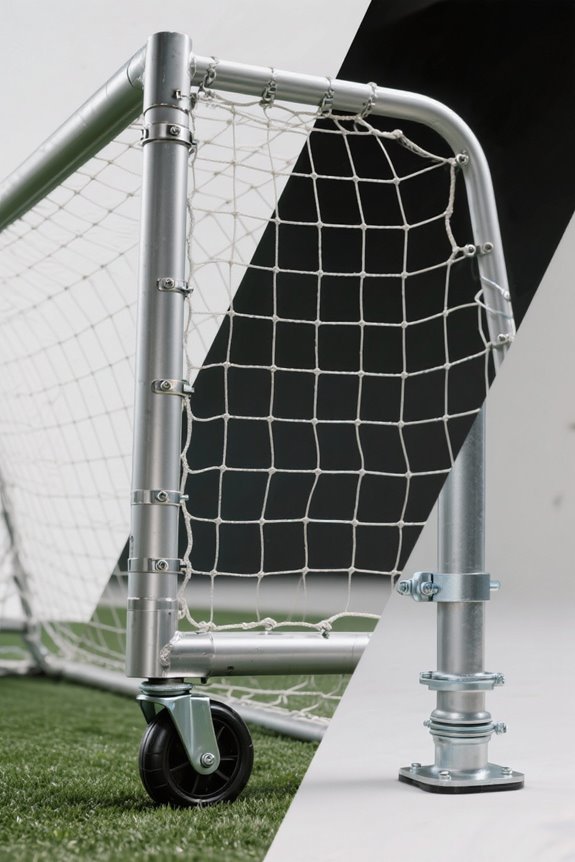
Selecting the appropriate type of goal for sports activities involves careful consideration of costs associated with various options. Portable goals generally feature lower initial purchase costs, ranging from $150 to $500, while permanent goals require a substantial investment, typically between $400 and $2,000 or more. Budget factors greatly influence choices, as portable goals eliminate installation and labor expenses, since they do not require professional help. Despite the cost trade-offs, long-term savings may arise from lower maintenance needs associated with permanent installations, which provide superior durability. Conversely, portable units may incur hidden costs, such as frequent replacement parts and potential damage from mobility. Ultimately, the goal selection should align financial constraints with anticipated usage and longevity needs. Additionally, many portable goals are designed for easy setup and quick assembly, making them ideal for spontaneous play.
Usability in Various Settings
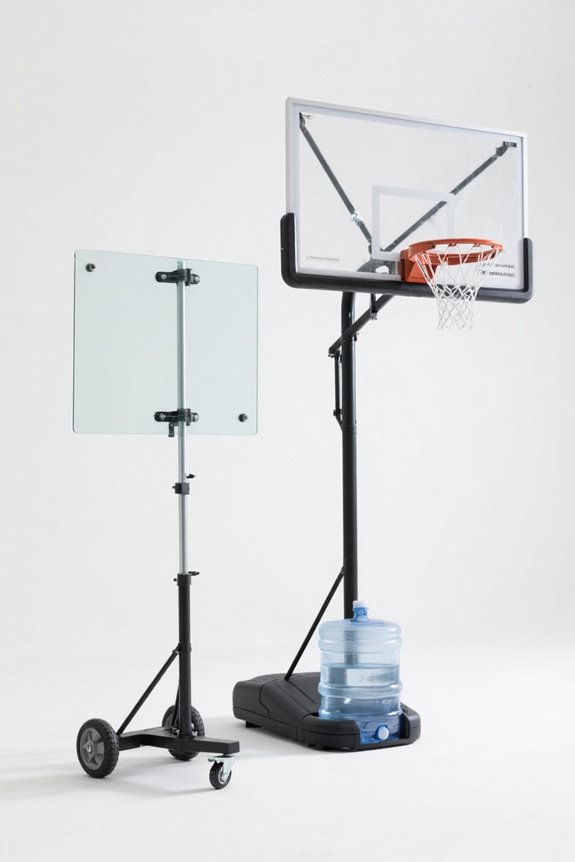
How do different goals perform across various sports environments? Portable goals provide significant location adaptability, allowing users to set them up easily in diverse places like parks and gyms. Their collapsible designs enhance user convenience, enabling quick assembly with minimal tools. In contrast, permanent goals are fixed, restricting their use to designated fields where installation is possible. These goals require a concrete foundation, limiting their placement options. Portable goals also accommodate various surfaces, including grass and hardwood, making them ideal for multi-sport settings. Their lightweight nature facilitates storage, beneficial in areas with limited space. Overall, portable goals offer greater versatility, allowing for efficient training and recreational use across different environments. Additionally, durable materials ensure that portable goals withstand outdoor elements, enhancing their usability in various settings.
Maintenance Needs and Longevity
The choice between portable and permanent goals extends beyond usability to encompass maintenance needs and longevity of the equipment. Permanent goals require minimal maintenance, typically involving seasonal checks for rust and structural integrity. They can last decades, often necessitating only component repairs rather than complete replacements. In contrast, portable goals demand more frequent inspections due to their mobility; users must regularly check anchors and structural stability. Repair strategies for portable goals often involve replacing worn-out parts, such as nets or wheels, and addressing bases susceptible to leaks or damage. While portable options provide flexibility, they typically have a lifespan of two to five years, leading to higher long-term costs associated with replacements and repairs compared to the durability of permanent installations. Additionally, net durability features play a crucial role in the overall lifespan of both types of goals.
Safety Standards and Considerations
Confirming that both portable and permanent goals comply with established safety standards is vital for minimizing risks associated with their use. Portable goals must meet safety regulations, such as ASTM F2950-14 in the U.S. or BS EN 16579:2018 in the UK, to enhance goal safety. They require proper anchoring to prevent tipping risks, whereas permanent goals, embedded in concrete, benefit from inherently higher stability. Regular inspections of joints, welds, and potential wear are important for both types to guarantee injury prevention. Portable goals, if improperly anchored or damaged, present increased accident risks. In contrast, permanent installations need maintenance to guard against corrosion and structural integrity, emphasizing the importance of installation by qualified personnel to uphold safety. Additionally, the choice of durable materials in goal construction can significantly impact their long-term safety and usability.
Performance Consistency Over Time
While portable goals offer flexibility for various sports settings, their performance consistency over time is often challenged by their inherent design characteristics. Permanent goals, embedded in concrete footings, provide superior structural integrity and stability, therefore minimizing performance variability. In contrast, portable goals utilize removable anchors or weighted bases that may not maintain consistent goal alignment, especially under repeated use or adverse conditions. The frequent assembly and disassembly of these goals can lead to wear on joints, adversely affecting their stability. As portable goals experience material fatigue, their net attachment reliability can decrease, leading to shifting positions that impact gameplay. Consequently, while portable goals are versatile, they may not match the long-term consistency of performance offered by permanent installations. Additionally, weather-resistant materials used in permanent goals contribute to their durability and performance under various environmental conditions.
Weather Resistance and Material Quality
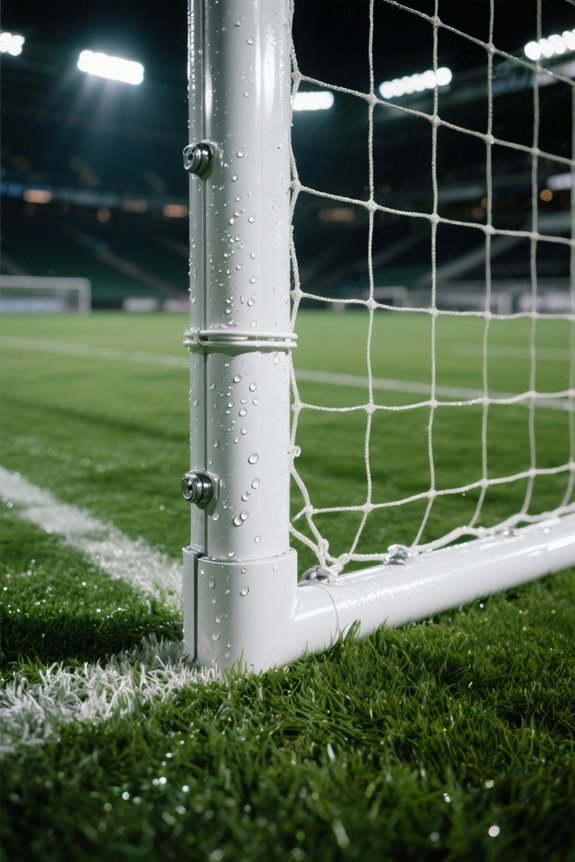
Weather resistance and material quality are critical factors influencing the performance and longevity of both portable and permanent sports goals. Portable goals typically use lightweight frames made from materials like fiberglass or aluminum, which may lack the necessary weather durability compared to the more robust construction of permanent goals. Permanent installations usually feature heavy-duty materials such as steel or advanced plastics, providing superior material resistance against harsh weather conditions. Additionally, both types utilize weather-resistant netting made from UV-treated nylon or polyester. However, portable goals require more frequent maintenance, as prolonged exposure to rain and sunlight can diminish their durability. Proper cleaning and storage practices can enhance the lifespan of portable goals in adverse weather, ensuring peak performance over time. Furthermore, high-density polyester is commonly used in goal nets to improve durability against various weather elements.
Ideal Use Cases for Portable Vs Permanent Goals
The choice between portable and permanent goals hinges on various factors, including flexibility, site requirements, and user levels. Portable use cases primarily benefit casual players, youth training, and multi-use fields where settings frequently change. Their lightweight design allows for quick setup and relocation, ideal for clubs needing adaptability. In contrast, permanent use cases cater to competitive teams, clubs, and schools that require stable, year-round installations, fixed in concrete footings for durability. Permanent goals serve intensive use, providing a dedicated practice environment, while semi-permanent options offer a balance between stability and flexibility. Understanding these distinctions helps users select the appropriate goal type for their specific needs, ensuring a suitable match for both training environments and athletic demands. Additionally, many portable goals are designed for quick assembly and setup, allowing for easy transportation and spontaneous gameplay.
Impact on Field Maintenance
Considering the significant role that field maintenance plays in athletic environments, the choice between portable and permanent goals can profoundly impact overall turf health. Portable goals can cause localized field wear due to weighted bases that compact the turf, leading to uneven wear patterns. This often results in higher maintenance frequency, as turf managers must repair damaged areas more frequently. In contrast, permanent goals, which are fixed in concrete footings, minimize ongoing surface damage, enabling more effective planning of maintenance regimes. Although they obstruct mowing routes, the reduced need for repositioning translates to fewer disruptions overall. Regular inspections are necessary for both types, but portable goals demand more frequent checks to guarantee stability, leading to increased maintenance requirements.
Storage and Transport Options for Portable Goals
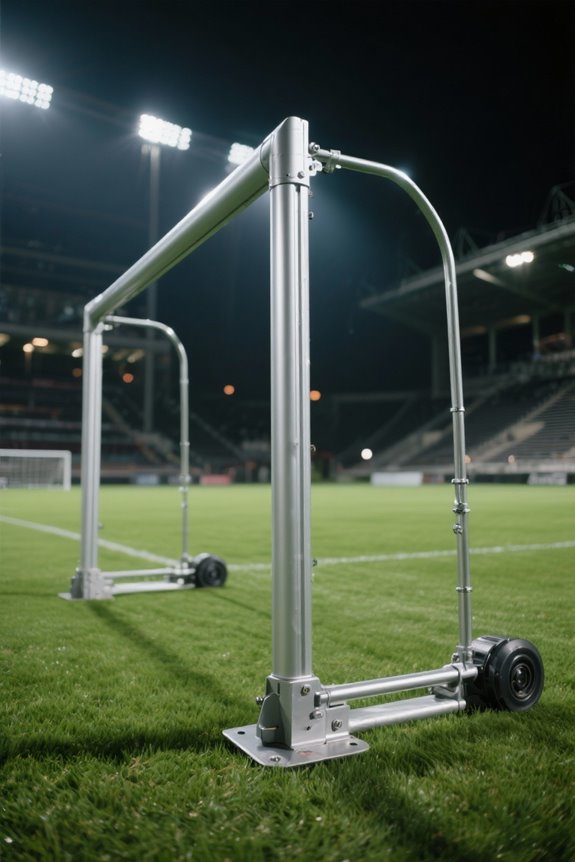
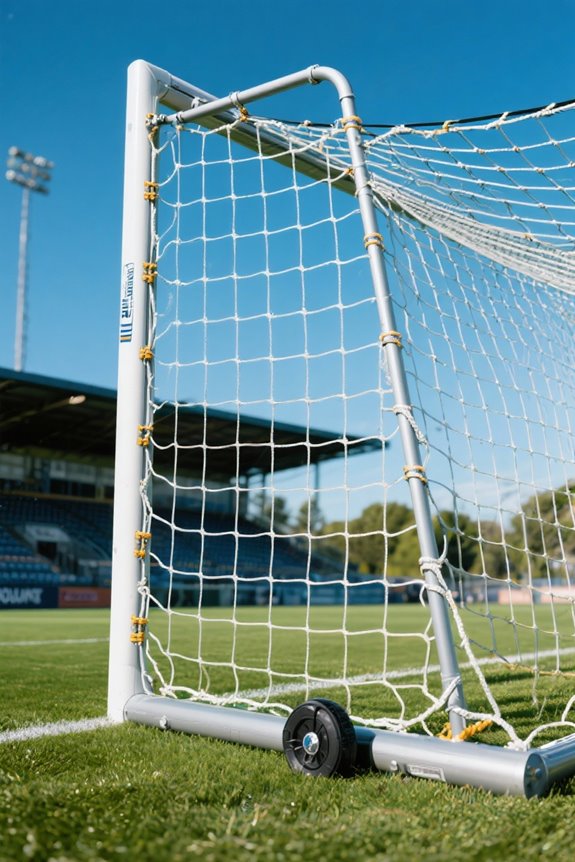
Portable goals offer versatile storage and transport options that enhance their usability across various athletic settings. Many portable models include integrated wheel kits, which provide efficient transport techniques for moving between fields or settings. These wheels fold into position, allowing users to roll the goal easily and lock it for stability during play. Additionally, foldable designs greatly reduce the storage footprint, making it simple to store goals in gym closets or sheds. When properly secured with locking mechanisms, like pins and chains, portable goals can be kept safely during transport and storage conditions. Proper handling, such as removing nets before storage, prevents wind damage and guarantees longevity. Overall, portable goals deliver practical and space-efficient solutions for both transport and storage.
Long-term Investment Value of Goal Choices
Evaluating the long-term investment value of goal choices reveals important considerations for users and organizations alike. Portable goals typically have lower upfront costs, making them more accessible, but they often depreciate faster due to wear and tear. Their resale value diminishes considerably over time, impacting long-term investment return. In contrast, permanent installations require a substantial initial investment, often ranging from several thousand to tens of thousands of dollars, but they provide better overall durability and consistent performance. Additionally, permanent setups can enhance property value, integrating high-quality spaces for training or entertainment. Over time, the lower maintenance costs of permanent goals can lead to greater long-term savings, particularly by eliminating frequent replacements associated with portable units.
Player Safety and Overall Experience
Ensuring player safety during sports activities is a critical consideration when selecting between portable and permanent goals. Portable goals are lightweight and can pose significant safety risks due to their potential to tip or collapse if not properly anchored. Many safety regulations stress the importance of secure anchoring, as instability has led to severe player injuries, including fatalities. In contrast, permanent installation goals are constructed from durable materials like heavy-duty aluminum, providing superior stability in all soil conditions. They feature secure anchoring systems, reducing the risk of player injuries during intense play. By adhering to safety regulations and guidelines, athletes can minimize risks associated with goal types, ultimately enhancing the overall experience during games.
Frequently Asked Questions
What Is the Weight Difference Between Portable and Permanent Goals?
Portable goals embody lightweight mobility with their aluminum structure, contrasting markedly with the heavy-duty composition of permanent goals, which anchor stability through substantial weight distribution and reinforced materials, ensuring longevity but limiting flexibility.
Are There Special Features Available for Portable Goals?
Portable goals offer special design features, such as collapsibility, lightweight materials, and adjustable sizes, which enhance their portability advantages. These aspects allow for easy transport, quick setup, and adaptability for various locations and uses.
How Does Goal Type Affect Player Training Efficiency?
The type of goal greatly influences player training efficiency, with portable goals enhancing training flexibility and skill adaptation through varied locations and drills, while permanent goals provide stability for realistic, high-intensity practice essential for skill development.
What Age Groups Benefit Most From Each Goal Type?
While some may doubt portable goals’ effectiveness, they are crucial for toddlers and young players, facilitating youth development in casual play. Permanent goals serve older youth and adults, ensuring safety and durability during competitive matches.
Can Portable Goals Be Used in Organized Leagues?
Yes, portable goals can be used in organized leagues, provided they meet team regulations. However, goal stability is essential; proper anchoring and regular inspections are necessary to guarantee safety and prevent movement during gameplay.