As an Amazon Associate, we earn from qualifying purchases. Some links on this site are affiliate links at no extra cost to you. Our recommendations are based on thorough research and editorial judgment.

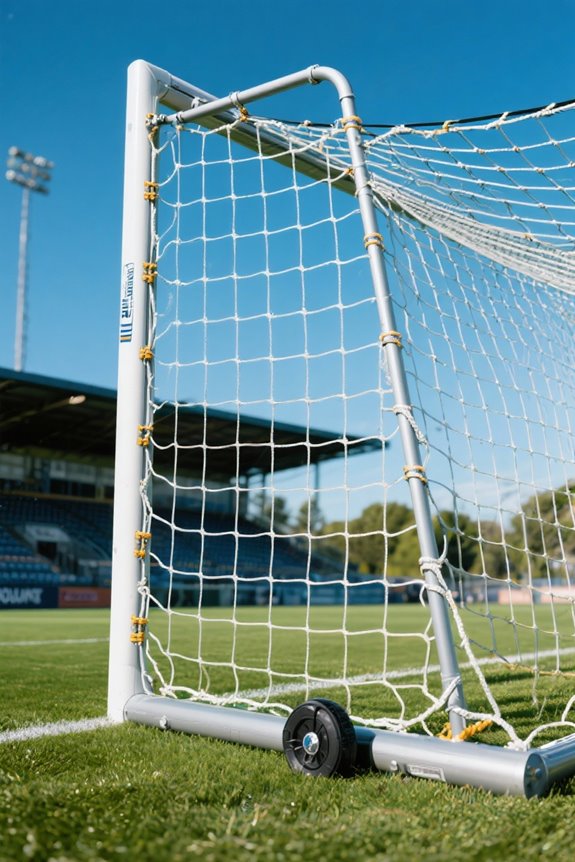
What Makes Professional Grade Soccer Nets More Durable?

Professional-grade soccer nets are especially durable due to their advanced material composition, which typically includes high-quality polyethylene and polypropylene. These materials provide flexibility and strength, with heavy-duty nets often using 60-ply designs. Additionally, smaller mesh sizes of around 120mm distribute impact forces evenly, preventing deformation. Strong, thicker 3mm to 4mm twine enhances longevity, while UV treatments safeguard against weather damage. Together, these features contribute to prolonged net lifespan, ensuring peak performance during rigorous play. More specifics on net care can be uncovered ahead.
Key Takeaways
- Professional-grade soccer nets use high-quality materials like 60-ply polyethylene and polypropylene, ensuring strength and durability against wear.
- Smaller mesh sizes and tighter designs distribute impact forces evenly, preventing deformation and extending the net’s lifespan.
- Thicker twine, typically 3mm to 4mm, enhances strength and longevity, with braided construction minimizing weak points and absorbing impact better than twisted options.
- Weather-resistant fabrics, combined with UV treatments, protect nets from sun damage and moisture, significantly improving durability in various conditions.
- Regular maintenance, including inspections for wear and cleaning, is crucial for prolonging the life of professional-grade soccer nets.
Material Composition of Professional Soccer Nets
When considering the material composition of professional soccer nets, polyethylene and polypropylene emerge as the predominant materials due to their exceptional physical properties. Polyethylene comprises approximately 30% of all plastic products, offering flexibility and strength through tailored molecular structures. Polypropylene is strong, lightweight, and resistant to tearing and impacts. Both materials display excellent weather resistance, including UV stability and moisture resistance. Additionally, heavy-duty 60-ply polyethylene nets are preferred for their enhanced durability and ability to withstand various weather conditions.
Natural fibers like cotton and jute can be used, but they require careful implementation to guarantee durability. Hybrid materials, which combine synthetic plastics with natural fibers, optimize properties for better performance. Additionally, eco-friendly alternatives like polylactic acid (PLA), derived from renewable resources, present robust options for environmentally conscious production while retaining durability comparable to traditional materials.
Impact of Mesh Size and Design
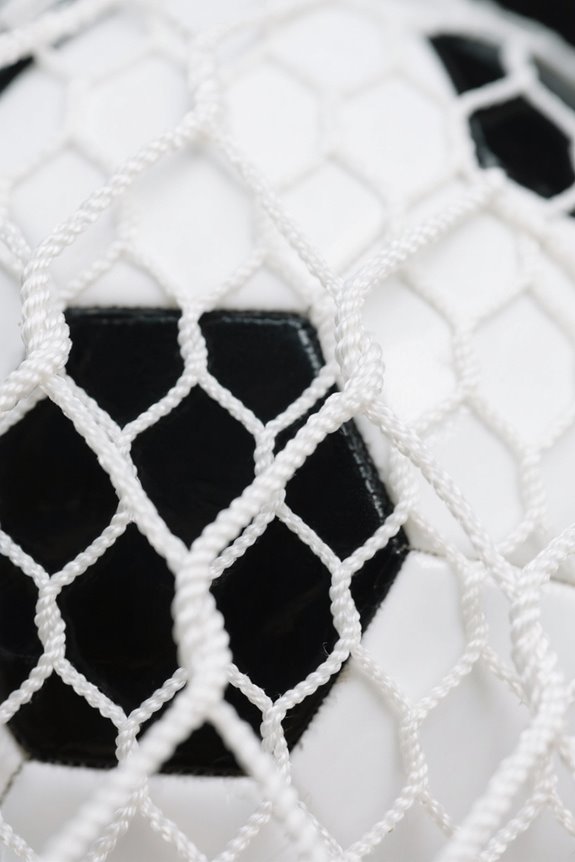
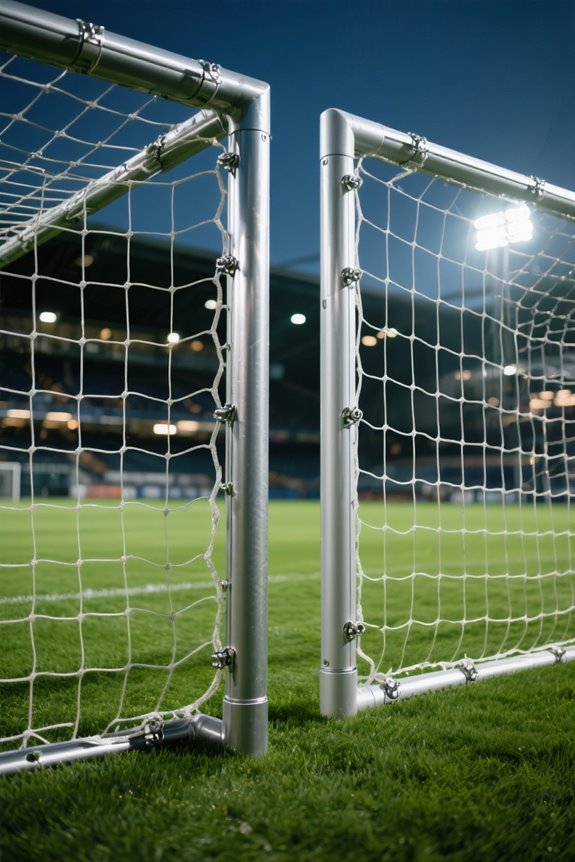
The choice of mesh size and design greatly affects the performance and durability of professional soccer nets. Smaller mesh openings, typically averaging around 120mm, distribute impact forces evenly, enhancing overall mesh durability. This distribution reduces stress concentration, preventing deformation and extending the net’s life under intense play. Tighter mesh designs, including hexagonal patterns, help absorb impact energy effectively while maintaining structural integrity during repeated stress. Moreover, knotless nets minimize friction points, allowing for better impact absorption and reducing wear. By balancing mesh size with the need for adequate ball containment, nets can prevent premature stretching while remaining visible and functional. Overall, an optimized mesh size and design contribute markedly to the longevity and reliability of soccer nets in professional environments. Additionally, using heavy-duty materials in construction can significantly enhance the net’s resilience against wear and tear during rigorous use.
Significance of Twine Thickness and Construction
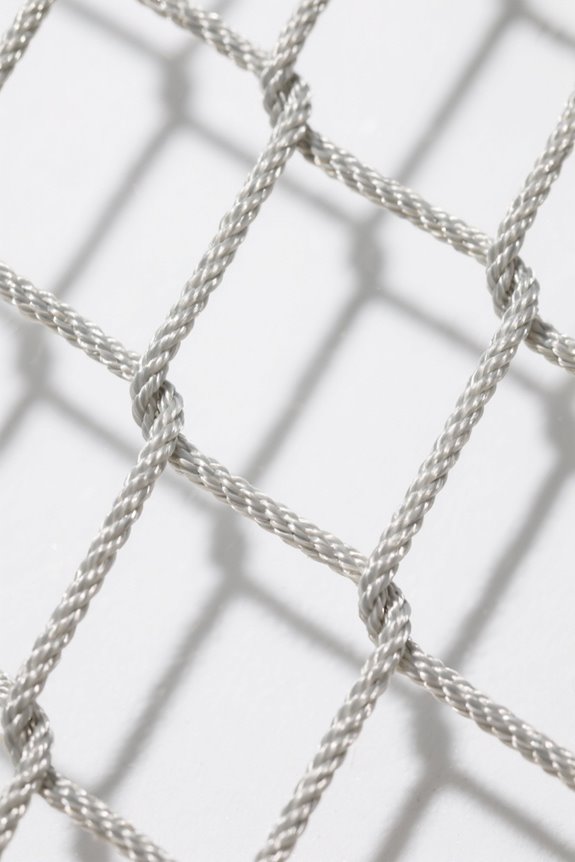
Twine thickness and construction play an essential role in determining the durability and performance of professional-grade soccer nets. Thicker twine, typically ranging from 3mm to 4mm, offers significant improvements in twine strength, enhancing net longevity. For practice use, 3mm twine suffices, while 4mm is ideal for competitive play due to its superior resistance against tearing and breakage from powerful kicks. Braided benefits arise from the construction quality; braided twine absorbs impact more effectively than twisted alternatives. This design maintains shape without fraying, providing resilience against repeated shots. Additionally, dense braiding reduces weak points, thereby minimizing the risk of sudden breaks. Ultimately, investing in quality twine construction supports performance under stress, leading to longer-lasting soccer nets. Furthermore, choosing nets made from durable materials ensures they can withstand various weather conditions and intense gameplay.
Weather Resistance Factors
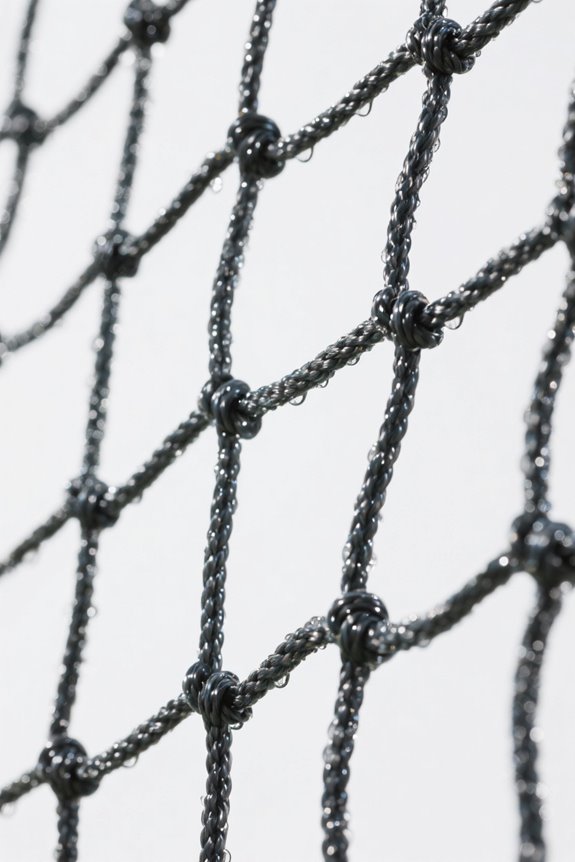
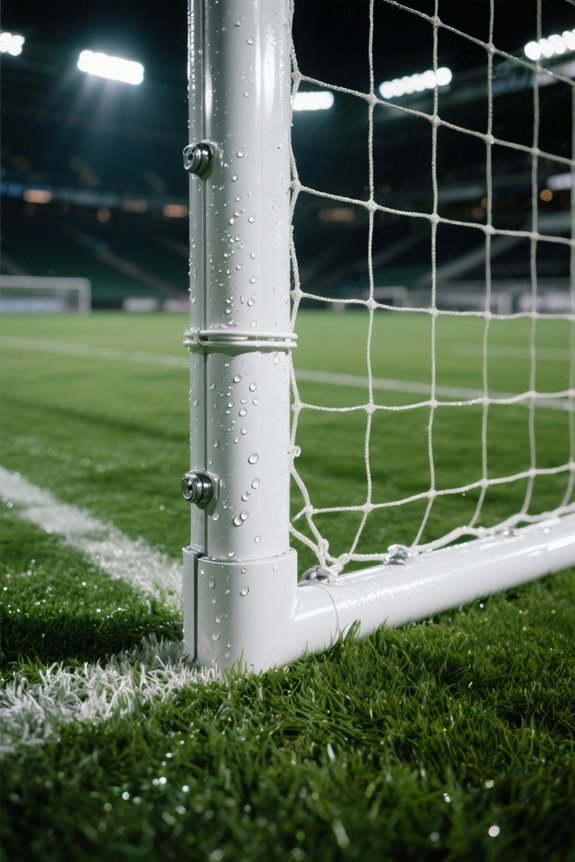
Effective weather resistance is a crucial factor in the performance and longevity of professional-grade soccer nets. High-density polyethylene (HDPE) is commonly used for its exceptional durability and weather resistance. This material can withstand sun exposure, rain, and temperature fluctuations without significant degradation. Additionally, UV treatments prevent discoloration and damage caused by ultraviolet rays. Weather-resistant nets repel water, reducing absorption that leads to sagging and material weakening. They dry quickly, minimizing the risk of mold and mildew. Braided construction helps distribute tension evenly, while knotless designs eliminate weak points exposed to adverse weather. Enhanced tensile strength specifications guarantee durability against wind loads and heavy rain impacts, highlighting the importance of robust weather resistance in maximizing performance and reducing overall environmental impact. Furthermore, professional-grade soccer goals are often designed with heavy-duty materials that enhance their resilience against harsh conditions.
Attachment and Fastening Systems
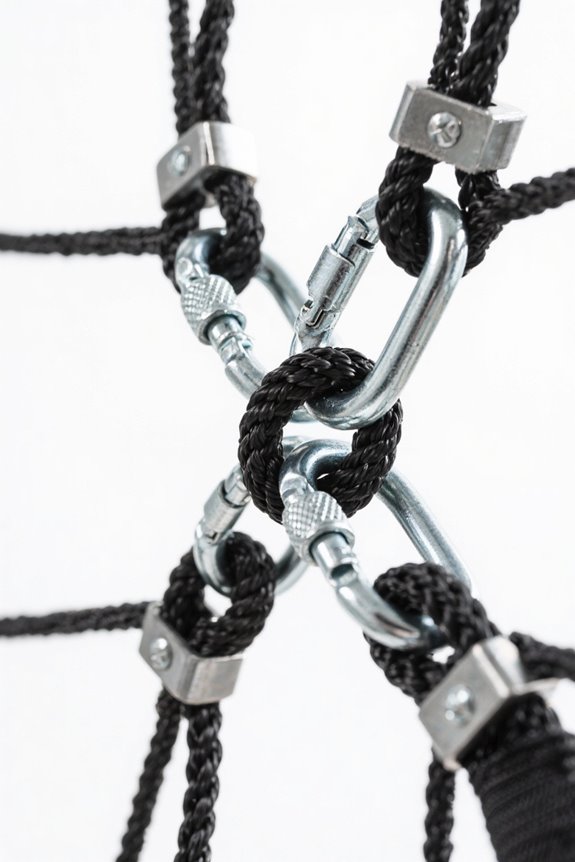
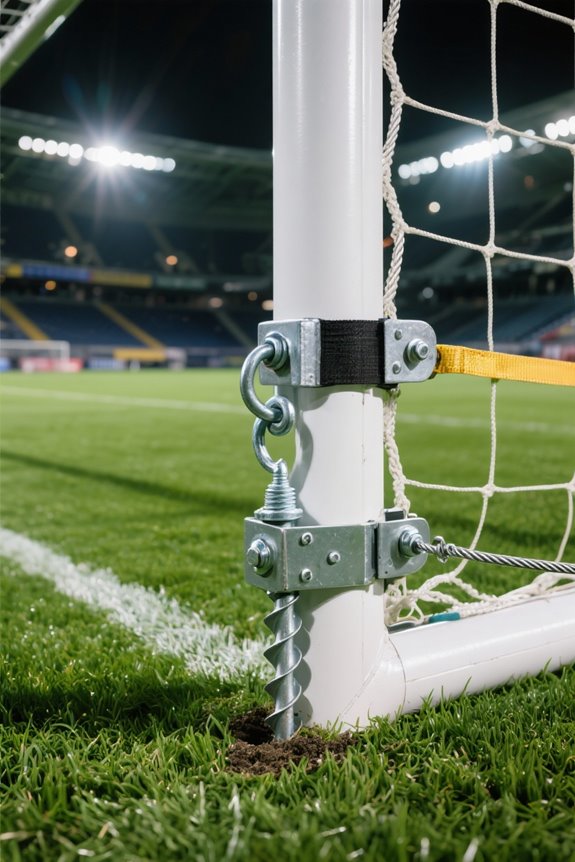
When selecting attachment and fastening systems for professional-grade soccer nets, various options are available that guarantee both stability and durability. Attachment techniques like the Kwik Lock® Net System provide secure cable or clip fastening around the goal frame, enhancing net stability. Additionally, cable systems use galvanized steel to maintain tension while meeting regulatory standards set by FIFA, NCAA, and NFHS. Fastening innovations include versatile hook-and-loop straps for easy adjustment and net clips offering quick installation. Semi-permanent anchors made from galvanized steel secure nets firmly in place, especially in competitive conditions. These robust systems effectively reduce wear by maintaining consistent tension, minimizing sagging, and prolonging the net’s lifespan—ultimately supporting prolonged net integrity during intense play. Furthermore, durable materials such as 450D thickened oxford cloth are often utilized in the construction of these nets to withstand harsh weather conditions.
Maintenance Best Practices
Maintenance of professional-grade soccer nets is crucial for guaranteeing ideal performance and longevity. Regular cleaning practices dictate a cleaning frequency that should increase after heavy use or poor weather. Utilizing mild soap and water prevents damage, while avoiding abrasive materials protects net fibers from weakening. Inspection routines must include frequent checks for wear, such as fraying or discoloration, particularly at vulnerable stitched borders. It is essential to examine fasteners and anchors to guarantee secure attachment. Implement annual thorough reviews to address any issues, such as tightening hardware and evaluating paint on frames to prevent rust. Additionally, investing in high-quality materials can significantly enhance the durability of the nets. Proper care considerably extends the lifespan of soccer nets, preserving their structural integrity and optimizing their functionality throughout their usage.
Replacement Guidelines for Longevity
Replacement guidelines for professional-grade soccer nets are essential to maintaining performance and safety on the field. The replacement frequency of these nets typically spans every 1-3 years, depending on usage intensity and environmental exposure. Under heavy use, professional-grade nets often last 2-3 seasons before requiring replacement. Regular inspection practices are crucial in identifying wear points that signal a need for replacement; issues such as holes larger than a few centimeters or significant stretching indicate compromised integrity. Additionally, using higher quality materials, like solid braided nylon, extends net life, while proper installation promotes durability. Compliance with safety regulations guarantees that nets meet needed standards, supporting player safety and game integrity on the field. Many top brands, such as Franklin Sports, offer durable options designed for various weather conditions.
Frequently Asked Questions
How Much Do Professional-Grade Soccer Nets Typically Cost?
“Don’t cut corners on quality.” Professional-grade soccer nets typically cost between $96 and $495, reflecting variations in materials and construction. Budget considerations highlight the importance of evaluating cost comparisons for durability and long-term use in competitive play.
Can Professional Nets Be Used for Recreational Play?
Professional nets can effectively be used for recreational play, offering superior durability compared to recreational nets. This durability comparison enhances the playing experience, making them a viable option for serious recreational activities and skill development.
What Sizes Do Professional Soccer Nets Come In?
What sizes do professional soccer nets come in? Professional soccer nets typically measure 8′ x 24′, meeting age requirements for competitive play. Variations exist for various league levels, adapting to net dimensions for appropriate user safety and skill development.
Are There Eco-Friendly Options for Soccer Nets?
Eco-friendly options for soccer nets exist, incorporating sustainability practices that minimize environmental impact. These nets utilize recycled materials, biodegradable polymers, or natural fibers, promoting reduced waste and less pollution, while still providing quality performance in sports.
How Do I Choose the Right Soccer Net for My Field?
Approximately 75% of soccer injuries occur in conjunction with poor equipment choices. To choose the right soccer net, one must consider field dimensions and select appropriate net materials, such as durable polyethylene, ensuring ideal performance and longevity.