As an Amazon Associate, we earn from qualifying purchases. Some links on this site are affiliate links at no extra cost to you. Our recommendations are based on thorough research and editorial judgment.

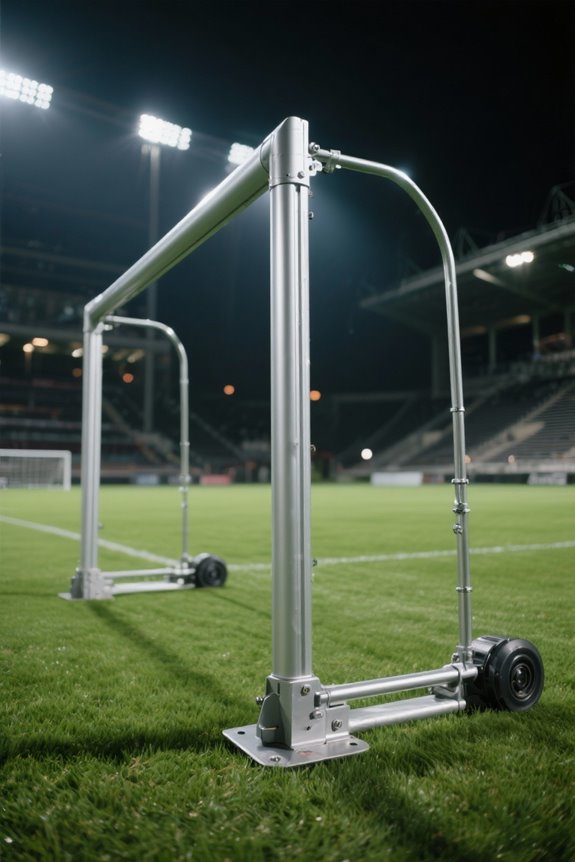
Why Do Some Goals Need Weighted Bases Instead Of Ground Stakes?

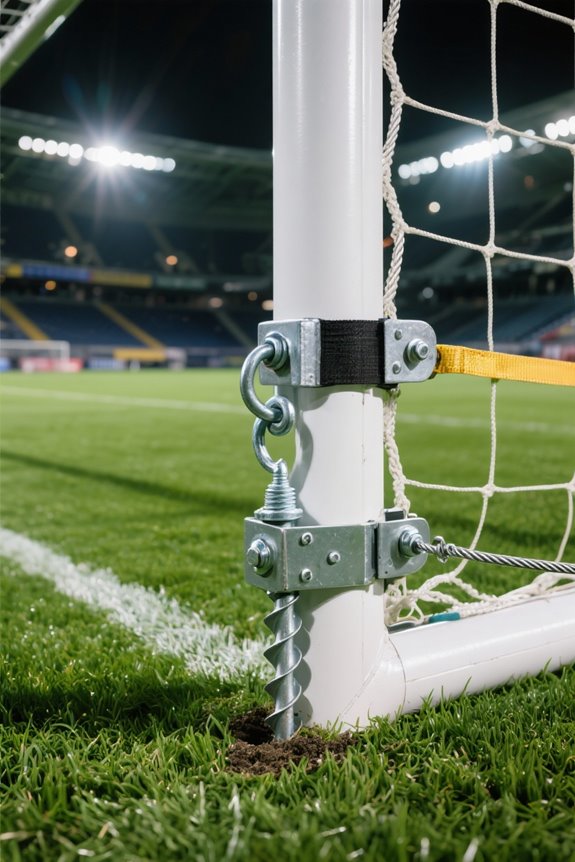
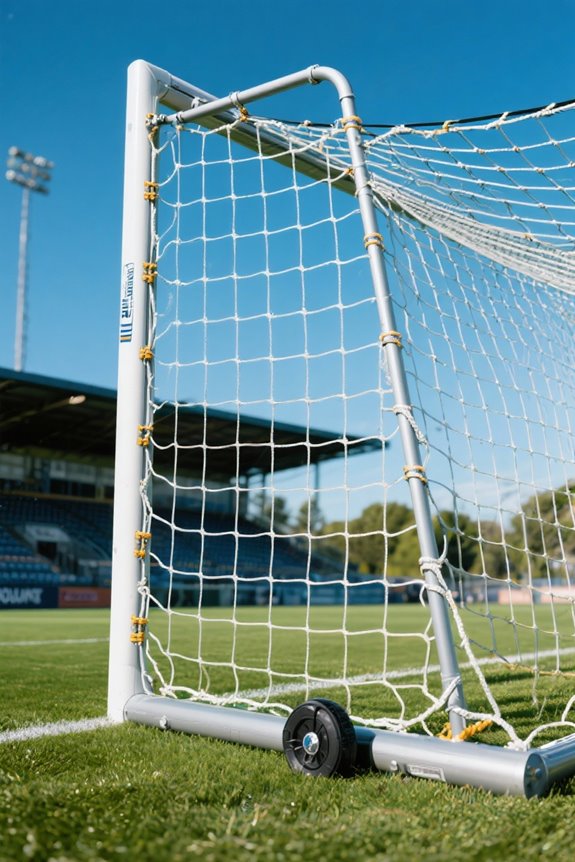
Some goals require weighted bases instead of ground stakes for enhanced stability on hard surfaces. Weighted bases offer superior weight distribution, preventing lateral and vertical movement, which reduces tripping hazards. They secure safety in windy conditions by counteracting forces that could overturn goals. Moreover, portable and easy to reposition, weighted bases do not penetrate the ground, making them suitable for various terrains. Understanding these distinctions helps in making informed choices for goal stability and safety in sports facilities.
Key Takeaways
- Weighted bases enhance stability on hard surfaces where ground stakes are ineffective, preventing tripping hazards and accidents.
- They provide superior weight distribution, effectively counteracting wind forces and reducing the risk of overturning goals.
- No soil penetration is needed with weighted bases, making them suitable for a variety of surfaces, including artificial turf.
- Weighted bases offer improved portability and quick set-up, allowing for easy repositioning without damaging the ground.
- High durability and weather-resistant materials in weighted bases ensure long-term reliability and reduced maintenance compared to ground stakes.
Stability and Safety Benefits of Weighted Bases
Weighted bases considerably enhance the stability and safety of goals in various environments. They provide superior weight distribution, creating a larger surface area that exerts downward force to resist lateral and vertical movement. This guarantees consistent anchorage, which is essential for accident prevention, as stakes can loosen in soft or unstable soil. Unlike ground stakes, weighted bases maintain stability on hard surfaces such as concrete and asphalt, effectively preventing dislodgment that can lead to tripping hazards. The added mass counteracts wind forces, reducing the risk of goals overturning. Furthermore, they allow for easy repositioning without damaging surfaces, facilitating safer handling. In environments subject to freeze/thaw cycles, they remain effective, further enhancing safety by minimizing risk from sudden goal failures. Additionally, the use of breathable, absorbent materials in weighted bases can contribute to overall effectiveness by ensuring proper moisture management and reducing deterioration over time.
Surface Compatibility: Choosing the Right Option

When selecting a goal anchoring system, one must consider the compatibility of the surface type to guarantee ideal safety and stability. For hard, non-penetrable surfaces like concrete or asphalt, weighted bases are the preferred installation method. These bases prevent surface damage and provide stability without the need for digging. Conversely, ground stakes are suitable for areas with soil that can be penetrated, ensuring a secure hold. However, loose gravel or compacted soil may hinder stake effectiveness, leading to instability. In environments where surface integrity is critical, such as artificial turf, weighted bases are crucial for maintaining structural support without causing harm. Ultimately, selecting the appropriate anchoring system is essential for optimal performance across various surface types. Additionally, many models of portable soccer goals prioritize stability features to enhance safety during play.
Terrain Adaptability for Various Playing Fields
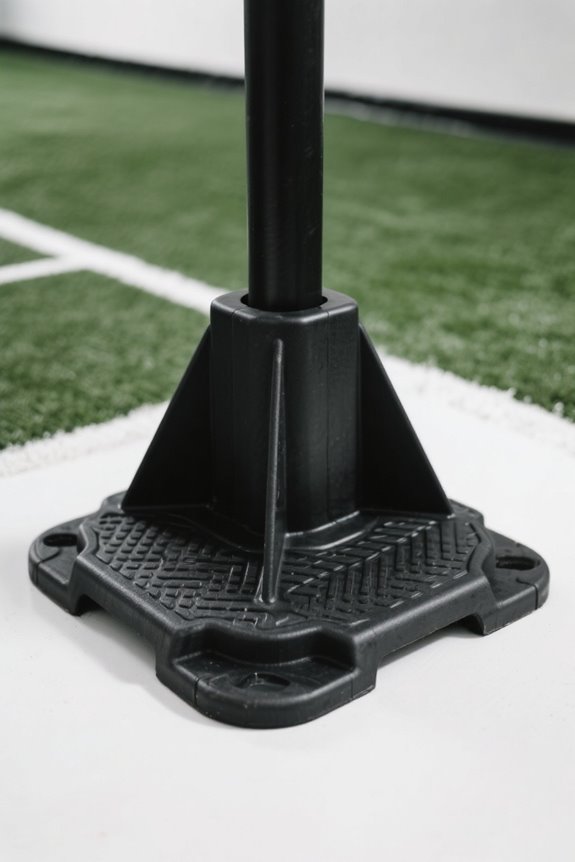
Adaptability to various playing fields is essential for guaranteeing ideal performance and safety of sporting goals. Terrain variations, such as hard surfaces like concrete or soft soils, demand specific adaptability strategies. Weighted bases provide a counterbalance that does not penetrate the ground, making them suitable in environments where traditional stakes cannot be effectively used. In contrast, ground stakes require soft, cohesive soils for proper anchoring; rocky or loose terrains often render them ineffective. Freestanding goals with built-in weights can be adjusted by changing their ballast, allowing them to stabilize across multiple surface types. This adaptability guarantees that the goals maintain structural integrity while complying with safety regulations, minimizing risks associated with unstable or inappropriate anchoring methods on diverse playing fields. Notably, portable soccer goal designs such as those with weighted bases enhance versatility, enabling use in various environments without compromising safety.
Environmental and Weather Considerations
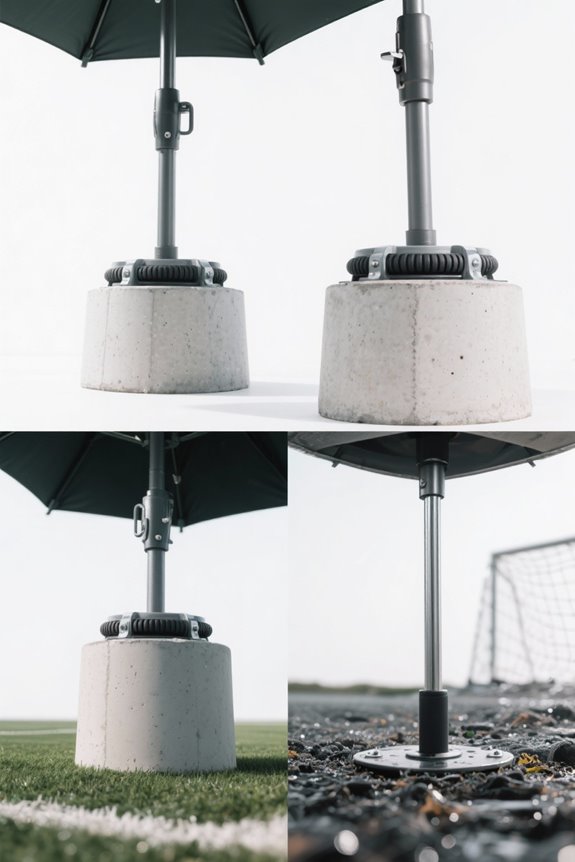
Environmental factors play an essential role in determining the effectiveness and safety of sporting goals. Wind and weather resilience greatly impact goal stability, especially in outdoor environments. Weighted bases provide enhanced support in windy conditions where ground stakes may loosen. The impermeable surface compatibility of weighted bases aligns with environmental regulations, allowing their use on artificial turf or concrete without risking damage. Additionally, waterproof materials enhance longevity and reduce the need for frequent replacements due to environmental exposure. In settings with unstable soil or inclement weather, weighted bases offer reliable performance without the risk of displacement. Their design minimizes ecological disruption, preserving plant health and local ecosystems while ensuring athlete safety and satisfaction. Moreover, the incorporation of weather-resistant materials in goal construction can further improve their performance under harsh conditions.
Material Durability: Comparing Construction Differences
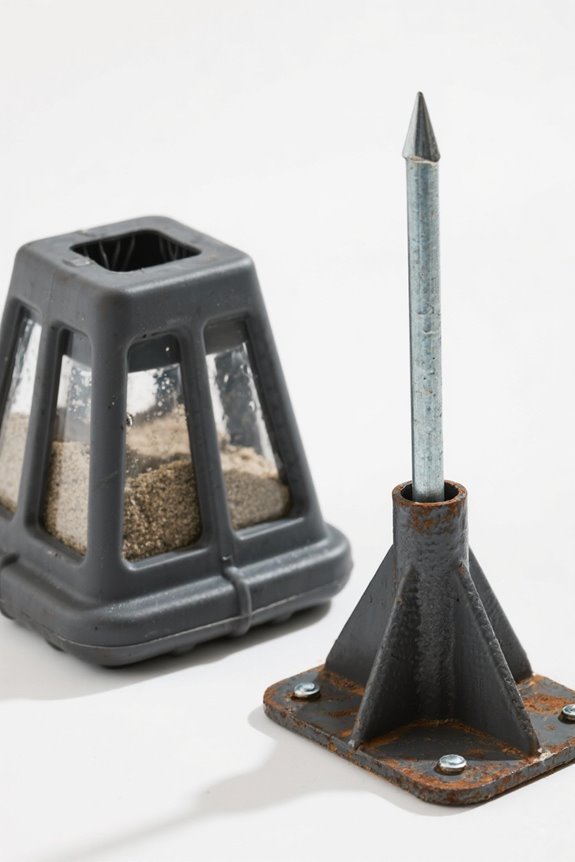
Material durability is an essential consideration in the selection of stakes and weighted bases for sporting goals. Hardwood stakes, such as oak and poplar, exhibit exceptional hardwood durability, resisting warping, cracking, and snapping under pressure. This guarantees they remain reliable in tough conditions. In contrast, composite stakes offer lower rigidity, providing reduced stability particularly on shifting ground, ultimately impacting their longevity. Metal stakes require special tools for installation and can corrode over time, diminishing their lifespan if untreated. While hardwood maintains clear markings better than composites, it is the material’s overall resilience that establishes a foundation for repeated use in various environments. Ultimately, understanding the differences in material durability aids in choosing the appropriate support system for specific applications. Additionally, the use of weather-resistant properties in goal construction can further enhance their performance and longevity in outdoor settings.
Practical Use: Portability and Setup Efficiency
In various sporting applications, weighted bases offer significant advantages in portability and setup efficiency compared to traditional ground stakes. Their design allows for easy setup on any surface, including concrete, which enhances event versatility. Unlike ground stakes, weighted bases do not require soil penetration, enabling swift installation and removal without specialized tools. This efficiency reduces labor intensity, as there is no need for manual driving of stakes. Furthermore, their modular design facilitates better transportation logistics; for instance, some bases can be filled with water or sand after arrival, minimizing transport weight during logistics. Additionally, weighted bases accommodate changing weather conditions by allowing easy adjustments, thereby ensuring stability while protecting the playing surface from damage. This versatility is especially beneficial for portable options that are designed for quick setups in various locations.
Safety and Regulatory Compliance in Sports Facilities
Proper safety measures and compliance with regulations are paramount in sports facilities to guarantee the well-being of participants. Goal safety is vital, especially for movable soccer goals, which can tip over and cause serious injuries or fatalities if not properly secured. Regulations, such as ASTM F2950-14, mandate that these goals be either anchored or equipped with weighted bases for effective tip-over prevention. Facilities must guarantee that goals withstand external forces and maintain structural integrity for at least five years. Regular inspections are necessary to identify potential hazards like loose components. Sports organizations also emphasize educating stakeholders on the risks associated with climbing goals, further supporting a culture of safety and compliance within sports facilities. Additionally, the importance of durability in soccer goals cannot be understated, as investing in quality equipment helps prevent accidents related to goal instability.
Long-Term Reliability of Goal Support Solutions
Although various anchoring methods exist, the long-term reliability of goal support solutions greatly hinges on the use of weighted bases. These bases provide consistent stability across diverse soil types, avoiding issues associated with ground stakes, which may loosen due to environmental conditions. Weighted bases excel in maintaining long-term performance, as they resist wear from moisture and do not suffer from rusting, unlike metal stakes. Additionally, weighted bases require markedly lower maintenance costs due to their durable materials, reducing the need for frequent checks and adjustments. This reliability becomes vital in locations with challenging soil conditions, enhancing user safety and mitigating liability risks. Overall, the choice of weighted bases aligns with practical longevity and reduced upkeep for goal support systems. Furthermore, goals made from high-strength galvanized steel are designed to withstand harsh weather conditions, thus complementing the stability offered by weighted bases.
Frequently Asked Questions
Can Weighted Bases Be Used in Both Indoor and Outdoor Settings?
Weighted bases can indeed serve both indoor applications and outdoor usage, cleverly sidestepping the need for ground stakes. Ironically, while appearing cumbersome, they excel at providing stability in spaces where traditional anchoring methods simply won’t cut it.
How Do I Clean and Maintain Weighted Goals?
To clean and maintain weighted goals, use mild soap for goal cleaning, inspect for damage, refill bases regularly, and dry components thoroughly. Follow maintenance tips to guarantee longevity and peak performance of the equipment.
What Are the Cost Differences Between Weighted Bases and Ground Stakes?
A festival utilizing both setups discovered through cost comparison that while weighted bases initially required higher investment, a value analysis revealed long-term savings due to reduced damage risks, while ground stakes incurred frequent replacement costs.
Are There Specific Brands Known for Quality Weighted Bases?
Quality weighted base brands include Feather Flag Nation, Sheltent, and Instantprint, known for using durable materials. These brands offer stability and portability, ensuring reliable performance in various conditions where traditional stakes are inadequate.
How Do I Store Weighted Bases When Not in Use?
To store weighted bases effectively, follow best storage practices by cleaning and fully drying them, using cool, dry areas while avoiding direct sunlight. Seasonal storage tips include stacking and covering to prevent moisture damage and guarantee shape retention.