As an Amazon Associate, we earn from qualifying purchases. Some links on this site are affiliate links at no extra cost to you. Our recommendations are based on thorough research and editorial judgment.


How Do Weighted Vests Enhance Soccer Conditioning Programs?

Weighted vests enhance soccer conditioning programs by adding external loads of 5-12.5% of body mass, which improves strength, endurance, and agility. This resistance training leads to better jumping ability and sprint performance. Chronic use can boost anaerobic capacity and neuromuscular control, reducing injury risks. The integration of vests creates training variation, enhancing motivation through gamified workout structures. Athletes can see significant improvements in their performance metrics, which highlights the benefits of incorporating weighted vests into their training regimes.
Key Takeaways
- Incorporating weighted vests boosts muscular resilience and neuromuscular control, vital for dynamic soccer movements and overall performance enhancement.
- Gradual addition of 10-12.5% body mass vests during training improves sprint metrics and anaerobic performance, benefiting soccer athletes significantly.
- Resistance training with weighted vests enhances jumping ability by engaging fast-twitch muscle fibers, increasing power output essential for aerial duels in soccer.
- Using weighted vests during agility drills improves change of direction skills, crucial for quick movements and strategic plays on the field.
- Weighted vests promote bone health and injury prevention by stimulating growth and joint stability, supporting safer training for soccer players.
The Science Behind Weighted Vests in Soccer Training
When athletes engage in soccer training with weighted vests, they experience distinct physiological benefits that enhance their performance. Weighted vests create an external load of approximately 10-12.5% of body mass, which optimizes training adaptation strategies by stimulating musculoskeletal adaptations. This additional load leads to improved bone density and muscle hypertrophy due to increased mechanical stress, while cardiovascular adaptations include elevated heart rate and oxygen consumption. These enhancements result in increased VO2 max, supporting overall endurance. Additionally, greater caloric burn assists in body composition improvements, particularly in reducing body fat percentage. The weighted vest physiology encourages enhanced anaerobic and aerobic capacities through more intense effort during soccer-specific drills, such as small-sided games and sprint re-warmups, facilitating overall performance improvements. Moreover, incorporating soccer gear organization into training routines can further streamline athletes’ preparation and focus on performance.
Enhancing Sprint Performance With Weighted Vests

Enhancing sprint performance in soccer players can be achieved through the strategic use of weighted vests during training. While acute weighted vest use may negatively impact sprint velocity due to increased ground contact time and reduced step frequency, chronic training proves more beneficial. Repeated use, with vest loads around 10-12.5% of body mass for twice a week over six weeks, leads to significant improvements in sprint performance metrics. This training enhances both anaerobic and aerobic capacities, which aid in sprint endurance. Additionally, small-sided games combined with weighted vest training encourage better change of direction and jumping performance, supporting overall sprint enhancement. Coaches should integrate these sessions carefully to maximize weighted vest benefits while minimizing fatigue and injury risks. The right waterproof soccer cleats can further support training by keeping players comfortable and dry in various conditions.
Recommended Products

HIGHLY FLEXIABLE AND DURABLE TO USE: Each weighted vest is either 18lbs , 28lbs , 35lbs, 45lbs, 65lbs, 80lbs or 100lbs with removable weights to scale to your training levels and goals. Specifically engineered for performance and comfort during any workout. Our compact design allows extreme weight with less bulkiness ensuring no restrictions in your range of motion
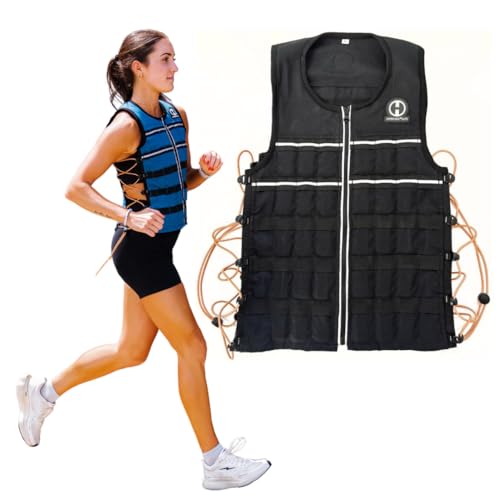
WALKS FEEL STRONGER, NOT HARDER — Patented stretch design holds 20 lb of steel micro-weights evenly across your torso — zero bounce, zero shoulder strain. Walk for miles with resistance that supports bone health, weight loss, and builds strength.

ADVANCED SOCCER GPS TRACKER VEST: The STATSports Academy soccer tracking vest records 24 metrics including speed, distance, sprints, exertion, and heart rate zones. FIFA-approved and trusted by elite soccer and football teams worldwide.
Improving Jumping Ability Through Resistance Training

Improving jumping ability through resistance training is crucial for soccer players who aim to enhance their on-field performance. Utilizing weighted vests during training can greatly enhance jump mechanics by increasing muscle activation and neuromuscular coordination. For best results, players can wear vests that weigh 10-12.5% of their body mass, balancing added resistance with proper technique. Studies show that short-term use of these vests, combined with sport-specific drills, enhances explosive jumping through resistance adaptations. Additionally, a six-week training program under these conditions can lead to substantial gains in vertical jump height. This progressive overload not only engages fast-twitch muscle fibers but also enhances tendon stiffness, improving overall power output crucial for soccer-related jumping activities. Incorporating athletic tape can further support injury prevention during intense training sessions.
Recommended Products

Solid iron weights - weights made to last a life time. Each weight Weights 3lbs and can be removed and added within seconds.
WALKS FEEL STRONGER, NOT HARDER — Patented stretch design holds 10 lb of steel micro-weights evenly across your torso — zero bounce, zero shoulder strain. Walk for miles with resistance that supports bone health, weight loss, and builds strength.

CUSTOMIZABLE TRAINING INTENSITY: Easily insert or remove 2 lb iron blocks to adjust your tactical weighted vest for men. Choose between 25 lb or 35 lb options for running, rucking, or WODs.
Boosting Agility and Change of Direction Skills

Weighted vest training remarkably enhances agility and change of direction (COD) skills in soccer players, as it challenges the body’s neuromuscular coordination and muscle activation patterns. Incorporating weighted vests that add 12.5% of body mass during agility drills can lead to significant improvements in COD performance, measured between 4.7% and 11.2%. This training modality helps develop rapid acceleration and deceleration, essential for effective direction changes on the field. By enhancing proprioceptive feedback and utilizing short, intense re-warm-ups with vests, players can improve neuromuscular readiness. Additionally, chronic usage stimulates adaptations beneficial for maintaining agility throughout matches, allowing athletes to manage the physical demands of frequent directional shifts while enhancing overall movement efficiency during high-intensity scenarios. Moreover, using strength training accessories can further complement these agility drills by building muscle endurance relevant to soccer performance.
Recommended Products
ADVANCED SOCCER GPS TRACKER VEST: The STATSports Academy soccer tracking vest records 24 metrics including speed, distance, sprints, exertion, and heart rate zones. FIFA-approved and trusted by elite soccer and football teams worldwide.

DURABILITY - Made with extremely strong 1000D nylon. Shoulder straps padded with TPE foam for maximum comfort even throughout long workouts. Double-stitched using the highest industrial standards for long use.

【CUSTOMIZABLE WEIGHT LEVELS | EASILY ADD OR REMOVE WEIGHTS】Adjust the intensity of your workout with removable iron bars. Our weighted vest comes in 25lb (12-bars), 35lb (16-bars), and 45lb (20-bars) variations, allowing you to tailor it to your specific fitness needs and goals.
Aerobic Conditioning Gains From Weighted Vest Workouts

While traditional aerobic conditioning often relies on bodyweight exercises or standard drills, incorporating weighted vests can considerably elevate the intensity and effectiveness of these workouts. The addition of a weighted vest increases cardiovascular demand, consequently improving aerobic capacity during training sessions. Studies show that young soccer players experienced statistically significant aerobic performance gains after just six weeks of using vests equivalent to 12.5% of their body mass. This resistance challenges the cardiorespiratory system, enhancing energy efficiency and stimulating adaptations similar to high-intensity interval training. Furthermore, weighted vest workouts improve running economy and speed endurance, essential qualities for soccer players. By facilitating progressive overload, these workouts can delay fatigue and acute metabolic stress during prolonged aerobic activities, leading to better overall fitness outcomes. Additionally, incorporating adjustable angles in training routines can further enhance the specificity and effectiveness of workouts.
Benefits for Anaerobic Performance in Soccer
Anaerobic performance is vital for soccer players, as it directly influences their ability to execute high-intensity actions such as sprinting, jumping, and quick changes of direction. Utilizing weighted vests during training greatly improves anaerobic capacity and related performance metrics. Research shows that players wearing vests weighing 12.5% of their body mass improved sprint times by 4.7% to 11.2% after six weeks. Additionally, incorporating weighted re-warmups during halftime enhances repeated change of direction performance, with benefits lasting up to eight minutes post-warmup. The added resistance stimulates neuromuscular adaptations, resulting in increased peak lactate levels indicative of enhanced anaerobic metabolism. Consequently, weighted vests promote superior performance in high-intensity efforts, vital for ideal soccer gameplay and condition. Furthermore, conditioning equipment such as weighted vests can enhance overall athletic performance by improving strength and endurance.
Strength Development and Muscle Endurance With Added Weight
Incorporating additional weight into training regimens greatly enhances strength development and muscle endurance for soccer players. Weighted vests, typically adding 5-10% of body mass, promote muscle hypertrophy strategies by increasing force demands on skeletal muscles. This added resistance activates more muscle fibers, particularly type II fibers essential for strength production. Consequently, progressive loading over weeks leads to improved maximal voluntary contractions in both upper and lower body muscles. Additionally, weighted vest training during repeated sprints extends time-under-tension, thereby enhancing muscle endurance adaptations. Such resistance training benefits contribute to greater oxidative capacity and fatigue resistance, which allows players to maintain power output during critical match moments, ultimately enhancing their overall soccer performance. Furthermore, using moisture-wicking materials in training gear can help players stay dry and comfortable during these intense workouts.
The Role of Weighted Vests in Bone Health
Weighted vests are often utilized in training regimens to support bone health by providing an external mechanical load, which mimics body weight and stimulates bone growth. The application of this mechanical load encourages bones to adapt by increasing their mineral density, thereby counteracting potential losses associated with weight reduction. Regular use of weighted vests can prevent the “unloading effect,” where bone density decreases due to reduced weight-bearing activities. Research indicates that wearing these vests during daily activities or exercise promotes bone formation, particularly in weight-bearing areas like the hip. This approach not only maintains bone density but also enhances overall bone strength, offering benefits for older adults, postmenopausal women, and those undergoing weight loss. Incorporating strength training equipment such as weighted vests into conditioning programs can further enhance the benefits of bone health.
Injury Prevention Strategies Using Weighted Vests
While injury risks in soccer are prevalent due to the sport’s demands, effective conditioning strategies can help mitigate these risks. Utilizing weighted vests within safe load parameters—typically between 5% to 10% of body mass—can enhance joint stability, thereby reducing injury risk. Gradual weight progression and proper monitoring of form are vital; excessive load can lead to musculoskeletal strain, particularly affecting joints, back, and hips. Enhanced neuromuscular control from weighted vest training aids in developing muscular resilience, particularly during dynamic movements. Additionally, incorporating weighted vests into warm-up routines can prepare athletes for high-intensity play, further serving as rehabilitation strategies that enhance performance while preventing injuries common in soccer. Proper guidance and technique guarantee safety throughout the training process. Furthermore, utilizing effective conditioning strategies can significantly improve overall athletic performance and reduce the likelihood of injuries.
Creating Variation and Enhancing Motivation in Training
Training variation plays a significant role in maintaining athlete engagement and promoting physical development. Incorporating weighted vests into interval training introduces additional resistance, providing new physical challenges that prevent monotonous routines. This method integrates sport-specific overload, facilitating skill work alongside resistance training during drills like small-sided games. The use of weighted vests also stimulates different muscle recruitment patterns, enhancing overall performance. Motivation techniques, such as gamifying workouts with timed challenges or group competitions, create a competitive environment that can drive athletes to exert greater effort. This continuous novelty encourages sustained athlete interest and commitment to training. The psychological benefits of overcoming resistance improve mental resilience, aiding athletes in coping with fatigue and pressure during actual matches, ultimately fostering better performance. Additionally, the use of agility training aids can further enhance conditioning by improving speed and coordination, making athletes more effective on the pitch.
Practical Implementation of Weighted Vest Protocols
Effective implementation of weighted vest protocols requires meticulous planning to maximize benefits while minimizing risks associated with added resistance. Coaches should consider ideal vest loads, typically ranging from 5% to 12.5% of an athlete’s body mass, to guarantee safety and effectiveness. Training frequency should be set at two sessions per week, integrating warm-ups and specific conditioning drills. Recovery times must be monitored, with at least 60 seconds between sprint efforts to enhance performance. Athlete feedback is vital for adjusting intensity and confirming safety measures are in place. Incorporating vest use into small-sided games enhances conditioning specificity and transfers effectively to match scenarios. Finally, consistent performance tracking is important for evaluating improvements in fitness metrics and overall athletic capability.
Recommended Products

CONSTRUCTION - Made from reinforced nylon and polyester. Dimensions vary depending on size selected.

No-Bounce Compression Fit for Running and HIIT — USA-made Xyflex stretch fabric locks weight to your body with zero vertical shift during sprints, burpees, and dynamic training. Moves with you, not against. 10 lb USA steel weights included.

5 Heating Zones: Experience precise warmth with five heating zones—left & right pocket, left & right arm, and middle back—keeping you cozy in specific areas as needed.
Measuring Performance Improvements With Weighted Vests
Measuring performance improvements with weighted vests involves analyzing various metrics to determine the effectiveness of training protocols. Key performance metrics include 20-meter sprint times, which provide insights into acute sprint performance outcomes. Studies indicate that sprint dynamics, specifically at loads between 5% to 10% of body mass, can enhance speed and power during training sessions. Additionally, variables such as ground contact time, step frequency, and step length offer critical information about biomechanical changes. These measurements reflect both mechanical outputs and adaptations resulting from weighted vest use. Other assessment techniques, including force-velocity profiling with radar systems, complement traditional timing methods and guarantee thorough evaluations of athlete performance under various vest loading conditions.
Best Practices for Safety and Effectiveness in Training
How can athletes guarantee the safe and effective use of weighted vests during conditioning? Following weighted vest guidelines is imperative. Athletes should begin with a vest that represents 5-10% of their body weight, allowing for proper adaptation. Gradual weight increases of 2-5% facilitate safe progression. Maintaining proper form is essential to prevent injuries and muscle imbalances; consequently, technique should not be compromised. Additionally, vests should fit comfortably, with even weight distribution to sustain balance. Training load management is critical; athletes must limit vest usage to prevent overtraining. Finally, avoid high-risk exercises and guarantee adequate recovery periods between workouts to promote muscular adaptation and performance improvements. Coaches should oversee these practices to enhance training effectiveness and athlete safety.
Recommended Products

COMPLETE 1200 LB DUMBBELL SET WITH 3-TIER RACK - 1200 lb dumbbell set with rack includes pairs from 5 lb to 75 lb rubber hex dumbbells and a heavy-duty 3-tier rack. A complete weight set for home or commercial gym strength training.

“QFS” Quick Fit System offers fine tuning of the torso height between small and large divers for a true one size fits all

UNPARALLELED COMFORT & STABILITY - The Mares Bolt SLS Scuba Diving Buoyancy Compensator boasts an impressive buoyancy of up to 18.5 kg, available in five sizes for a tailored fit, ensuring maximum comfort and stability for divers of all shapes and sizes
Frequently Asked Questions
How Should Athletes Choose the Right Weight for Their Vest?
“All that glitters is not gold.” Athletes should select the vest weight based on individual differences and weight considerations, starting with 5-10% of body weight and adjusting gradually to guarantee safety and effectiveness in training.
Can Younger Athletes Use Weighted Vests Safely?
Younger athletes can safely use weighted vests with careful attention to safety considerations and age appropriateness. Ensuring proper weight limits, gradual increments, and vigilant monitoring during training minimizes injury risks and promotes effective conditioning.
What Types of Exercises Pair Best With Weighted Vests?
Like a phoenix rising stronger from the ashes, pairing weighted vests with bodyweight exercises and plyometric drills enhances athletic performance. Integrating box jumps, burpees, and agility drills develops explosiveness and endurance essential for soccer.
How Often Should Weighted Vest Training Be Incorporated?
Weighted vest training should be incorporated 1–2 times weekly to guarantee adequate workout recovery and prevent overtraining, allowing for muscle adaptation while minimizing the risk of injury from excessive joint and tendon stress.
Are There Any Negative Effects From Using Weighted Vests?
Despite potential benefits, using weighted vests carries significant injury risk and performance impact. These risks include altered biomechanics, increased joint strain, and heightened fatigue, which may ultimately undermine training objectives if not managed with care.