As an Amazon Associate, we earn from qualifying purchases. Some links on this site are affiliate links at no extra cost to you. Our recommendations are based on thorough research and editorial judgment.


How Do Speed Ladders Improve Soccer Player Agility?

Speed ladders improve soccer player agility by enhancing neuromuscular coordination, foot speed, and quickness. These ladders promote precise foot placement through varied drills, which develop faster reaction times and strengthen neural pathways. Additionally, training with speed ladders increases proprioceptive feedback, aiding in effective change of direction and balance. While ladder drills provide significant benefits, incorporating them with dynamic balance exercises can further enhance athletic performance. Exploring additional training methods can yield even deeper insights into improving soccer agility.
Key Takeaways
- Speed ladders enhance neuromuscular coordination, improving foot placement and simulating essential soccer movements effectively.
- They boost cardiovascular endurance and lower limb stamina, supporting sustained performance during games.
- Ladder drills promote faster nerve signaling and reaction times, connecting cognitive processing with physical movements.
- They sharpen proprioceptive feedback, enabling precise foot placements during rapid directional changes.
- Integrating ladder training with dynamic drills enhances overall agility and reduces the risk of injuries in soccer players.
Understanding Agility in Soccer
Agility in soccer entails a significant blend of physical and cognitive elements, as players must execute rapid movements while responding to unpredictable stimuli on the field. Agility definitions encompass swift whole-body movements that involve changes in velocity and direction. This capacity relies on several physical components, including speed, power, and coordination. Additionally, cognitive processing plays an essential role, as players must use visual scanning and anticipation to react effectively. Unlike change of direction speed, effective agility incorporates the perception of real-time scenarios, linking decision-making to motor actions. Players trained in agility can perform intricate maneuvers while maintaining control of the ball, directly affecting both offensive and defensive strategies during a match. This synergy of skills enhances overall soccer performance dramatically. Incorporating tools like adjustable angles during training sessions can further refine agility and responsiveness in various game situations.
The Role of Speed Ladders in Training
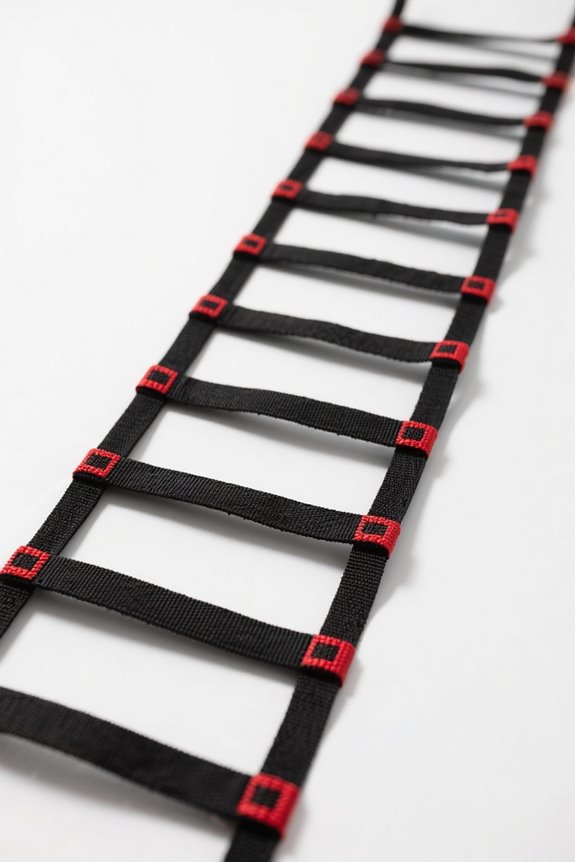
Incorporating speed ladders into training regimens greatly enhances soccer players’ performance on the field. Speed ladders facilitate neuromuscular coordination, improving proprioception by requiring precise foot placement during drills. Ladder variations, such as zig-zag or lateral movements, simulate critical soccer motions, increasing agility and body control. The training intensity of ladder drills elevates heart rates, enhancing cardiovascular endurance while developing lower limb stamina. Regular practice strengthens neural pathways, enabling quicker reaction times and explosive first-step quickness. Enhanced balance and stability gained from controlled ladder movements reduce injury risk during dynamic changes in direction. Ultimately, these aspects lead to improved performance in both offensive and defensive situations, making speed ladders an essential component of soccer training. Additionally, using a fixed-width speed ladder minimizes tripping hazards, allowing for safer training sessions.
Enhancing Foot Speed and Quickness
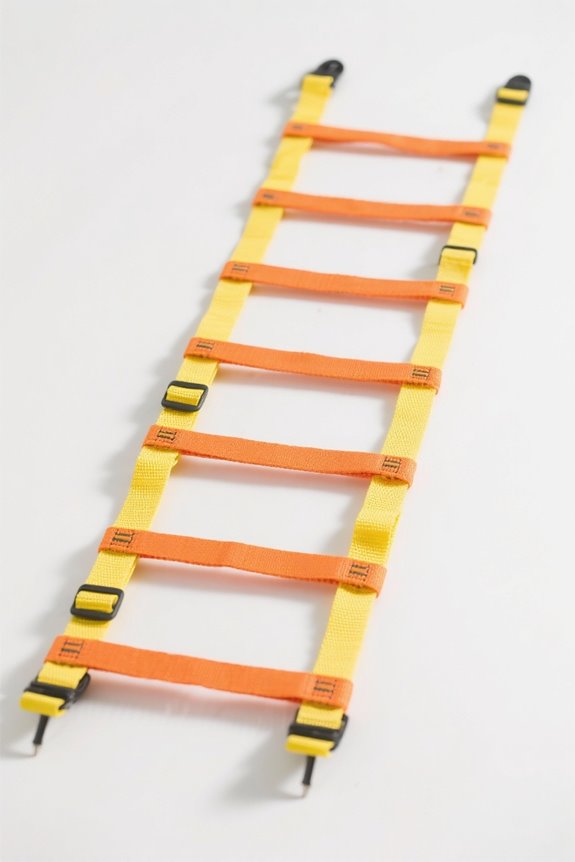
Speed ladders not only improve agility but also play a significant role in enhancing foot speed and quickness. By incorporating footwork fundamentals into their training, soccer players can stimulate rapid neural activation, which improves motor unit recruitment. Enhanced speed mechanics facilitate quicker foot strikes during rapid directional changes, making movements more efficient. The repetitive patterns found in ladder drills also sharpen proprioceptive feedback, leading to precise timing in foot placements. Additionally, consistent ladder training conditions fast-twitch muscle fibers, which are essential for quick foot taps and sustained muscular endurance. As players develop better motor pattern precision through these drills, they experience increased cadence and reduced energy wastage, ultimately contributing to their overall foot speed and responsiveness on the field. Furthermore, the use of agility ladder training has been proven to enhance coordination and balance, which are critical components in soccer performance.
Neuromuscular Coordination Benefits

Neuromuscular coordination serves as a critical component for success in soccer, greatly influenced by the use of speed ladders during training. Speed ladder drills enhance neuromuscular synchronization techniques, improving the communication speed between the brain and muscles. This leads to quicker nerve signaling and stronger muscle contractions. Enhanced motor unit optimization allows athletes to better recruit and time motor units, promoting smoother and more efficient movements. Additionally, improved proprioception from ladder drills contributes to dynamic balance, empowering players to adjust posture rapidly during game situations. Increased myelination in neurons facilitates faster signal transmission, thereby optimizing reaction times. Overall, consistent training with speed ladders promotes precise motor commands, ultimately sharpening the athlete’s agility and responsiveness on the field. Moreover, integrating resistance bands into training routines can further enhance strength and flexibility, essential for optimal performance.
Change-of-Direction Ability Development
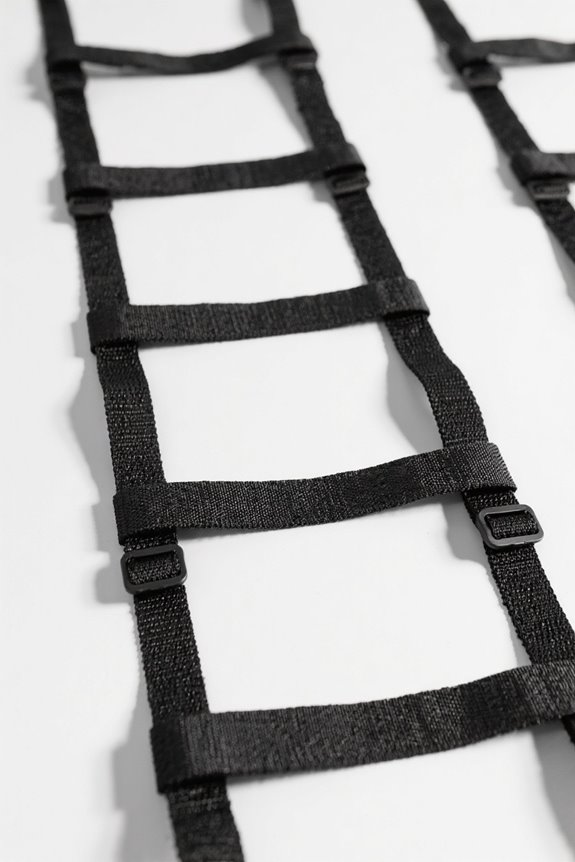
Agility training plays an essential role in developing change-of-direction (COD) abilities for soccer players. Utilizing agility ladders, athletes focus on precise footwork, which enhances their change mechanics during gameplay. The ladder drills emphasize rapid foot placement and controlled knee and ankle flexion, crucial for effective deceleration and re-acceleration. Additionally, these drills help reduce ground contact time, a significant performance metric for optimal COD. While some studies indicate improved agility test results, the transfer to real-game scenarios remains limited due to the constrained environment of the drills. As a result, agility ladders should be a supplement to a broader training regimen that includes strength, sprinting, and specific agility exercises to thoroughly develop COD abilities for soccer players. Incorporating agility ladder features like adjustable heights and cones can provide a more versatile training experience.
The Importance of Balance and Body Control
Balance and body control are critical components in the performance of soccer players, greatly influencing overall gameplay effectiveness. Balance training considerably improves both dynamic and static balance after four to eight weeks of consistent practice, enhancing neuromuscular coordination. Core stability plays a fundamental role in maintaining effective postural balance during dynamic movements. Engaging core muscles during specific drills, such as single-leg balancing, increases control and decreases unnecessary sway. This improvement in balance results in better stability during challenging on-field scenarios, facilitating the execution of powerful movements like shooting and passing. Soccer-specific balance drills, which include multi-directional movements and ball control tasks, further enhance stability and coordination, reducing injury risk and improving overall athletic performance. Incorporating agility training tools like speed ladders and poles can significantly boost coordination and speed, ultimately benefiting a player’s agility on the field.
Spatial Awareness and On-Field Navigation
Spatial awareness plays an essential role in a soccer player’s ability to navigate the field effectively, influencing decision-making during gameplay. Speed ladder drills enhance proprioception, improving spatial judgment by training players to be aware of their body positions and distances in tight spaces. This practice allows athletes to enhance movement efficiency, as they learn to place their feet accurately without looking down. Repeated foot placement patterns concerning their surroundings help players anticipate opponents’ positioning and passing lanes. The neuromuscular benefits from ladder drills lead to quicker reaction times, facilitating sharper directional changes. As a result, players develop the ability to maneuver seamlessly around defenders, contributing to effective field navigation and strategic gameplay decisions. Furthermore, incorporating agility training equipment into practice sessions can further refine these skills and enhance overall performance.
Limitations of Agility Ladder Training
While training with speed ladders can enhance certain footwork skills, it presents several limitations that can affect a soccer player’s overall agility development. Ladder drawbacks include a limited transfer to game-specific agility, as the predictable patterns fail to mirror the dynamic situations players face. Additionally, studies indicate training inefficacy, with little improvement in actual agility tests after ladder drills. The intensity of these exercises often falls short of what is needed for significant adaptation, as maximal effort is rarely achieved. Overemphasizing foot speed rather than true agility may lead to poor movement patterns. Ultimately, the repetitive nature of ladder drills can promote inefficient techniques, making complementary training modalities essential for more effective agility development in soccer. Furthermore, incorporating agility training equipment can enhance overall performance and address the limitations of ladder drills.
The Role of Proprioception in Athletic Performance
Proprioception serves as an integral element in understanding athletic performance, considerably influencing how athletes perceive and respond to their movements. This sensory process allows individuals to sense their body position and movement in three-dimensional space, greatly enhancing motor skills. Proprioceptive feedback integrates sensations from joint position and muscle force, enabling athletes to execute precise movements without the need for visual guidance. This capability is vital for quick adjustments in posture and balance during dynamic actions, such as during a soccer match. Additionally, enhanced proprioception improves reaction times and decision-making under pressure, fostering greater agility and speed. Overall, the mastery of proprioceptive feedback reduces injury risk by supporting joint stability and ideal muscle force utilization during sports activities. Furthermore, incorporating tools like hands-free trainers can further aid in the development of proprioceptive skills by allowing athletes to practice movements repetitively without the need to chase the ball.
Recommended Drills for Ladder Training
Ladder training drills effectively enhance agility and coordination, making them essential tools for soccer athletes seeking to improve their performance. Basic ladder variations, including the “Two Feet In Each Square” and “In-In-Out-Out Drill,” enhance rhythm and lateral movement through focused footwork techniques. Advanced drills, like “Lateral High Knees” and “Speed Scissors,” refine speed and coordination, while engaging different muscle groups for enhanced performance. The “Backward Icky Shuffle” offers added benefits in backward motion agility. For specificity, performing each drill in sets of 2–3 with controlled pacing helps athletes master technique before increasing speed. Implementing such structured training guarantees significant improvements in agility, balance, and overall soccer skills, setting players up for success on the field. Additionally, using aluminum soccer goals during practice can create realistic game scenarios that enhance skill application in dynamic environments.
Integrating Ladder Work With Other Training Methods
Integrating agility ladder work with complementary training methods can greatly enhance overall athletic performance in soccer players. Ladder variations can effectively improve foot placement and body positioning, essential for quick direction changes. When combined with change of direction (COD) training, players experience refined movements, showing measurable gains in agility over 6-8 week programs. Additionally, integrating ladder drills with plyometric exercises develops reactive strength and enhances explosiveness during jumping activities. These drills promote improved timing, which increases efficiency in movement. Ultimately, coupling ladder work with resistance and sprint training translates strength gains into functional soccer speed. This multimodal approach fosters critical neuromuscular adaptations, enhancing agility and overall athletic performance in diverse training intensities.
Youth Development and Injury Prevention Benefits
Engagement in agility drills offers valuable development opportunities for youth soccer players, enhancing both skill acquisition and injury prevention strategies. Through agility ladder exercises, athletes can achieve fitness goals while participating in fun activities that promote youth engagement. These drills help debunk injury myths by focusing on proper biomechanics, reducing the likelihood of common injuries like sprains. Training consistency in ladder work fosters skill progression, ensuring players can execute movements with precision. Improved balance and coordination develop dynamic joint stability, allowing for better performance during unpredictable play situations. Ultimately, early exposure to such training sets the foundation for long-term physical resilience, offering a pathway for young athletes to excel safely and effectively in soccer.
Frequently Asked Questions
Can Speed Ladders Improve Overall Soccer Performance?
Can speed ladders enhance overall soccer performance? Absolutely. These tools promote performance enhancement and skill development, fostering better coordination, agility, and reaction times, essential for executing complex maneuvers on the field during competitive play.
How Often Should Athletes Train With Speed Ladders?
Athletes should train with speed ladders 1 to 2 times weekly for youth, and 3 to 4 times for high school and college players. Practice duration typically involves 2-3 repetitions with brief rest intervals for maximum effectiveness.
Are Agility Ladders Effective for All Age Groups?
Agility ladders are not a magical solution for all age groups. While they greatly aid youth development in coordination, training variation is essential for older players, who require strength-based exercises to complement ladder drills effectively.
What Equipment Is Needed for Agility Ladder Training?
Agility ladder training requires various agility ladder types, such as adjustable models, and recommended training surfaces, including grass, turf, or gym floors. Additional accessories like cones and hurdles enhance effectiveness and complement agility drills.
Can Agility Ladder Drills Lead to Injuries?
Agility ladder drills can lead to injuries if proper training techniques are not followed. Emphasizing injury prevention through warm-ups, correct foot placement, and gradual progression in difficulty can considerably reduce the risk of overuse injuries.