As an Amazon Associate, we earn from qualifying purchases. Some links on this site are affiliate links at no extra cost to you. Our recommendations are based on thorough research and editorial judgment.

Why Do Different Leagues Use Specific Soccer Ball Designs?

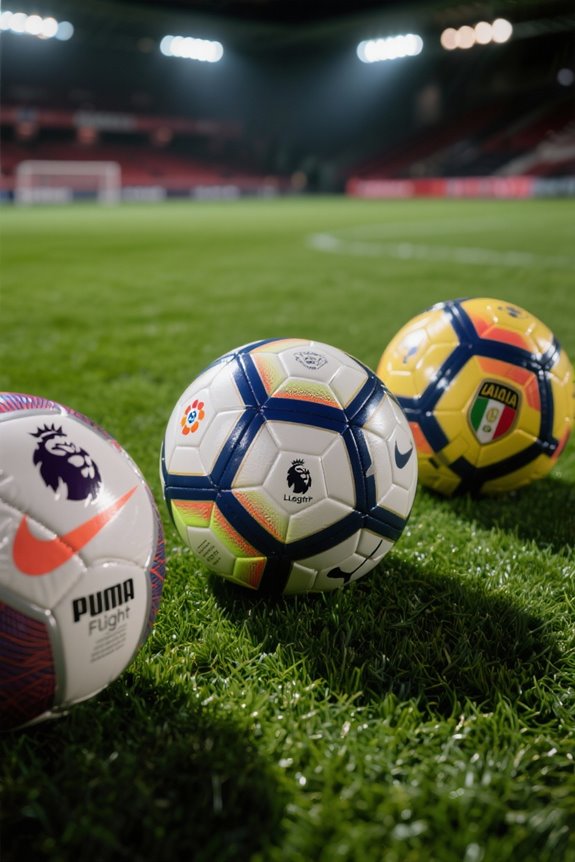
Different soccer leagues use specific ball designs to meet performance needs and comply with regulations. These designs often reflect league branding and identity. For instance, professional leagues typically prefer thermally bonded panels and high-quality materials like polyurethane for durability and control. Soccer balls must also meet FIFA standards, with size 5 balls measuring 68-70 cm in circumference and weighing 410-450 grams. Customized designs can enhance fan engagement, expanding marketing opportunities. Further exploration reveals additional insights into their impact on play.
Key Takeaways
- Different leagues tailor soccer ball designs to enhance performance characteristics suited for their specific playing styles and match conditions.
- Higher-tier leagues prioritize stability and control with thermally bonded panels, while lower leagues may opt for hand-stitched balls for better ball handling.
- Soccer balls are constructed from materials that affect durability, softness, and responsiveness, aligning with league requirements and player preferences.
- Unique designs allow leagues to create strong branding and marketing opportunities, reinforcing fan loyalty and enhancing merchandise sales.
- Training with league-specific balls assists players in developing skills that meet the demands and playing styles prevalent in their respective leagues.
League Branding and Identity
League branding and identity play an essential role in establishing a recognizable presence within the competitive landscape of soccer. Effective brand representation includes logos that utilize logo symbolism to embody league values. For instance, the National League incorporates an eagle, symbolizing strength and nobility, while soccer-related imagery, such as soccer balls, reinforces the sport’s importance. Typically enclosed in shield shapes, these logos represent protection and competitive spirit. Color schemes are selected strategically to reflect league identity and guarantee brand consistency. Dimensions for logos are standardized to maintain visibility in digital and print media. Clear space and minimum size regulations are enforced to preserve recognition, thereby protecting the league’s brand integrity and reinforcing its position within the sports market. Additionally, maintaining a consistent appearance on the field through durable soccer field lines enhances the overall presentation of the league during matches.
Performance Characteristics Tailored to League Needs
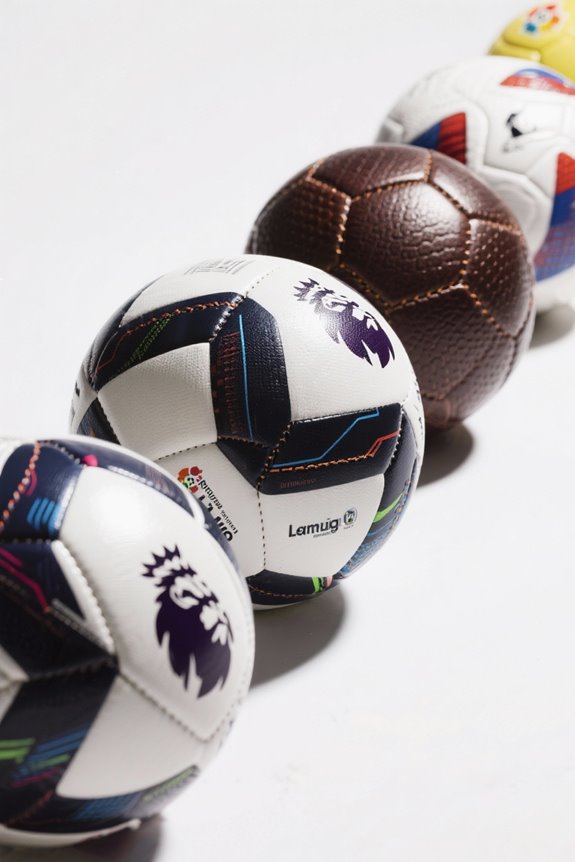
Soccer balls are designed with specific performance characteristics tailored to meet the unique needs of different leagues. Playability factors are critical, influencing the choice of materials and construction techniques. For example, higher-tier leagues often utilize thermally bonded panels to enhance flight stability and reduce water absorption. Meanwhile, hand-stitched panels provide a softer touch for better control in professional matches. The design specifications may include the use of polyurethane covers for premium balls, guaranteeing superior handling, while PVC covers are employed for durability in training. Additionally, the internal bladders vary, with latex preferred for match balls and butyl for training. Overall, these tailored elements guarantee that each ball meets the specific competitive demands of its respective league. The top soccer balls of 2026 illustrate the advancements in technology and materials used to optimize performance for various skill levels.
Compliance With Regulatory Standards
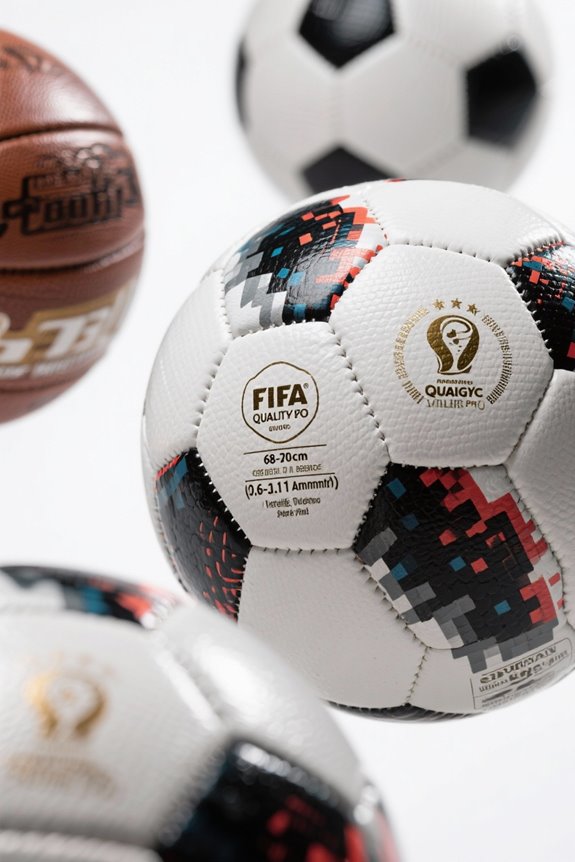
Regulatory standards play a significant role in ensuring that soccer balls used in matches meet specific criteria for performance and quality. Governing bodies like FIFA implement rigorous regulatory testing, requiring soccer balls to pass evaluations on shape, bounce, and water absorption. Approval processes involve manufacturers paying licensing fees for the right to display official approval logos, signifying compliance with standards that cover size and weight specifications. For example, a size 5 ball must have a circumference of 68-70 cm and weigh between 410-450 grams. These regulations guarantee consistency among match balls, preventing unfair advantages and ensuring that referee decisions are based on balls meeting established criteria. Consequently, compliance with these standards is essential to maintaining fairness in competitive play. Additionally, FIFA Quality Pro certification ensures superior durability and performance standards for the balls used in professional leagues.
Material and Construction Variations
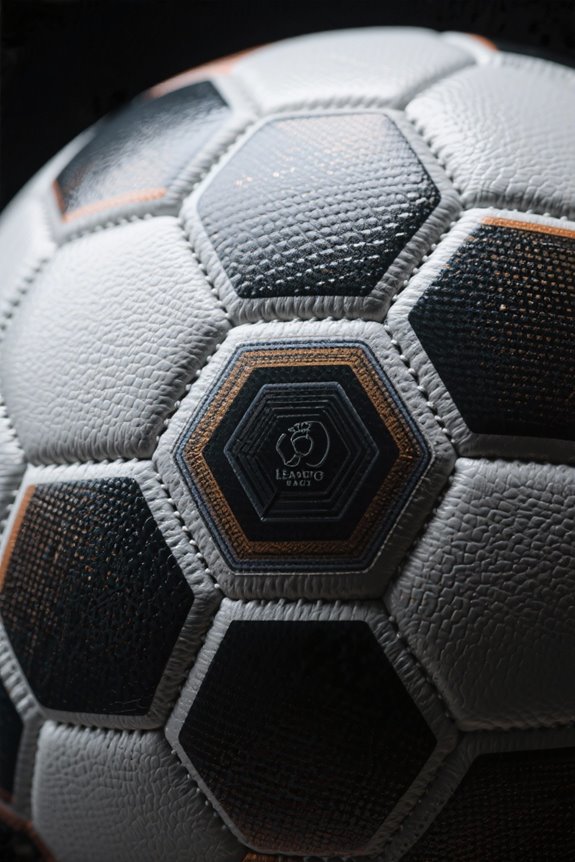
When considering the material and construction variations of soccer balls, it becomes clear that the choice of materials greatly influences performance and durability. Professional match balls primarily utilize polyurethane (PU) for its superior soft touch, ideal shape retention, and exceptional durability. In contrast, polyvinyl chloride (PVC) is commonly used for training balls due to its affordability; however, it sacrifices responsiveness. Thermoplastic polyurethane (TPU) represents a compromise, blending durability with softness but still falling short of PU quality. Construction techniques involving layering synthetic foams and varied linings underpin the ball’s structural integrity and overall feel. Additionally, bladder materials, such as butyl and latex, directly affect air retention and responsiveness, further influencing players’ experiences during different weather conditions and competitive settings. The construction quality of soccer balls significantly impacts their flight stability and performance on the field.
Visual and Technological Innovations
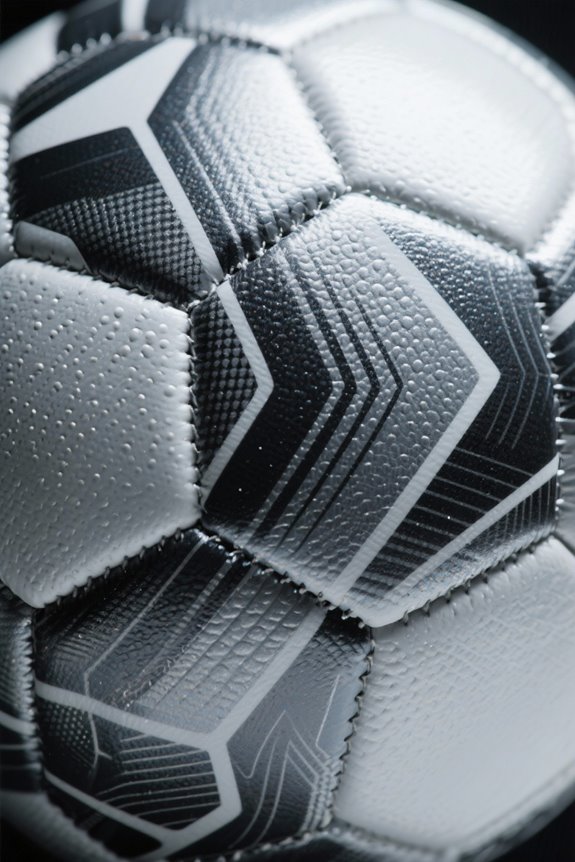
Innovations in visual and technological design considerably enhance the performance and usability of modern soccer balls. Enhanced color visibility, achieved through bold patterns and fluorescent shades, allows players and spectators to track the ball better under various lighting conditions. Ball technology has made significant advancements, with innovations like AerowSculpt technology improving flight accuracy by reducing air turbulence and ensuring consistent performance in diverse environments. Surface textures, including dimples and grooves, optimize stability and predictability in ball trajectories. Furthermore, the integration of embedded sensors enables detailed performance data tracking, allowing coaches to analyze aspects such as speed and spin, thereby enhancing training effectiveness. These innovations reflect an ongoing commitment to improving the soccer experience for players and fans alike. Additionally, the use of synthetic leather materials in ball construction enhances durability and control, crucial for optimal play on turf surfaces.
Marketing and Commercial Implications
Marketing and commercial implications of soccer ball designs greatly influence leagues’ financial success. Custom soccer balls transform into mobile advertisements featuring league and sponsor logos, enhancing brand visibility during matches and broadcasts. These designs create opportunities for effective sponsorship strategies, attracting premium commercial partners due to their visual appeal and strategic logo placements. Unique league-specific designs drive merchandise sales, as fans often seek collectible items, markedly increasing revenue streams beyond traditional ticket sales. Licensing agreements further expand merchandise offerings, allowing manufacturers to produce official replica balls, thereby boosting profits. Additionally, limited edition designs stimulate demand, justify premium pricing, and promote cross-promotion with branded goods, ultimately strengthening the league’s commercial ecosystem while enhancing its competitive positioning in the marketplace. The use of high-quality PU leather in these balls ensures durability and performance, appealing to both players and collectors alike.
Global Recognition and Fan Engagement
Soccer ball designs serve as essential tools for enhancing global recognition and promoting fan engagement across various leagues. Each league utilizes distinct patterns and colors, contributing to global symbolism, essential for quick identification during matches. The iconic black and white hexagonal design showcases soccer’s heritage but often undergoes modifications to reflect cultural resonance within the league’s community. Unique designs also facilitate visibility against diverse playing surfaces and lighting conditions, improving overall spectator experience. Additionally, customizing graphics and logos reinforces the league’s brand identity, while limited-edition balls celebrate key accomplishments, fostering fan loyalty. At its core, these design elements deepen emotional connections, enhance audience segmentation, and support league-specific narratives that attract a global fanbase and encourage ongoing engagement. Furthermore, the specific soccer ball designs used in different leagues can influence player performance and skill development, making them integral to the sport’s evolution.
Frequently Asked Questions
How Are Soccer Balls Tested for Quality Across Different Leagues?
Soccer balls are tested for quality by evaluating ball performance against standardized testing protocols. These include assessments of durability, water absorption, pressure retention, and consistency to guarantee compliance with rigorously defined testing standards across various leagues.
What Role Do Sponsors Play in Ball Design Choices?
Sponsors greatly influence ball design choices through sponsor branding and marketing strategies, ensuring visibility during matches. Their financial contributions drive custom designs, enhancing brand presence while aligning with league identities and engaging fans effectively.
Can Players Influence the Design of League Soccer Balls?
Players can indeed influence the design of league soccer balls through design feedback and preferences. Their direct insights on ball characteristics, like touch and balance, help shape improvements, although final decisions rest with manufacturers and regulatory bodies.
How Often Do Leagues Update Their Soccer Ball Designs?
In the world of soccer, design frequency dances between 1 to 4 years for leagues, intertwining with league branding and major events, ensuring that each ball remains a striking symbol of competition and innovation.
Are Fans Involved in the Ball Design Process for Leagues?
Fans are generally not directly involved in the ball design process for leagues. While fan feedback is occasionally gathered through design surveys, their influence remains minimal, mainly reflected in merchandise aesthetics rather than technical specifications.


