As an Amazon Associate, we earn from qualifying purchases. Some links on this site are affiliate links at no extra cost to you. Our recommendations are based on thorough research and editorial judgment.

How To Choose Goals That Meet League Safety Requirements?

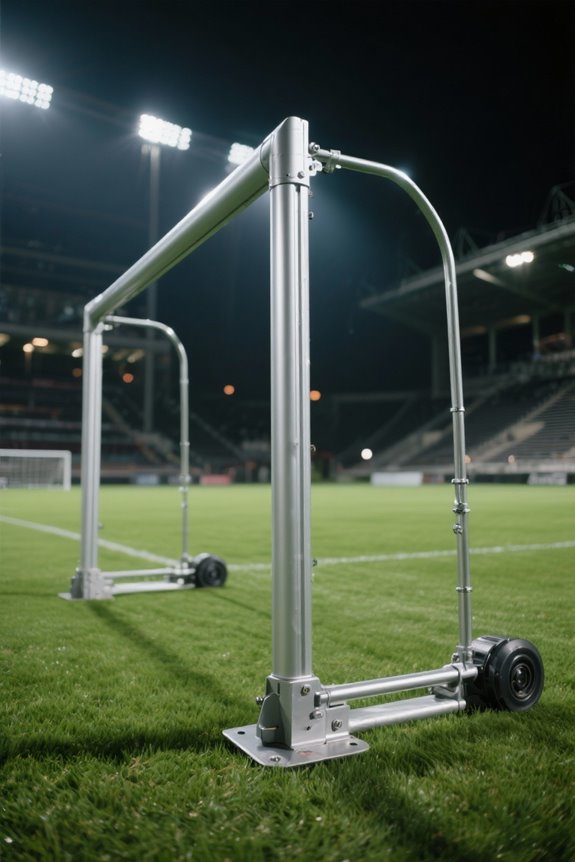
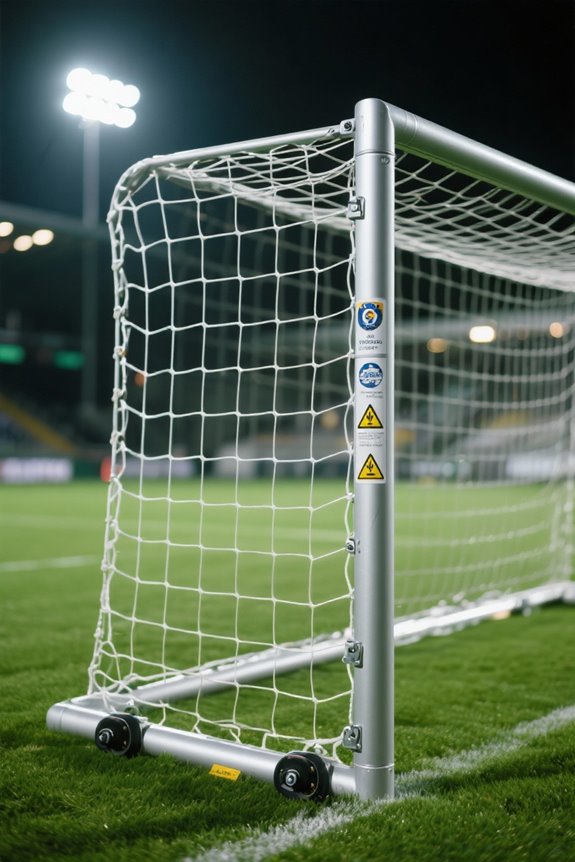
To choose goals that meet league safety requirements, one must prioritize compliance with safety standards. Goals typically range from 18 to 24 feet wide and 6½ to 8 feet high. They should be constructed from durable metal or aluminum, ensuring impact resistance. Proper anchoring techniques are essential to prevent tip-overs during play. Regular inspections, including checks for structural integrity and net security, further enhance safety. Understanding these criteria allows for informed selections that prioritize player safety, leading to more thorough insights ahead.
Key Takeaways
- Verify that the goal dimensions are within league specifications, generally 18 to 24 feet wide and 6½ to 8 feet high.
- Ensure all construction materials comply with safety regulations, utilizing non-dangerous substances like metal or aluminum.
- Confirm that the goals meet nationally recognized safety standards like NOCSAE, ASTM, and ANSI via third-party certification.
- Evaluate the goal’s tip resistance features to prevent accidental tip-overs during games and practices.
- Properly install goals following manufacturer instructions, securing anchoring and net installation to reduce injury risks.
Understanding League Safety Standards for Goals
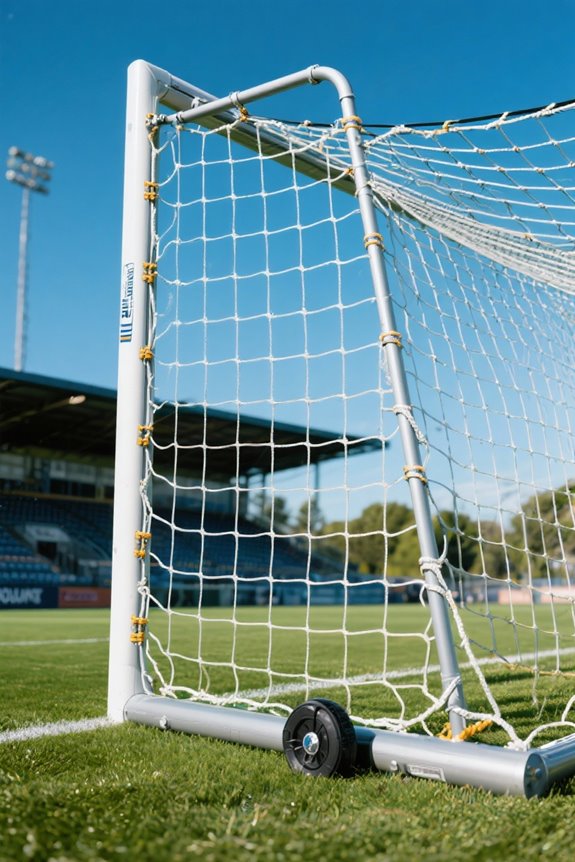
In order to secure player safety, leagues must adhere to specific safety standards for soccer goals. These standards include established goal dimensions, which typically range from 18 to 24 feet wide and 6½ to 8 feet high for movable goals. Additionally, the construction materials for goalposts and crossbars must comply with safety regulations, utilizing non-dangerous substances like metal or aluminum. The tip resistance requirements are essential, as they prevent accidental goal tip-overs, especially when children swing or hang from the crossbar. Goals must provide stability without relying solely on tie-downs, which may fail. Regular inspections are recommended to verify compliance with safety standards, thereby minimizing injury risks for players aged 3 to 12, while enhancing overall gameplay safety. Incorporating durable materials such as aluminum and 450D thickened oxford cloth can further ensure compliance with safety requirements.
Ensuring Compliance With Equipment Safety Regulations
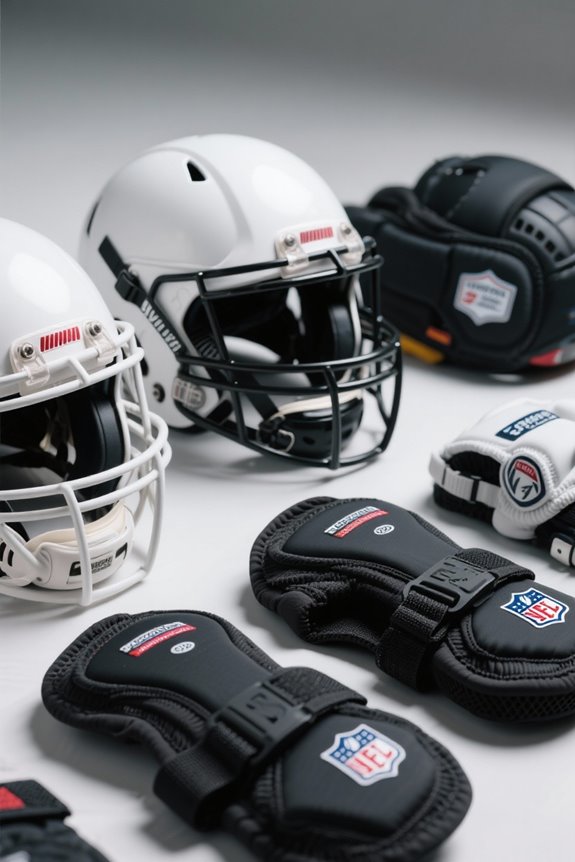
Assuring compliance with equipment safety regulations is essential to safeguarding players and maintaining high performance standards in sports leagues. All equipment, including goals, must adhere to nationally recognized safety standards, such as those set by NOCSAE, ASTM, and ANSI. The certification process involves third-party evaluations by organizations like the Safety Equipment Institute, which confirm compliance with these standards. Regular compliance audits and post-sale testing guarantee that equipment remains safe over time, requiring ongoing adherence to updated regulations, such as the new NOCSAE standards effective September 2027 for youth football helmets. Additionally, documentation of safety compliance, including labels detailing hazard warnings and usage instructions, is critical for meeting regulatory requirements and promoting safety awareness among players and coaches. The durability of soccer goals, particularly those made from weather-resistant materials, plays a crucial role in ensuring long-term safety and performance.
Evaluating Material Durability and Stability
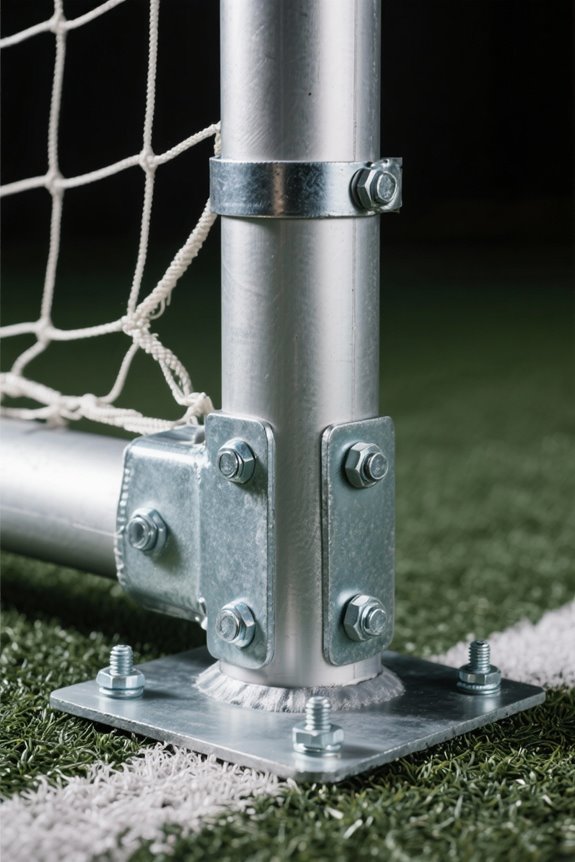
Proper evaluation of material durability and stability plays a significant role in the long-term safety and performance of sports equipment, including goals. Effective material selection includes evaluating impact resistance and the ability to withstand stress from repeated use. Rigorous durability testing simulates real-world conditions, ensuring materials do not crack, deform, or break under pressure. Additionally, equipment must maintain integrity during extreme weather conditions—outdoor goals require weatherproof materials while indoor options focus on impact resistance. Regular visual inspections are essential to identify flaws like cracks or sharp edges, which can lead to accidents. Compliance with industry standards, such as ASTM and ISO, guarantees that materials have met safety regulations and durability benchmarks necessary for safe goal use. The choice of heavy-duty materials is crucial for ensuring long-lasting performance during extensive use.
Importance of Proper Goal Installation
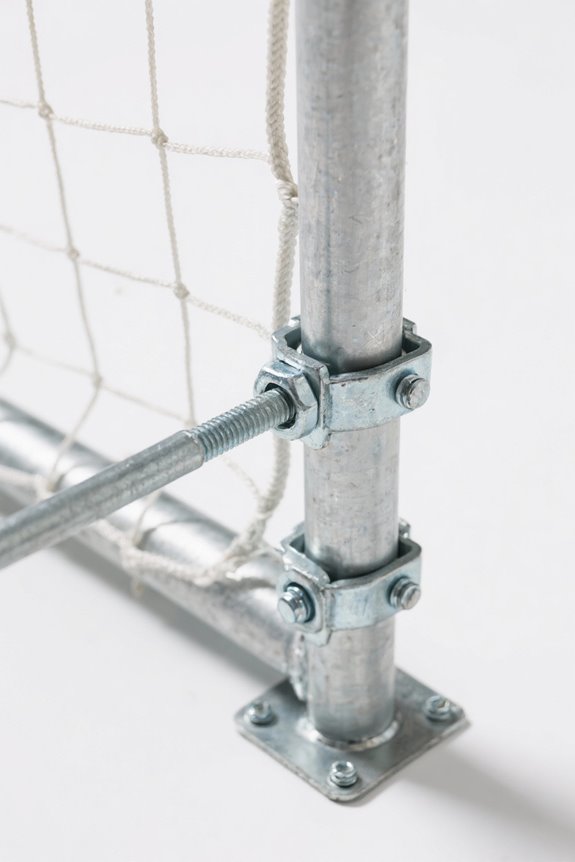
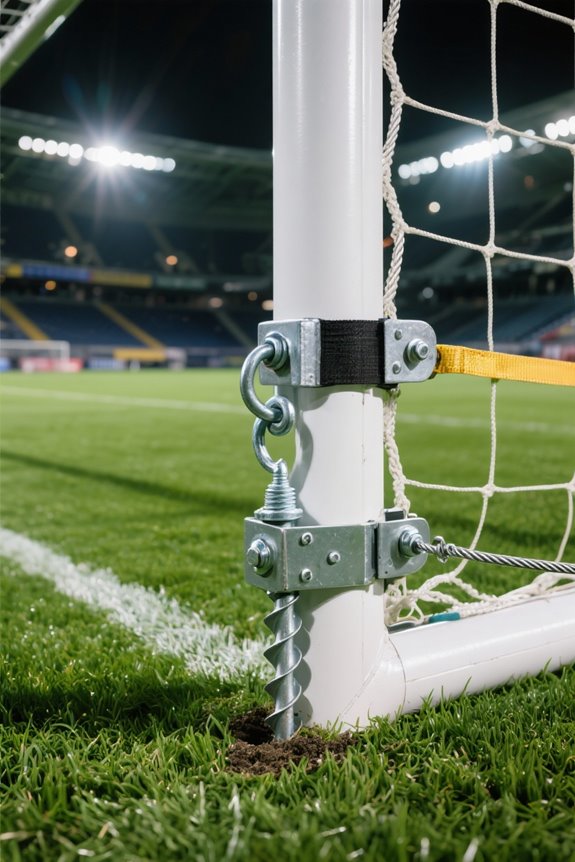
How essential is the installation process for guaranteeing the safety and functionality of sports goals? Proper goal installation is critical for preventing accidents during play. Goal anchoring must be executed firmly to prevent tipover accidents, which could lead to serious injuries. For ideal stability, semi-permanent concrete anchors are recommended, as they can withstand at least 110 kg of horizontal force without tipping. Additionally, secure net installation is essential for safety; recommended mesh sizes should not exceed 120 mm to reduce entrapment risks. Goals must remain anchored, whether in active use or storage, to maintain ongoing safety. Following manufacturer instructions during installation provides valuable guidance, aiding in compliance with safety standards and minimizing potential liabilities. Moreover, ensuring proper goal installation can significantly enhance team identification during practice sessions, helping players stay organized and focused.
Regular Maintenance and Inspection Practices
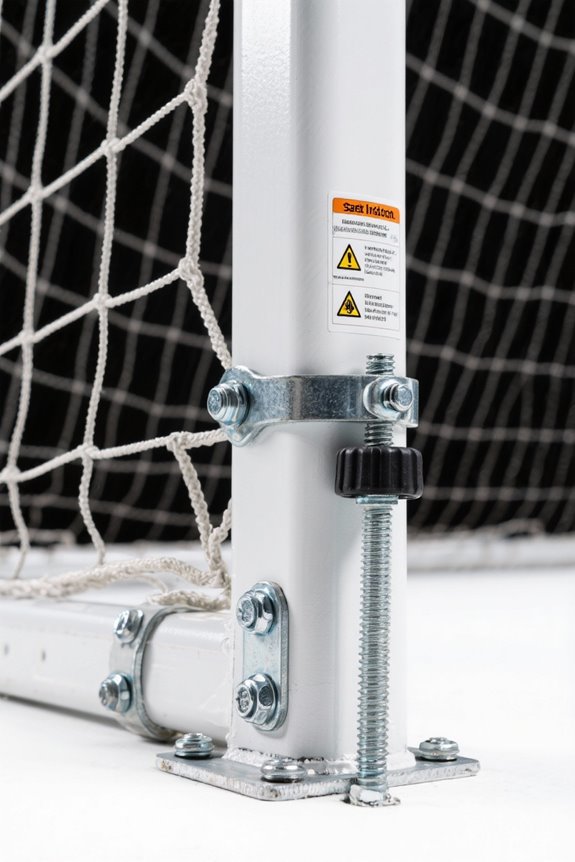
Regular maintenance and inspection practices are essential for guaranteeing the ongoing safety and functionality of sports goals. Weekly visual inspections should confirm that all nuts, bolts, and fixings are secure, and the goals remain firmly attached to their anchoring points. Inspect nets for any damage or wear, which could create hazards. After repositioning goals, it is vital to recheck all inspection items to confirm continued safety. Annual thorough evaluations must include detailed checks for structural integrity and compliance with league regulations. Maintaining detailed maintenance logs documenting all inspections and repairs provides necessary evidence of adherence to safety standards. Finally, proper training of staff on inspection techniques helps mitigate risks, ensuring safe goal use for players. Additionally, reinforced stitching on goal nets is crucial for preventing tearing during play.
Incorporating Player Safety Features in Goal Design
Incorporating player safety features into soccer goal design is vital for minimizing injuries and guaranteeing a secure playing environment. Durable materials like wood and metal are essential for goal frames, which should maintain structural integrity outdoors for at least five years. To enhance injury awareness, goalposts must conform to standard shapes, while dimensions should not exceed 5 inches in width and depth to decrease impact risks. Effective prevention strategies include stabilizing systems for movable goals that resist toppling during play. Additionally, nets should have small mesh sizes to prevent entrapment. Adhering to established safety guidelines from ASTM and the CPSC guarantees that goals remain safe for all players, emphasizing the critical role of compliance in promoting player safety. Moreover, opting for goals like the MangoStar Portable Soccer Goal can provide enhanced stability and secure anchoring, further ensuring player protection during use.
Frequently Asked Questions
What Documentation Is Needed for Goal Purchase to Ensure Compliance?
To guarantee compliance during goal purchasing, individuals should refer to goal purchasing guidelines, collecting a safety compliance checklist that includes testing certifications, installation manuals, anchor specifications, and verification of materials meeting established safety standards and regulations.
How Can I Verify a Manufacturer’s Safety Certifications?
Maneuvering a certification jungle, one must rigorously verify a manufacturer’s safety certifications through accredited bodies, cross-checking documentation against regulatory agency databases and ensuring compliance with recognized standards for a trustworthy product assurance.
Are There Specific Age Requirements for Using Certain Goal Types?
There are specific age restrictions for using certain goal types. Younger players utilize smaller goals, while older athletes, starting at age 13, shift to standard adult-sized goals, ensuring safety and age-appropriate play standards are maintained.
What Are the Recommended Weight Standards for Portable Goals?
Recommended weight standards for portable goals vary by type, emphasizing safe performance. Goals over 40 lbs should meet ASTM F2950-14 specifications, while lighter options are guided by ASTM WK94637, ensuring appropriate materials and safety designs.
How Often Should Goals Be Replaced for Optimal Safety?
Goals should be replaced based on their lifespan, typically every 1-2 years, contingent on usage intensity and environmental factors. Regular inspections and adherence to a maintenance schedule can help determine the appropriate timing for replacement.