As an Amazon Associate, we earn from qualifying purchases. Some links on this site are affiliate links at no extra cost to you. Our recommendations are based on thorough research and editorial judgment.


How To Choose The Right Soccer Ball Material For Your Playing Surface?

Choosing the right soccer ball material for your playing surface is essential for peak performance and safety. For grass fields, synthetic leather or polyurethane balls provide excellent handling and bounce. On artificial turf, durable polyurethane balls are preferred for their abrasion resistance and controlled grip. When training on hard surfaces, PVC balls are economical, while rubber options excel in durability. Attention to inner layers, such as polyester, will enhance overall stability. Detailed specifications guide informed selections for improved play. More insights await.
Key Takeaways
- For grass fields, choose synthetic leather or polyurethane balls for better bounce and handling on well-maintained surfaces.
- On artificial turf, select durable synthetic leather balls that reduce bounce and enhance grip for faster gameplay.
- Use PVC balls for training on hard surfaces and vulcanized rubber balls for concrete due to their grip and resilience.
- Look for abrasion-resistant materials for rough surfaces to maintain ball integrity and performance during play.
- Consider your playing style and frequency of use when selecting ball materials to ensure optimal performance and longevity.
Understanding Soccer Ball Materials
Understanding soccer ball materials is crucial for selecting the right ball based on intended use and performance needs. The choice of bladder types greatly impacts a ball’s performance. Butyl bladders offer superior air retention, maintaining pressure longer, while latex bladders provide a lighter feel but require more frequent inflation due to faster air leakage. Lining materials, such as textile linings made from cotton or polyester blends, enhance flexibility and durability, surrounding the bladder. Multiple layers of nylon or polyester increase strength and improve rebound characteristics. Generally, thicker linings promote better shape retention, though they may add weight. The right combination of bladder types and lining materials guarantees a well-performing soccer ball tailored to the player’s needs, balancing durability, feel, and responsiveness. Additionally, material quality and durability are essential factors to consider when choosing sports equipment like soccer scrimmage vests, as they also impact overall performance.
Overview of Soccer Ball Outer Materials

Soccer ball outer materials greatly influence performance, feel, and durability, ultimately shaping the ball’s overall quality. Historically, leather provided an exceptional natural touch, making it favored for premium play, but it absorbed water and lost shape over time, limiting its use. Modern alternatives have largely replaced historical materials. Polyvinyl Chloride (PVC) offers cost-effective solutions but sacrifices softness and responsiveness, particularly in colder temperatures. Thermoplastic Polyurethane (TPU) balances durability and performance, suitable for training balls, while synthetic leather excels in durability and water resistance, making it popular in professional and recreational use. Overall, outer materials markedly impact ball behavior, ensuring considerations for playing surface, weather, and usage are paramount in the selection process. Additionally, high-quality materials like polyurethane enhance performance and durability, ensuring players can trust their equipment during matches.
Polyurethane (PU) – The Premium Choice

Polyurethane (PU) stands out as the top choice among soccer ball materials, offering a mix of durability, performance, and tactile sensitivity that enhances playability. Its durability attributes include a layered construction that incorporates nylon reinforcement, ensuring strength and longevity. PU soccer balls have a Shore A hardness of 64-67, balancing softness and toughness, making them suitable for various playing surfaces. For peak performance, the PU cover typically ranges from 1.3 mm to 1.6 mm in thickness. Proper maintenance tips include storing PU balls away from extreme weather and cleaning them regularly to prevent degradation. These practices not only preserve the ball’s softness but also extend its lifespan, making PU the preferred option for competitive play. Additionally, PU is often used in high-quality balls that comply with FIFA regulations, ensuring performance reliability.
Recommended Products

Crafted with a 14 panel construction, for increase energy and power transfer.
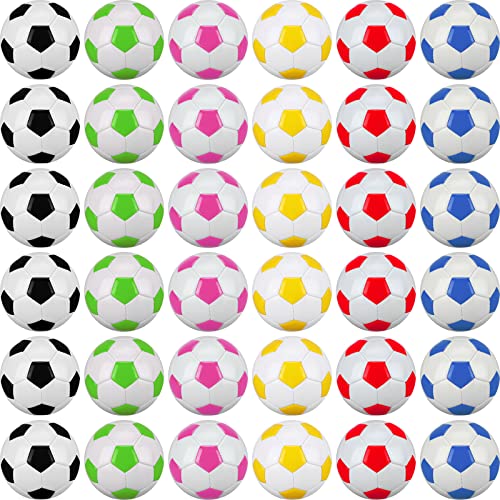
Package Includes: you'll get 36 pcs regulation size 5 soccer ball in 6 colors, the quantity is sufficient to meet your daily play needs and replacement demand, you can share or play the soccer ball with your friends to enhance your relationship

24 Pack Bulk Value for Teams and Schools:you will receive 24 brightly colored soccer balls, 1 soccer net bag, and 1 air pump. The ample quantity and reasonable combination can meet the needs of soccer training camps, school physical education classes, and soccer clubs for use and replacement.
Thermoplastic Polyurethane (TPU) – High Performance

When evaluating high-performance soccer balls, Thermoplastic Polyurethane (TPU) emerges as a formidable choice due to its combination of advanced performance features and durability. TPU advantages include excellent rebound characteristics and consistent flight behavior, making it suitable for training and competitive play. Balls made from TPU are abrasion-resistant, ensuring they maintain their shape after extensive use.
In terms of sustainability impact, TPU is more recyclable than PVC and requires less energy to manufacture, making it an environmentally friendly option. Additionally, TPU balls offer a cost-effective balance between quality and budget, appealing to clubs and players of various skill levels. With customizable designs and adept performance in different weather conditions, TPU soccer balls are an excellent investment for any player seeking reliability and durability. Furthermore, many of the top soccer balls in 2026, such as the adidas UCL League Ball, utilize TPU for enhanced durability and performance attributes.
Recommended Products
THE PERFECT FIRST RESPONSE BAG| Be Fully Stocked & Ready to Go in Case of Emergency! | High-Performance, HSA/FSA Approved Trauma & Bleeding Backpack Kit Includes Everything Professionals Need to Protect & Serve with Confidence including CAT Tourniquet, QuikClot 4x4 Dressing, HyFin Vent Chest Seal, Israeli Bandage & Oxygen Tank | Perfect for EMT, EMS, Fire, Police, Paramedics & Other Servicepeople | Extra Large Model Measures 22” x 14” x 8”

THE PERFECT FIRST RESPONSE BAG| Be Fully Stocked & Ready to Go in Case of Emergency! | High-Performance, HSA/FSA Approved Trauma Backpack Has Everything You Need to Serve with Confidence | Perfect for EMT, EMS, Fire, Police, Paramedics & Other Servicepeople | Extra Large Model Measures 22” x 14” x 8”

[COMPREHENSIVE COLLECTION] Choose from three exclusive sets: Pro Ball Set, Mini Ball Set, and Club Ball Set, each featuring all 15 iconic FIFA World Cup match balls from 1970 to 2026.
Polyvinyl Chloride (PVC) – Budget-Friendly
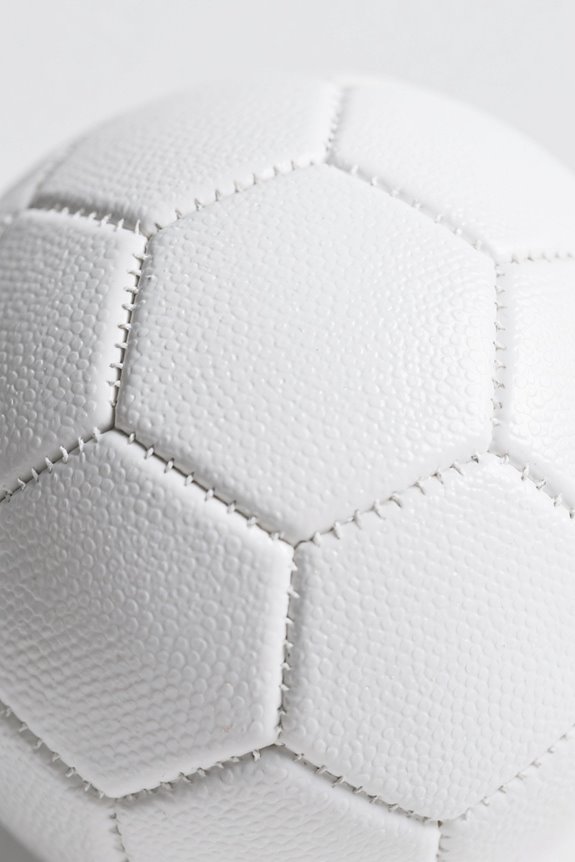
For players seeking budget-friendly options, Polyvinyl Chloride (PVC) presents a pragmatic choice among soccer ball materials. Significantly, PVC is the most cost-effective option, ensuring cost efficiency for teams and individuals focused on economical solutions. These balls are particularly suitable for training sessions, as they offer durability against rough surfaces and weather conditions. PVC soccer balls require minimal maintenance, easily cleaned with mild soap and water, making them ideal for frequent use. However, they do have performance limitations; PVC’s hardness can reduce touch sensitivity and ball control. Despite this, PVC remains a preferred choice for youth players and beginners, as it balances affordability with sufficient resilience for training and recreational play across various conditions. Additionally, PVC is often used in durable outer layers, which contributes to its performance on various playing fields.
Recommended Products

HEAVY DUTY: Xpose Safety plastic orange traffic safety cones are sturdy so you can rely on them not to fall over. Create a barrier or designate an area with the help of these brightly colored orange cones. Our weighted cones stay up right without falling.

HEAVY DUTY: Xpose Safety plastic orange traffic safety cones are sturdy so you can rely on them not to fall over. Create a barrier or designate an area with the help of these brightly colored orange cones. Our weighted cones stay up right without falling.

【2-in-1 Volleyball & Soccer Fun】Switch between sports in seconds! Use the inflatable net for volleyball, or remove it for an open soccer field – perfect for backyard games, parties, or school events.
Rubber – Best for Recreational Use
Rubber soccer balls are recognized for their exceptional durability and suitability for recreational use. These balls offer numerous rubber advantages, including impressive puncture resistance and longevity, which makes them perfect for casual play. Their butyl bladders guarantee good air retention, reducing the need for frequent inflation, unlike latex alternatives. The sturdy rubber cover allows these balls to withstand rough surfaces like asphalt and gravel, contributing to their maintenance-free nature. Additionally, rubber soccer balls maintain performance integrity under various weather conditions, resisting cracking and peeling. Although they provide a heavier feel during headers, their simple construction minimizes the risk of seam failure. Overall, rubber soccer balls deliver significant recreational benefits, making them ideal for schools, parks, and backyard games. Furthermore, their impressive durability ensures they can handle various playing environments without significant wear.
Recommended Products

【1500 LBS Large Capacity】 The Max loading of this 16ft trampoline is 1500LBS, can hold 8-10 kids. This trampolines for kids and adults provide an effective and safe way to have family fun while burn calories and improve overall coordination. Please remind that the weight of alone user does not exceed 330 LBS, for prevent injuries caused by uneven strength on trampoline

【1500 LBS Large Capacity】 The Max loading of this 16ft trampoline is 1500LBS, can hold 8-10 kids. This trampolines for kids and adults provide an effective and safe way to have family fun while burn calories and improve overall coordination. Please remind that the weight of alone user does not exceed 264 LBS, for prevent injuries caused by uneven strength on trampoline
【Safe Trampoline with Super Bounce】 ASTM F381 & F2225 Approved. The steel poles are padded with foam and sleeves, which can protect your kids from banging against the pole. The enclosure system features safety enclosure net, protective padding to cover the spring, help stabilize kids as they jump on the 16' trampoline
The Shift From Leather Balls
Although leather balls were once the standard in soccer, their inherent limitations led to a significant shift towards synthetic materials. Historically, leather offered durability, but absorbed water, causing increased weight that hampered control during wet play. This water retention, along with misshaping due to moisture exposure, often compromised performance quality. In contrast, modern synthetic options like Polyurethane (PU) and Thermoplastic Polyurethane (TPU) do not absorb water, ensuring consistent performance regardless of weather conditions. Player preferences have evolved, favoring the enhanced touch and superior shape retention of synthetic materials. Additionally, these materials improve durability and reduce maintenance needs, establishing a notable history comparison between leather and modern synthetic balls that prioritize both player experience and overall game performance. This shift aligns with the impact of material quality on performance, as players now seek balls that offer better grip and control.
Impact of Surface Type on Ball Performance
The performance of a soccer ball is markedly influenced by the type of playing surface it encounters during a game. For instance, a rough surface, like concrete or gravel, necessitates balls made of highly abrasion-resistant materials, such as vulcanized rubber. These materials guarantee durability and maintain shape under continuous impact, impacting ball handling and surface interaction. Conversely, smoother surfaces, such as hardwood, benefit from softer covers that enhance control and reduce bounce. Artificial turf requires balls with reduced bounce while guaranteeing durability against synthetic blades. Each surface type, as a result, directly affects how the ball behaves, influencing factors like flight stability and responsiveness, which are vital for effective gameplay and overall performance. Additionally, choosing a ball made from high-quality PU leather can further enhance durability and performance across various playing conditions.
Choosing the Right Ball for Grass Fields
Selecting an appropriate soccer ball for use on grass fields markedly impacts player performance and the overall playing experience. Soccer balls made from synthetic leather or polyurethane (PU) are preferable for grass due to their superior touch and control. Size 5 balls are standard for players aged 13 and older, while smaller sizes are available for younger players. The natural grass ball interaction allows for improved bounce and handling, enhancing skill development. Additionally, a well-maintained grass surface supports player safety by providing a softer landing, reducing the risk of injury. Players must also consider the impact of uneven grass, as it can affect ball behavior, necessitating adjustments in technique and strategy for ideal play on grass fields.
Recommended Products

24 Hour Lasting: 24 hour lasting takes Mizuno's signature fit to the highest levels in the 'Made in Japan' collection.

Legendary soccer cleats for stability on firm natural ground
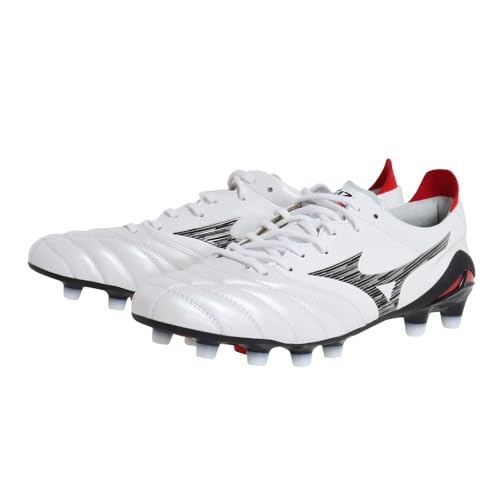
The latest technology x lightweight, flexible, and barefoot feeling unchanged but continues to evolve. The 4th generation model of the Morellia Neo has been further sharpens the feeling of bare feet. Natural leather offers a soft fit and lightweight feel. Morellia NEO4 has been designed to improve the sense of hold by attaching the frame while maintaining the feeling of barefoot. The upper opening, grommet construction, and outsole have been updated to give you an even barefoot feel
Selecting Balls for Artificial Turf
When playing on artificial turf, it is vital to choose a soccer ball that can withstand the unique demands of this surface. These fields generate increased friction and abrasion, which can degrade ball materials more quickly compared to natural grass. To guarantee durability, artificial turf balls typically employ synthetic leather, often polyurethane, for improved abrasion resistance. They are designed with lower bounce and enhanced grip textures to accommodate faster play on synthetic surfaces. For peak performance, manufacturers often use multi-layer laminates and thermofused construction, which help maintain air retention and prevent seam damage. Compliance with FIFA standards, including weight of 430–450g and circumference of 68–70cm, is essential for consistent performance and safety on artificial turf fields. Many of the best soccer balls, like the adidas UCL League Ball, are engineered specifically for durability and performance on various surfaces, including artificial turf.
Hard Surfaces and Ideal Ball Materials
Hard surfaces, such as concrete and asphalt, present unique challenges for soccer ball materials, which directly influence performance and durability. Balls made of PVC (Polyvinyl Chloride) are often less responsive but durable, ideal for training on hard surfaces. Their cost-effectiveness supports budget-conscious programs, enhancing ball longevity. In contrast, vulcanized rubber offers superior grip and resilience against rough terrains, making it the preferred choice for concrete play. Thicker materials, around 2.7mm, provide added durability, while tire tread textures improve handling. Although PU (Polyurethane) offers a softer feel, its material flexibility comes at the expense of longevity and durability on hard surfaces. Selecting the appropriate ball involves evaluating performance needs, budget constraints, and surface compatibility for ideal play. Additionally, PVC soccer balls, such as those made with machine-stitched panels, ensure enhanced shape retention and a reliable playing experience.
The Role of Inner Layers in Ball Performance
The inner layers of a soccer ball play an important role in determining overall performance, as they provide essential structure and strength that influence playability. These layers, typically composed of polyester or cotton, support ball shape retention, which affects pressure stability and aerodynamics influence during play. By aiding in energy transfer, they contribute to ball performance, enhancing both bounce consistency and player control. The materials and construction of inner layers can dictate durability factors, ensuring the ball withstands impacts and resists wear over time. Additionally, softer inner linings may enhance player safety by minimizing force transmission during contact, a critical consideration when heading the ball. Consequently, choosing the right inner layer composition is fundamental to optimizing a soccer ball’s functionality and player experience.
Environmental Considerations in Soccer Ball Selection
Numerous factors contribute to environmental considerations in soccer ball selection, reflecting growing awareness of sustainability in sports equipment. The choice of materials markedly influences the environmental impact of production. Traditional soccer balls often utilize petroleum-based synthetics, which contribute to greenhouse gas emissions during extraction and processing. Sustainable materials, such as recycled polyester and natural latex, present eco-friendly alternatives that reduce resource consumption and decrease carbon footprints. Additionally, eco-friendly manufacturing methods can lower the energy used in production, ultimately diminishing harmful emissions. As discarded soccer balls frequently end up in landfills or the ocean, selecting durable options and supporting brands committed to sustainable practices can minimize waste and enhance recyclability, fostering a more responsible approach to sports equipment consumption.
Frequently Asked Questions
How Do Different Ball Materials Affect Player Injury Risk?
Different ball materials impact player injury risk by influencing ball cushioning and impact absorption. Stiffer balls increase peak forces upon contact, raising the likelihood of head injuries, while softer materials reduce these forces, thereby enhancing player safety.
Can I Use the Same Ball for Multiple Surfaces?
Using the same ball for multiple surfaces is generally not advisable. Surface compatibility affects ball performance, as different materials are optimized for specific conditions, impacting durability, control, and overall effectiveness during play on various terrains.
What Are the Signs of a Worn-Out Soccer Ball?
Signs of a worn-out soccer ball include surface damage, air retention issues, and changes in flight performance. Regular ball maintenance can help identify these issues early, preventing significant performance degradation during play.
How Often Should I Replace My Soccer Ball?
Soccer balls generally require replacement every 2-3 matches or annually for regular use. Factors such as wear, weather, and playing conditions influence replacement frequency, impacting overall ball longevity and performance on the field.
Is There a Significant Difference in Price by Material Type?
The significant price range in material comparison reflects diverse needs; PVC balls are budget-friendly, while TPU and PU offer durability and performance at higher costs, highlighting preferences for recreational versus professional play in soccer.


