As an Amazon Associate, we earn from qualifying purchases. Some links on this site are affiliate links at no extra cost to you. Our recommendations are based on thorough research and editorial judgment.


How To Transport And Store Portable Soccer Goals?

Transporting and storing portable soccer goals requires careful attention to safety and maintenance practices. Use wheel kits for efficient movement, ensuring 10-inch wheels for stability. Securely anchor goals to prevent tipping and regularly check hardware for damage. Store goals indoors in a locked facility or use chains for outdoor security. Face-to-face stacking and net removal enhance safety. Regular inspections, cleaning, and lubrication of components extend equipment lifespan, ensuring ideal performance for future use. More efficient techniques can be discovered ahead.
Key Takeaways
- Securely anchor or counterweight goals before transport to prevent tipping and ensure safe movement.
- Inspect all fasteners and hardware for damage to maintain structural integrity during transport.
- Remove nets and clean equipment to reduce weight and entanglement risks while transporting goals.
- Store goals indoors in a locked facility or secure them outdoors with chains to prevent theft and weather damage.
- Use compact, foldable designs for easy storage and minimize the storage footprint.
Understanding Portable Soccer Goal Transport Mechanisms
Portable soccer goal transport mechanisms are integral to the functionality and usability of these equipment pieces. A transport mechanism overview highlights the folding and hinged designs commonly used, which allow goals to collapse into compact forms for easy storage and mobility. Hinge design features, including self-lubricating and quick-locking capabilities, enable smooth adjustments without tools during setup and transportation. These mechanisms utilize high-grade steel with corrosion-resistant coatings, ensuring durability against wear and impact. The lightweight yet strong construction allows for simple carrying, while extensive testing under intense conditions guarantees reliability in various environments. Ultimately, effective transport mechanisms enhance the practicality of portable soccer goals, making them essential for sports teams and facilities aiming for quick and efficient setup. Additionally, many models come with carrying bags that further facilitate easy transport and storage.
Types of Wheel Kits and Their Benefits
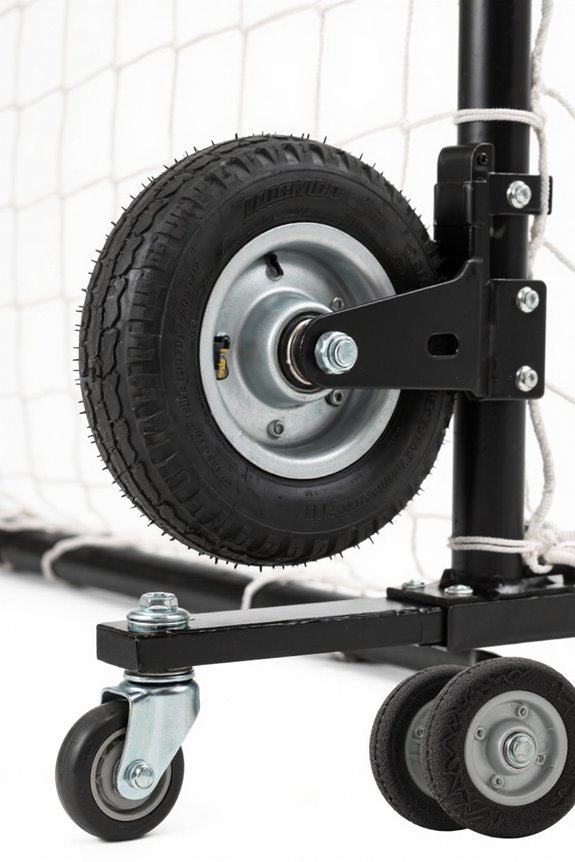
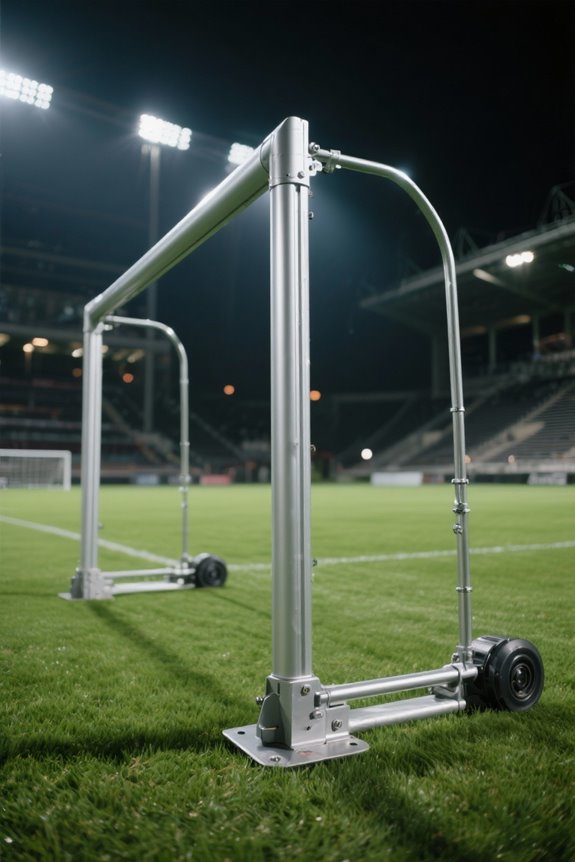
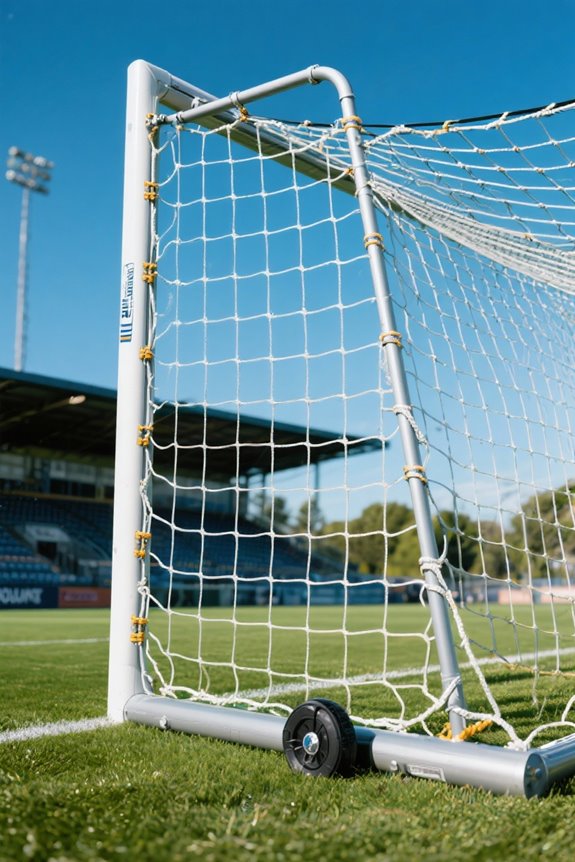
Transporting soccer goals efficiently relies heavily on the selection of appropriate wheel kits, which enhance mobility and ease of use. Levered kits provide 360° wheel rotation for maneuverability on uneven surfaces, while flip forward kits allow for easy transport and storage. Removable kits offer flexibility by detaching when not in use, and fixed kits prioritize simplicity but may limit movement. Add-on kits enhance existing goals by attaching directly to backstays, improving portability. Wheel diameters typically range from 9 to 10 inches, ensuring adequate ground clearance and turf protection, minimizing damage during transport. Larger wheels facilitate smoother movement over rough terrains, reducing stress on both the turf and the user, optimizing the handling of heavier soccer goals commonly used in clubs and schools. Proper care and maintenance, similar to padded pants for youth goalkeepers, can extend the lifespan and performance of portable soccer goals.
Storing Portable Soccer Goals: Best Practices
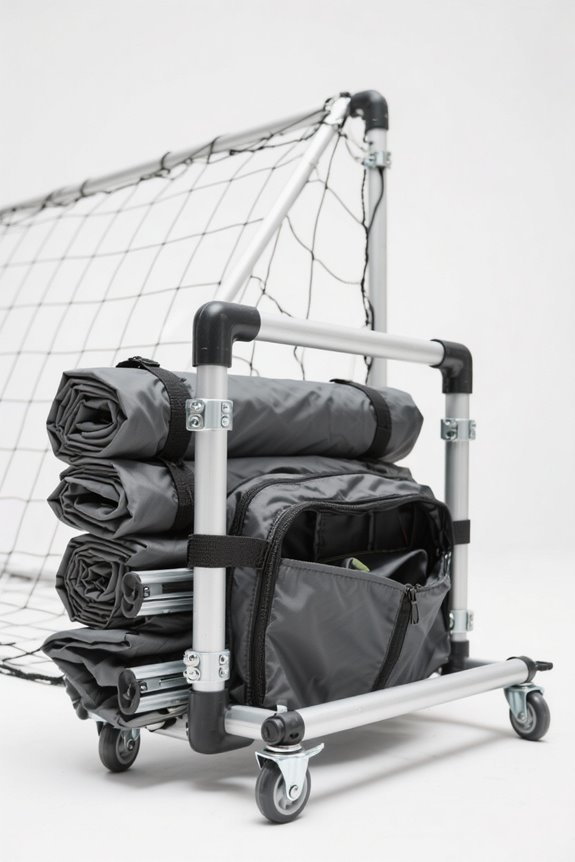
When effectively storing soccer goals, several best practices must be followed to guarantee their longevity and safety. First, secure storage in a locked indoor facility is essential to protect goals from weather and unauthorized access. If outdoor storage is necessary, goals should be fastened to sturdy structures with a locked chain. Proper goal positioning enhances safety; storing goals face-to-face and removing nets prevents climbing risks. Conduct a thorough risk assessment, checking all hardware for damage and ensuring manufacturer warning labels remain visible. Additionally, educate all personnel involved in goal storage on procedures, emphasizing the importance of anchoring or locking goals when not in use. Implementing these practices will greatly reduce hazards while maintaining the integrity of the goals. Furthermore, consider the durability importance of choosing heavy-duty materials when purchasing goals, as this can significantly impact their lifespan during storage.
Importance of Material and Durability

Understanding the importance of material and durability in soccer goals is essential for guaranteeing their effective usage and long lifespan. Material selection directly affects a goal’s performance and maintenance requirements. Aluminum frames offer lightweight yet strong construction, resisting rust and corrosion for excellent durability in various weather conditions. In contrast, steel goals provide cost-effective options with frame advantages but require regular maintenance to prevent rust. Fiberglass provides a balance of weight and sturdiness, while plastic is the least durable, ideal for very light use only. Overall, selecting high-quality materials guarantees that soccer goals can withstand rigorous daily use, weather elements, and the impact of powerful kicks, which enhances both portability and longevity. Additionally, opting for UV-stabilized HDPE nets ensures that the goal can resist fading and deterioration from prolonged sun exposure.
Safety Measures for Transporting Goals

Ensuring the safety of portable soccer goals during transport is crucial for preventing accidents and maintaining the equipment’s integrity. Properly securing and anchoring these goals is essential; use chains or straps to attach them to sturdy fixtures, thereby preventing tipping. Inspect all fasteners and connecting hardware for damage before transport, ensuring the goal frame is stable and resting on a level surface. Compliance with transport regulations includes making safety labels clearly visible, which inform users to avoid climbing on the goal and emphasize anchoring requirements. Conduct regular safety audits to reinforce safe handling practices, limiting movement to trained personnel only and avoiding horseplay around the equipment during loading and transporting. This thorough approach reduces risks during transit and promotes safety. Additionally, consider using lightweight and portable designs to facilitate easier transport and setup.
Ensuring Stability During Storage
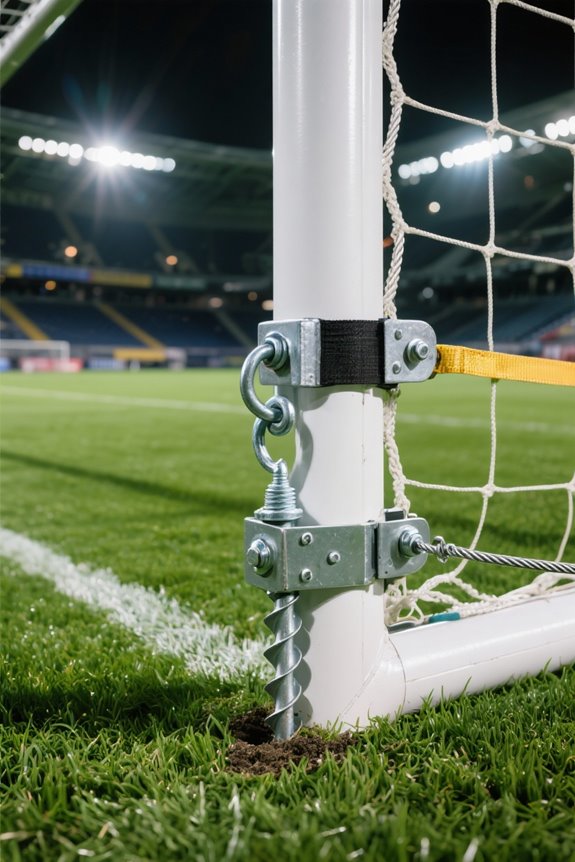
Proper stability during the storage of portable soccer goals greatly contributes to the longevity and safety of the equipment. Adequate goal anchoring is essential to prevent tipping, particularly when stored outdoors. Auger-style anchors, designed to screw into the ground, should be used, guaranteeing a minimum of two per goal based on soil conditions. Goals must be laid flat or stacked horizontally, using padding between stacked frames to enhance stability and protect the structure. Selecting a level, firm surface for storage helps reduce movement, while avoiding uneven ground minimizes tipping risks. Enclosed storage spaces shield goals from environmental elements, preserving structural integrity. Regular inspections confirm no loose components threaten stability, solidifying effective storage techniques for long-lasting use. Additionally, using durable materials such as high elastic fiberglass poles can further enhance the goal’s stability during both use and storage.
Efficient Handling Techniques for Soccer Goals
Efficient handling techniques for portable soccer goals maximize safety and facilitate seamless transport. Users should employ proper lifting methods when handling larger goals, specifically those weighing over 28 kg, to prevent injuries. It is crucial to keep the back straight and bend the knees while lifting to minimize back strain. Additionally, carrying goals close to the body enhances balance and control during transport. Handlers must avoid twisting their torso; instead, they should pivot their feet to turn safely. When available, utilizing handles, straps, or carry bags improves grip and simplifies movement, especially for pop-up goals. Periodic checks on moving parts and connectors can further safeguard smooth disassembly and safe handling, reducing the risk of damage during transport or setup. Furthermore, keeping gear organized in soccer cleat bags can help maintain the condition of equipment while on the go.
Recommendations for Wheel Kits and Accessories
Selecting the right wheel kits and accessories for portable soccer goals considerably enhances mobility and stability during use and transport. Wheel kit features should include a common size of 10 inches to guarantee a balance between maneuverability and stability. A flip-forward wheel design allows wheels to be easily flipped back for gameplay, minimizing interference. Kits may come in sets of two or four wheels, which can retrofit existing goals. Accessory options like heavy-duty pro line goal anchors and protective post pads improve safety, while counterweights can stabilize goals on turf surfaces. Regular inspection and maintenance of these components, along with consideration for compatibility and installation requirements, guarantee safe and effective use, thereby extending the lifespan of the portable goals during transport. Additionally, ensuring that wheel kits are made from high-quality materials can further enhance their durability and performance on the field.
Compact Storage Solutions for Goals
Frequently, teams and sports organizations seek compact storage solutions for portable soccer goals to optimize space and enhance organization. Compact goal designs, such as foldable and pop-up models, reduce the footprint of equipment when not in use. Such designs allow goals to collapse into flat shapes, facilitating easier storage in limited space. Versatile storage systems are created from lightweight materials that enable stacking or wall-hanging, further maximizing efficiency. Storage racks made for outdoor conditions protect against weather while securely organizing multiple goals. Incorporating protective coatings helps prevent corrosion and prolongs the lifespan of the equipment. By utilizing separate net storage options, teams can keep nets organized and minimize tangling, which enhances overall equipment management strategies and extends usage life. Additionally, considering portable soccer goal sets can further enhance the ease of transport and storage.
Avoiding Common Transport Mistakes
Transporting portable soccer goals requires careful attention to common mistakes that can lead to accidents and equipment damage. Proper transport safety begins with securely anchoring or counterweighting the goals to maintain goal stability and prevent tipping. Goals must be handled by trained personnel, ensuring they are moved only on level surfaces. Avoid dragging them over rough terrain, which can damage their frames. Regularly inspect all parts, replacing any damaged hardware, as structural integrity is critical for safe transport. In addition, removing nets before moving minimizes entanglement risks and reduces weight. Finally, stored goals should be inaccessible to children to avoid unauthorized movement, which could cause injuries or damage. Adhering to these guidelines enhances safety during the transport and storage of soccer goals. Additionally, using durable materials in the construction of portable goals can significantly increase their lifespan and performance during transport.
Maintenance Tips for Transport Equipment
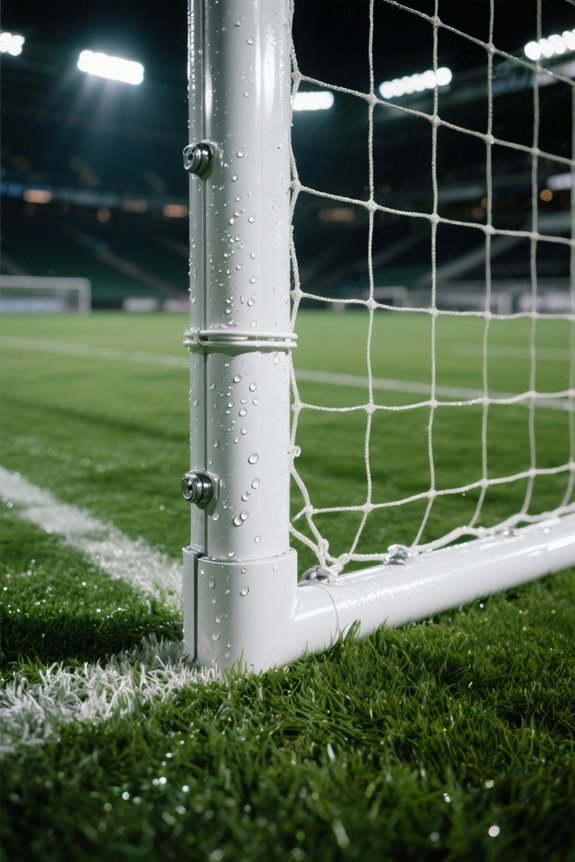
Maintaining transport equipment for portable soccer goals is vital to secure maximum functionality and safety during use. Regularly inspecting all components, such as wheels, fasteners, and metal frames, helps identify wear and damage. Cleaning equipment with mild soap and water, particularly focusing on moving joints and metal surfaces, prevents corrosion and maintains equipment longevity. Lubricating hinges and wheels guarantees smooth operation and reduces wear. Establishing maintenance schedules, including weekly checks for tightness and corrosion, supports effective oversight. Additionally, promptly replacing any compromised hardware and disassembling equipment for long-term storage minimizes risks. Protecting equipment from moisture and UV exposure during storage is fundamental for maintaining structural integrity, ultimately assuring reliable performance during transport and play.
The Role of Stabilizer Bars in Transport Safety
Stabilizer bars play an indispensable role in enhancing transport safety for portable soccer goals. The stabilizer bar construction, typically using galvanized or zinc-coated steel tubing, guarantees durability and resistance to corrosion. These bars connect to backstays, improving structural stability during movement. They counterbalance the forward weight of the goalposts, considerably reducing the risk of tipping over, whether influenced by wind or force during loading. Stabilizer bars extend the base depth of goals, increasing ground contact area for added stability. They also integrate with wheel kits to facilitate smoother transport, while compatible anchor systems lock goals in place, confirming immobility during transit. Regular inspection is vital to maintain their functionality and prevent accidental injuries, reinforcing overall transport safety specifics.
Frequently Asked Questions
Can I Transport Soccer Goals Using a Bicycle or Similar Vehicle?
Transporting soccer goals using a bicycle presents challenges. Goal portability options are limited; bicycle transport techniques may only suit compact pop-up goals. Standard-sized goals are too cumbersome, making alternative transport methods far more practical and safer.
What Safety Gear Should I Wear While Transporting Soccer Goals?
When transporting goals, individuals should wear safety equipment including gloves to prevent injuries, steel-toed boots for foot protection, safety glasses for eye safety, and high-visibility vests to enhance awareness in crowded or traffic areas.
How Often Should I Inspect My Transport Equipment for Damage?
In a world where transport equipment is more dependable than a reality show star, a weekly maintenance schedule becomes paramount. Regular damage assessments guarantee that not even a rogue wheel can derail any grand transport adventure!
Can I Store Goals Outside if Covered?
Yes, goals can be stored outside if covered, offering weather protection. Effective storage solutions include using waterproof covers and securing the goals to prevent damage from moisture, wind, and other environmental factors, ensuring longevity.
What Are the Best Temperature Conditions for Storing Soccer Goals?
The ideal storage temperature range for soccer goals is moderate, avoiding extremes. Controlled indoor environments minimize material stress, reducing risks of rust and damage, while fluctuating temperatures can compromise the integrity of the goals over time.